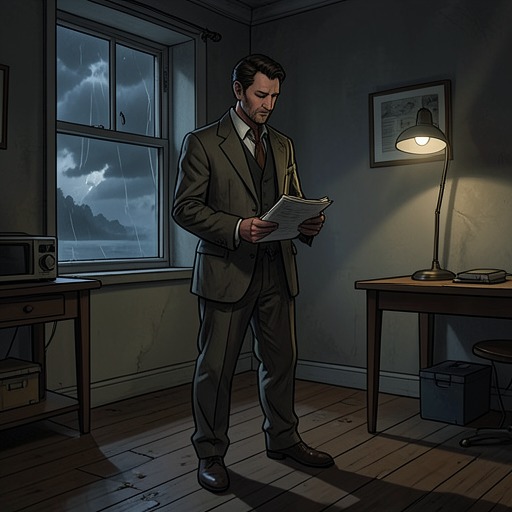
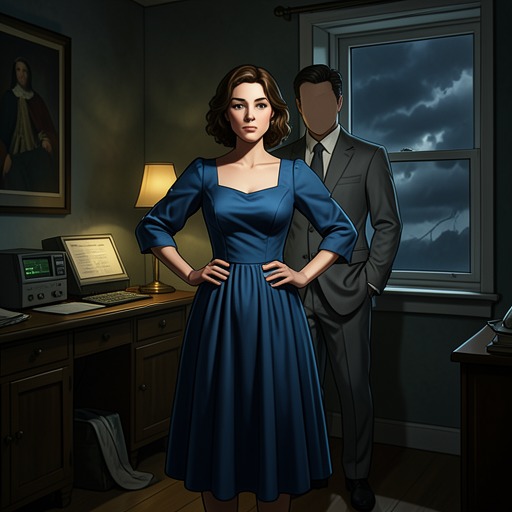
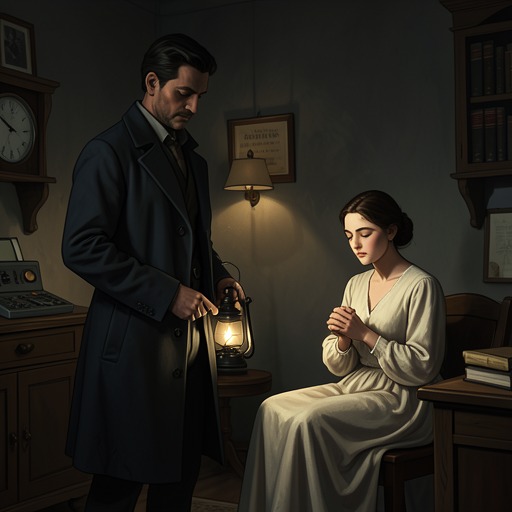
Isobel and Dominic break into Rupert's home to retrieve evidence
When You Were MineIsobel and Dominic’s break-in at Rupert Davenport’s house turns Isobel’s recollection of coercion into a search for documentary proof. The recovered papers give the couple a way to challenge Rupert’s attempt to exploit her fortune and, later, his attack on the validity of her marriage to Dominic.
Background and Documentary Stakes
After Isobel was taken from Willowbrook Hall, Rupert told her that Peter Davenport had died in Norfolk and that Rupert had therefore become her guardian. He gave her little time to pack and pressed her to leave, while threatening that her aunt Elspeth could be sent to an asylum if Isobel resisted. Isobel agreed to go partly to protect Elspeth, not knowing where Rupert was taking her. The story later establishes that Rupert had used threats and deception to secure Elspeth’s compliance in Isobel’s removal.
At Gosport Hall, Rupert and his associate Bertram DeLisle repeatedly tried to make Isobel sign a betrothal document naming DeLisle as her intended. She refused. When Isobel later reconstructs those events, she remembers that the document already bore the signatures of Rupert and DeLisle, but lacked her own. Her account links the proposed betrothal to Rupert’s interest in her wealth: she reasons that the document could help secure a special license and force her into marriage, while her signature was necessary to make it legally effective. In her view, its existence would also show that Rupert was trying to obtain access to her fortune despite not being her guardian.
The immediate clue emerges when Isobel tells the household that she knows how to find evidence that Rupert knew about her fortune. Writing her experiences in sequence, as Dominic had asked, has brought the document back to mind. Peter and Dominic consider whether Rupert might have destroyed it, but Isobel argues that he could have kept it to support a later claim that she was already promised to DeLisle when she married Dominic. Dominic concludes that the document is likely at Rupert’s house across town. Peter offers to go, but the search becomes a question not only of retrieving evidence, but of whether Isobel will be allowed to act for herself.
Isobel Insists on Taking Part
Dominic prepares to leave with a blade in his pocket and expects Isobel to remain behind. She refuses that division of roles. With Sebastian away in London and Peter in Derby, she would otherwise be left at Havistock Hall with Edward, waiting while Dominic took the risk. Her resistance is shaped by an earlier experience of waiting for him and by the fact that the evidence concerns her own captivity and the pressure she endured.
Isobel makes clear that Dominic may accompany her or leave her to go alone, but cannot simply prevent her from going. She tells him that the marriage they are trying to build depends on his accepting her decision. When he questions how they could get into the house, she states that she intends to break in and retrieve the papers. She does not present the venture as a request for permission or help: she needs to do it for herself, because Rupert’s actions were directed against her and she wants the documents she knows exist.
Their disagreement gives way to a joint plan rather than to Isobel’s withdrawal. Dominic recognizes her resolve and helps her assess the approach to the house. Before they move, he asks her to promise that if anyone returns, she will run directly home rather than hide or wait for him. Isobel agrees, but asks him in turn not to stay behind and play the hero. The exchange sets the terms of the risk: they will search together, but their escape depends on neither treating the other as expendable.
The Search and Escape
They approach through the shrubbery, keeping to the shadows. At the door, Dominic works the latch; its click sounds alarmingly loud to Isobel, and they pause to listen. When nothing stirs, they ease inside the large kitchen. In the dark, they make out the table and the pot-laden dressers along the far wall. Dominic crosses the room quietly, while Isobel follows, keeping her cloak close and continuing despite her fear.
They make their way upstairs and search for Rupert’s room. After checking the master suite and two guest rooms, Isobel spots Rupert’s trunk at the foot of a bed in the last room they enter. They close the door and wait as candlelight passes beneath it. Their first search of the writing table, clothes press, and small table beside the bed turns up nothing. Isobel continues through the drawers until Dominic taps her shoulder and shows her a roll of papers.
Isobel unrolls the papers and reads what she can in the gloom. Her relief tells her that they have found the documents she believes can expose Rupert’s scheme. The narrative identifies the recovered papers as two documents that could seal his fate, though the scene does not set out their full contents. Their importance rests on the contrast between Rupert’s claim to authority and the written evidence Isobel expects to find: he had tried to secure her signature to a betrothal while, as she understands the matter, having no right to act as her guardian.
They leave without lingering. Once outside, they shelter among the shrubs and watch the candlelight disappear from the upper window, apparently moving down the internal staircase. They retrace their route across the gardens and into the trees. Isobel nearly stops to celebrate, but Dominic reminds her to keep moving; he looks back to check for pursuit and signals her onward. The urgency of their retreat carries the evidence out of Rupert’s house and back toward Havistock Hall. Later, Dominic removes the papers from a concealed pocket in his cloak and hides them in a compartment in the fireplace.
Consequences and Significance
The recovered papers shift the conflict from Isobel’s recollection of Rupert’s conduct toward evidence that can be used against him. Their value is not merely that they record a proposed betrothal: according to Isobel’s reasoning, they connect Rupert and DeLisle to an attempt to compel her into marriage for access to her wealth. The missing signature is central to that reasoning. Isobel’s refusal had prevented the document from taking the form they wanted, but the signed paper could still reveal what they had tried to accomplish.
The danger of disputed documents becomes clear when Rupert later confronts Isobel and Dominic and claims that Isobel is already married to DeLisle, making her marriage to Dominic bigamous. Isobel denies ever having married DeLisle. Peter counters that he was Isobel’s legal guardian when she married Dominic and had not consented to any other marriage; he also says he holds papers, witnessed by a magistrate, recording Isobel’s betrothal to Dominic years earlier. These later claims do not amount to a final ruling in the scene, but they show why the break-in matters: documents become weapons in a struggle over who can define Isobel’s legal and personal status.
The episode also marks a change in Isobel’s position within the conflict. Rupert had previously controlled her movements through false claims about Peter’s death, threats against Elspeth, and the abrupt removal from Willowbrook Hall. At his house, Isobel chooses the objective, insists on joining the search, identifies the document’s significance, and helps bring the evidence out. Dominic’s concern remains evident in the escape plan, but the action is no longer his alone. The papers are a practical means of challenging Rupert, while the decision to retrieve them makes Isobel an active participant in that challenge.