Isobel's forged death records
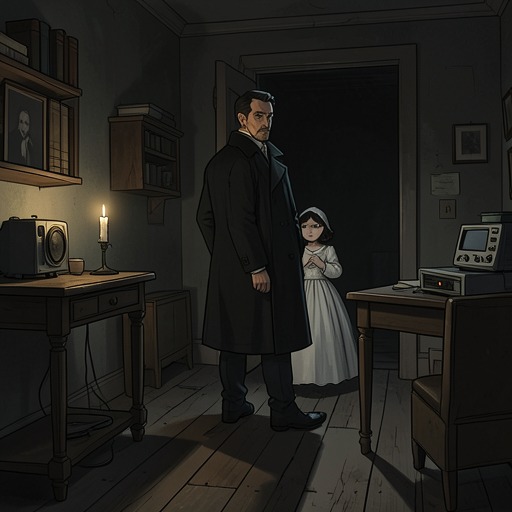
When You Were MineIsobel's forged death records turn a protective falsehood into apparent fact: papers and a church entry support the claim that Isobel Davenport has died, while a murdered woman loosely matching her description supplies a body to anchor the story. Arranged by Isobel Davenport and Hubert Williams to deter Rupert Davenport and buy her time, the records protect her only by making people who care for her grieve as though she were truly gone.
Fabrication and Purpose
The records emerge when Dominic Cavendish asks whether Hubert Williams arranged for death papers and a church entry to be forged. Isobel Davenport confirms that he helped sustain the lie. She explains that, while alone and trying to find her way, she came near Hubert Williams’s house and decided to risk approaching him rather than be handed over to Rupert Davenport. Hubert Williams had promised her dying father that he would help either Isobel Davenport or Peter Davenport if they needed it. That earlier promise gave her reason to trust him, though she could not know for certain how he would respond.
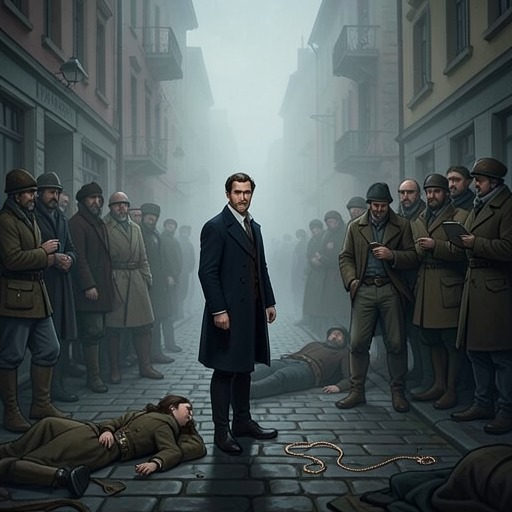
The two devised a story of murder and used the discovery in a village of a woman who only loosely resembled Isobel Davenport to reinforce it. The forged records and the reported death thus worked together: the documents offered a formal-looking confirmation, and the apparent match made the account more convincing. Their purpose was not to establish a permanent new identity for Isobel Davenport, but to persuade Rupert Davenport that pursuit was pointless. Isobel Davenport expected the deception to give her a few weeks of freedom, until she reached the age of twenty-five.
A Temporary Barrier to Guardianship
That deadline made the records part of a specific plan for independence. Isobel Davenport clarifies that reaching twenty-five would mean being old enough to receive the money and property she inherited in her own right from her grandmother, as well as no longer needing a guardian. Dominic Cavendish recognizes the age as the point at which she would be free of guardianship, but she stresses that inheritance was equally central. The false death therefore buys time against both Rupert Davenport’s pursuit and the restrictions that kept her from her property.
Hubert Williams’s role, as Isobel Davenport describes it, was to secure that interval. She says she had instructed him to tell anyone looking for her that she was dead, and believes he followed her instruction, including when Dominic Cavendish and Peter Davenport came seeking her. His maintenance of the story was also shaped by uncertainty: he had never met Peter Davenport and had only Dominic Cavendish’s and Peter Davenport’s word that they were who they claimed to be. Isobel Davenport believes Hubert Williams acted to protect her, and argues that without his help Rupert Davenport would probably have found her.
Discovery and Consequences
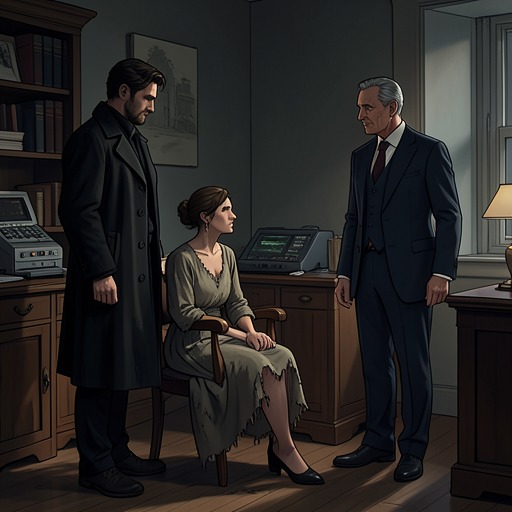
The records’ success becomes visible in the harm they cause. Dominic Cavendish and Peter Davenport believed Isobel Davenport had been brutally murdered and grieved for her. Learning that Hubert Williams knew she was alive makes Dominic Cavendish ask why he did not tell them the truth, especially when Peter Davenport was her brother. Isobel Davenport admits that Hubert Williams helped tell a lie, but explains that she had authorized the appearance of her death and that Hubert Williams may have become more cautious than usual because of Rupert Davenport.
Her explanation does not immediately undo the injury. Dominic Cavendish remains troubled by the concealment and is not ready to forgive Hubert Williams for maintaining it after their arrival. The records have protected Isobel Davenport from discovery, but they have also prolonged the false belief of those searching for her. Their consequences therefore reach beyond the intended target: the deception that frustrates Rupert Davenport also separates Isobel Davenport from Dominic Cavendish and Peter Davenport through grief and mistrust.
Narrative Function
The forged papers and church entry matter because they make a fabricated death credible enough to alter other people’s actions. A spoken claim alone might be challenged; joined to a church entry and the report of a loosely matching murder victim, it acquires the appearance of corroboration. The account reveals the gap between documentary certainty and the truth known privately by Isobel Davenport and Hubert Williams: the records say she is dead, while their actual purpose is to keep her alive and beyond Rupert Davenport’s reach.
Their later explanation also recasts Hubert Williams’s silence. To Dominic Cavendish, the false record first signifies betrayal and needless grief; through Isobel Davenport’s account, it becomes a risky, temporary safeguard devised under guardianship and pursuit. The object’s significance lies in that double effect: the same fabricated proof that helps Isobel Davenport approach independence makes her apparent death persuasive to the people who most need to know she lives.