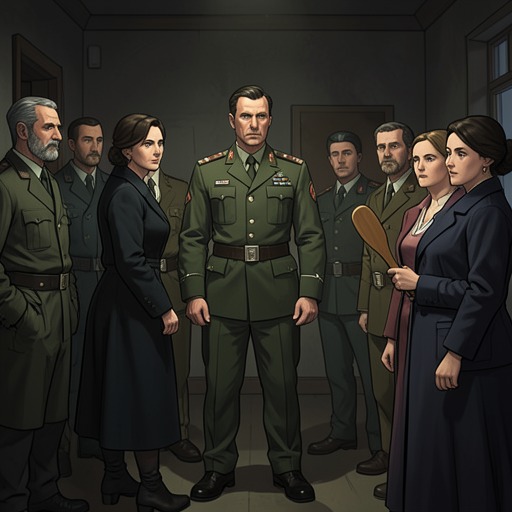
Isobel's presumed-dead status
When You Were MineIsobel Davenport's presumed-dead status is a mistaken conclusion built around a grave and a familiar necklace: Dominic Cavendish and Peter Davenport accept that she has died, only to encounter her alive and later learn that the jewellery used to identify the body belonged to her, not the dead woman. The error turns a personal keepsake into apparent proof of death, shaping the men's grief and delaying their understanding of Isobel's fate.
Discovery and Burial
After searching for Isobel for days, Dominic and Peter move north and learn, through a chance conversation and careful inquiries, of a young stranger found dead near Peterborough. The woman has no identification and is buried far from Isobel's family crypt, in a pauper's grave in a village where she had not lived. A plain wooden cross, provided through a villager's sympathy, is the only marker. The burial's anonymity gives the men's search a stark destination: instead of finding Isobel, they find a grave that seems to hold her.
The circumstances leave room for alarm as well as grief. The dead woman had been found wearing only a necklace, and both men know the piece as Isobel's. They do not bring themselves to say that Isobel was murdered, but the thought is shared. The grave and the reported discovery make her presumed death feel settled before they have established what happened to her or why she never reached the help Dominic had arranged at Havistock Hall.
The Necklace as Identification
The necklace carries the emotional authority that the dead woman's lack of identification cannot provide. It is a thin chain with a small stone in a star-shaped mount, given to Isobel by her father on her tenth birthday. Although it has little financial value, Isobel treasured it after his death and wore it everywhere; Dominic and Peter believe she would never willingly have parted with it. Their recognition therefore supplies what official identification is missing, and the object appears to connect the unknown body directly to Isobel.
When Sir Hubert Williams, the magistrate, meets the men at the grave, he produces the necklace as the only item found on the body that might identify her. Dominic reaches to touch the chain and takes it as confirmation that he has lost Isobel. The act of recognition is intimate, but its evidentiary basis is incomplete: the men know the necklace, not the woman's identity. The distinction goes unnoticed in their immediate grief, while the object transforms an uncertain discovery into what they believe is proof.
Grief and the Reversal
The belief that Isobel is dead changes the search into mourning. Peter knows how deeply Dominic loves his sister and sees the news's effect on his friend. Dominic, in turn, cannot understand why Isobel did not seek the assistance he had promised through his man of business at Havistock Hall. That unanswered question remains beside the grave, an unresolved gap between the help he believes he made available and the failure to receive any message from her.
The conclusion is overturned at the Melton market. While moving through the crowd, Dominic thinks he sees a figure who resembles Isobel; when she reappears, he blocks her path, and her stunned blue eyes meet his. The encounter changes the necklace's meaning: it had seemed to confirm her death, but Isobel's return proves that the conclusion drawn from it was wrong. Her survival does not erase the men's experience of loss; it reveals that their certainty rested on a mistaken identification.
Correction and Unresolved Knowledge
Later, Peter tells Isobel that they were informed she was dead and shown her grave. Dominic produces the thin gold chain and asks why it was found on another woman's body by the roadside in Newisham. The body had belonged to a badly beaten woman, and the necklace was the sole item found on her. It was the apparent link between the body and Isobel that persuaded the men that the grave was hers. The account corrects their understanding of the evidence without explaining, in this exchange, how the necklace came to be on the other woman.
Isobel stares at the chain and reaches toward it, but her trembling hand stops short and falls back. When asked who gave it to her, she asks instead who gave it to Dominic; she does not ask where it was found. Dominic reads her hesitation and avoidance as signs that she knows something, while Isobel says she does not know and looks down. Peter asks whether she can recall anything that might help them. Thus the false identification is exposed, but the necklace's path and Isobel's knowledge remain unsettled in this conversation. Her presumed death is no longer accepted as fact, yet the evidence that created it continues to carry an unresolved history.