Isobel’s staged death
When You Were MineIsobel’s staged death turns a substituted body and a familiar necklace into apparent proof of Isobel Davenport’s death. The false identification sends her family and Dominic Cavendish into mourning, but the circumstances of the burial—and the later discovery that Isobel is alive—reveal how little that proof established. The episode’s force lies in the gap between an object that seems conclusive and the hidden truth it cannot settle.
The Search and the False Identification
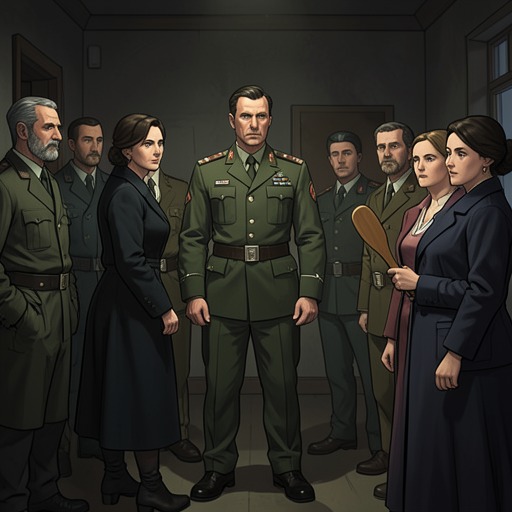
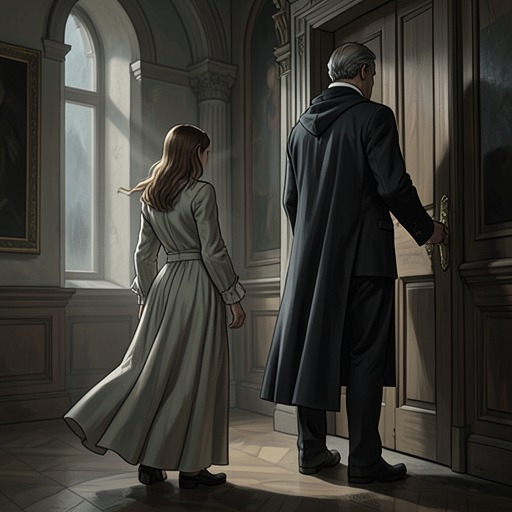
The false report takes shape after Dominic and Peter Davenport return from Norfolk and learn that Isobel has disappeared. Their aunt, Elspeth, explains that Rupert Davenport removed Isobel from her care by asserting his guardianship and suppressing Elspeth’s objections with threats. Isobel’s last known appearance was a brief, tearful farewell before she was taken away in an unmarked carriage. The household had heard nothing from her since. The staff also believed that she had been betrothed to Bertram DeLisle shortly before she vanished, leaving Dominic to fear that Rupert had distorted the truth about him as well as concealing Isobel’s whereabouts.
Dominic and Peter begin an exhaustive search with the remaining household staff. For days they question people in towns and villages and search the surrounding fields, gradually moving north without finding Isobel. Their lead comes by chance: near Peterborough, Peter overhears a conversation about a young stranger found dead outside the town. Careful inquiries identify the farmer who discovered the body and the small rural graveyard where the woman was buried. The search for a missing woman has become, for the brothers, the discovery of what they believe to be her grave.
The dead woman had no identification, and the magistrate, unaware of who she was, ordered a pauper’s burial. She was not interred in the family crypt at Willowbrook Hall, but in a village where she had no family ties. A plain wooden cross marked the grave only because a local villager was moved by her circumstances. The modest, hurried burial is consequential: without a name or family recognition, the identification rests on the single object reported to have been found with the body.
The Necklace as Evidence
That object is Isobel’s star necklace, a thin gold chain bearing a small stone in a star-shaped setting. Her father gave it to her on her tenth birthday, the last birthday she shared with him. Although it had little monetary value, it carried deep personal meaning: after her father’s death, Isobel refused to take it off. Dominic and Peter knew its distinctive design and believed she would never willingly part with it. Its history therefore makes the necklace seem more persuasive than an ordinary possession. It is not merely associated with Isobel; to her family, it is an intimate sign of continuity with her father and with her life before her disappearance.
The brothers’ reasoning is understandable but incomplete. The necklace identifies an object, not the person wearing it. Because the woman’s identity was otherwise unknown, the chain supplies the missing name in their minds, and the pauper’s grave becomes Isobel’s grave. At the burial site, Dominic asks why the woman was buried so quickly, while Peter insists that she should be returned to Willowbrook Hall and placed in the family crypt beside their parents. Their wish to restore her to the family burial place gives physical expression to their belief that they have found her, even as the circumstances leave the identification dependent on the necklace alone.
Grief, Doubt, and Concealed Knowledge
The apparent death changes the brothers’ search into an effort to establish what happened. They contact Sir Hubert Williams, the magistrate who ordered the funeral, and learn that he had no idea of the woman’s identity. Dominic and Peter do not speak openly of murder, though both suspect it. Their grief is joined to anger at Rupert’s deception and to uncertainty about how a woman whose death was reported could have been taken from Willowbrook only weeks earlier.
Sir Hubert’s private doubts complicate the apparent certainty of the grave. He recalls having promised a friend long ago to take whatever action was required, and recognizes that he did so in connection with events a month earlier. He is unsettled by the brothers’ sincere distress after they identify the gently bred woman and wonders why he had been asked to secure that outcome. He also regrets not insisting on details about Isobel’s current whereabouts and considers whether he should reveal the truth. His reflections establish that the report and burial were not simply the product of an innocent administrative mistake; someone had involved him in a plan, though the evidence here does not identify that person or explain the full arrangement. The small cross marks an empty grave by the time he looks back at it, another unresolved detail rather than an explanation.
The Truth Reopens the Case
When Isobel is later with Dominic and Peter, Peter tells her that they were informed of her death and shown her grave. Dominic produces the thin gold chain that had persuaded them. He explains that the magistrate gave it to them after a badly beaten woman was found beside a road in Newisham, and that the necklace was the only item on her body. The geographical and personal details turn the earlier graveyard discovery into a direct confrontation: the chain that had served as proof of death is now in Dominic’s hand, while its former owner is alive before him.
Isobel reaches toward the necklace but stops before touching it and lets her hand fall. Instead of asking where it was found, she asks who gave it to Dominic. Her question and hesitation make clear that the object carries knowledge for her that she is not ready to explain. When Peter asks whether she can recall anything that might help, she says she does not know. Her response does not settle who arranged the substitution or what part she played. It does, however, transform the necklace from apparently decisive evidence into a sign of concealed history and strained trust. Dominic’s grief over the grave, the family’s confidence in the chain, and Isobel’s guarded recognition all belong to the same mistaken conclusion: the staged death succeeds because a cherished personal object is treated as an identity, while the truth behind its transfer remains withheld.