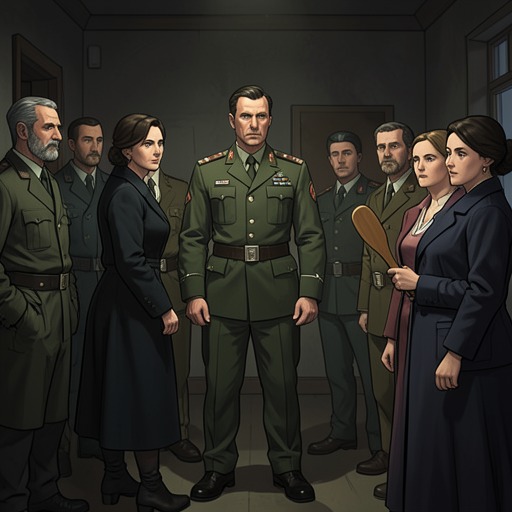
Isobel's severe illness and recovery at Havistock Hall
When You Were MineIsobel's severe illness and recovery at Havistock Hall is the story of a rescue that did not end with reaching shelter: after escaping Rupert, Isobel arrived dangerously malnourished and ill, and for weeks her survival depended on sustained care. Her condition brought Dominic face to face with his inability to control the outcome, while her slow return to awareness made the household's care visible as a daily, uncertain process.
Arrival and Condition
Dominic brought Isobel to Havistock Hall after finding her in a state of extreme exhaustion. On the journey, he wrapped her in his wool cloak and held her close against the cold. She could hear his voice only indistinctly and could not summon the strength to open her eyes. When she fainted, he could not tell whether starvation, cold, exhaustion, or fear had overwhelmed her. Rain began before they reached the house, adding to the danger of the journey.
At Havistock, Dominic carried her upstairs without stopping at the guest rooms and took her to his own suite, determined to remain near her. On his bed, her small, fragile appearance made the severity of her condition plain: she had nearly starved, and her clothing offered inadequate protection even against the conditions she had already endured. Dominic, who had witnessed suffering on battlefields, was unprepared for the extent of her plight. He lit the fire and began removing her wet outer clothing, but when Mrs Holcombe and two maids arrived, he recognized the need to preserve Isobel's dignity and left them to help her.
The doctor had visited by the time Dominic was told the news, and the outlook was grave. Isobel's lungs were in serious condition, and her malnutrition made her less able to withstand the illness. Dominic sent for Peter so he could tell him both that his sister had survived and that her life remained in danger. The first days brought little improvement. Mrs Holcombe reported that Isobel had taken only a small amount of nourishment; Dominic understood that the broth she was managing to drink was not enough to sustain her.
Care Through the Crisis
The household's care was practical and persistent. Mrs Holcombe and the servants helped tend Isobel, while Dominic stayed close, urging her to drink when she was conscious enough to do so. Broth and the doctor's tincture were among the measures used; later, a tisane was also part of her treatment. These efforts did not produce a quick recovery. Nearly three days after Isobel's arrival, she remained in much the same condition, and Dominic's frustration arose from the gap between the care he could provide and the improvement he desperately needed to see.
A severe snowfall made that helplessness more acute. During the night, Dominic heard a strange rattling sound and went to Isobel's bed. He found her unresponsive and unusually cold despite the warmth of the room. Her pallor and stillness recalled to him the appearance of mortally wounded soldiers, but when he checked, he could feel a faint heartbeat. He summoned Mrs Holcombe, who had already become a trusted source of help during the illness. With the storm worsening, however, the doctor could not readily be brought to the house. Mrs Holcombe advised sending for him, but Dominic judged that a journey in the weather would put the messenger at serious risk and that the doctor might not travel even if summoned.
Isobel suffered repeated, severe coughing fits. Mrs Holcombe helped change her into a warm, dry nightgown and replace the damp bedding, while the fire was kept burning. Dominic held Isobel and tried to give her the tincture the doctor had left, waiting for the coughing to ease enough for her to take it. When her condition caused further alarm, he left Havistock Hall despite the staff's protests, unwilling to wait without trying to find help. He returned at daybreak, exhausted and covered in snow, fearing that Isobel might have died while he was away. She was still alive, and he went straight upstairs to her. He then stayed beside her, gathered her into his arms, and slept only intermittently.
Awakening and Gradual Recovery
Isobel's return to consciousness was gradual. At first she registered only distant murmuring and could not make out what was being said. She felt warm and at peace, but unease and indistinct threatening images also passed through her confused awareness. When she could respond, her voice was hoarse and her memory uncertain. Dominic told her that they had nearly lost her; she did not understand the danger he meant, since she was awake and present with him. Her recollections of the illness were fragmented enough that she could not be sure which remembered events had happened and which might have come from her confused state.
When Isobel asked how long she had been at Havistock Hall, Dominic told her it had been three weeks. Her astonishment made clear how much time had passed beyond her conscious grasp. He could only begin to explain that her situation had been poor before exhaustion overtook her again. She fell back into a deep, restorative sleep, comforted by his nearness. Dominic told her she would not be merely a guest at Havistock, though she was too tired to ask what he meant.
Her survival did not mean that she was immediately well. When Dominic later described her condition to Peter, he explained that Isobel had been half-starved since escaping Rupert and had only two halfpennies in her pocket when she was found. It had taken time to coax her to eat enough to sustain her. Her lungs had improved, but remained a serious concern; the doctor advised warmth and as much food as she could manage, and the tisane was still being given. Because she had been so weak and malnourished, recovery was slower than it might otherwise have been. Three and a half weeks later, she was still weak and confined to bed, tired of the restriction and longing for fresh air. Much of the period had passed in eating and sleeping, and she remembered little of it.
Significance and Aftermath
The illness turns the rescue from Rupert into a prolonged test of survival. Isobel had escaped, but the effects of deprivation and exposure continued to threaten her after she reached safety. The snowstorm sharpened that danger by restricting access to outside medical help, leaving Dominic and the household to rely on warmth, food, the medicines already available, and close observation. The slow course of improvement also distinguishes awakening from full recovery: after three weeks Isobel could speak and ask questions, yet she remained weak and needed ongoing care.
The experience also changes the balance of care between Isobel and Dominic. During her illness, he had to wait beside her, watch for signs of change, and accept that his efforts could not guarantee her survival. Later, when Dominic himself was incapacitated, Isobel recognized the helplessness of sitting beside someone she loved and being unable to hasten recovery. She stayed near him and encouraged him to be strong, echoing the attentiveness with which he had watched over her. Her illness thus remains consequential beyond her own convalescence: it establishes a shared experience of vulnerability and care, while marking Havistock Hall as the place where she survived the immediate aftermath of her escape.