The Army
When You Were MineThe Army appears in the novel less as a depicted institution than as a point of reference for trained experience, danger, and practical competence. The text identifies Dominic and Peter as experienced soldiers of war, while Isobel’s sharp observation leads Dominic to remark that the Army could have used her; together, these moments connect military ability with both physical action and intelligent attention.
Military Experience and Action
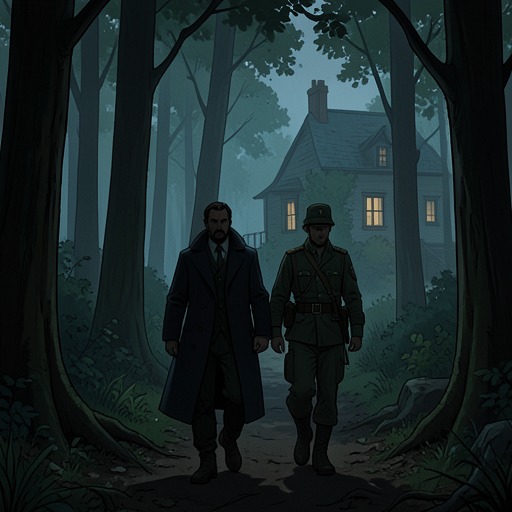
Dominic and Peter’s experience as soldiers is presented in the context of the threat posed by Rupert and his associates. Isobel expects the two men to seek justice against the surviving attackers and fears what might happen if they catch Rupert, given the pain he has caused them and their desire for revenge. Their training is made concrete through Dominic’s return after four men corner him on a dark road: his sword skill enables him to get home alive, even while injured and weakened.
This association between military experience and readiness for further conflict is not simply celebratory. Dominic is still recovering, yet Isobel believes he is prepared to fight again and expects him to join Peter in pursuing the surviving thugs once he is well enough. The Army therefore stands behind both the characters’ capacity to meet violence and the danger that their experience may turn a pursuit of justice toward personal retribution.
Isobel and the Army
The Army also becomes a measure of a kind of competence not confined to combat. During the preparations to enter Rupert’s house, Isobel carefully tracks a candle’s route through the building: from the upper hall, down the stairs, through the lower rooms, and eventually to the kitchen. She reasons that they might enter when the watch is on the far side of the house, where they would be less likely to hear them.
Dominic is impressed by her cool logic and close observation, and remarks that they could have used her in the Army. The moment does not establish that Isobel serves or intends to serve there. Instead, it briefly unsettles the assumption that military usefulness belongs only to men with battlefield experience: her contribution is tactical judgment, applied to a dangerous plan.
Narrative Significance
The novel gives no description of the Army’s ranks, structure, campaigns, or institutional life. Its significance is conveyed through the abilities and risks associated with its reference: Dominic and Peter’s soldierly experience helps explain their readiness to confront attackers, while Isobel’s ingenuity earns a comparison to military service without erasing the difference between her role and theirs.
That contrast is especially pointed because the men’s experience can pull them toward retaliation, whereas Isobel’s contribution in the break-in is careful observation and timing. The Army thus functions as a compact measure of competence in the story—one that links physical courage with strategic intelligence, while leaving the institution itself largely outside the narrative.