Cnut
When the Cold Breathes A Ragnar Stormbringer Tale A Ragnar Stormbringer TaleCnut is a settler in the Jarl’s lands whose importance lies less in physical dominance than in his willingness to recognize danger, seek help, and keep information moving through a frightened community. He is the first substantial human link between the disappearances and Ragnar Stormbringer’s intervention: when others hesitate, Cnut brings the matter to Ragnar, accompanies the search for answers, and later helps organize the survivors. His fear is real, but it does not make him inert. Instead, it gives the crisis a human scale, showing how extraordinary violence is experienced by people responsible for families, settlements, and one another.
Identity and Introduction
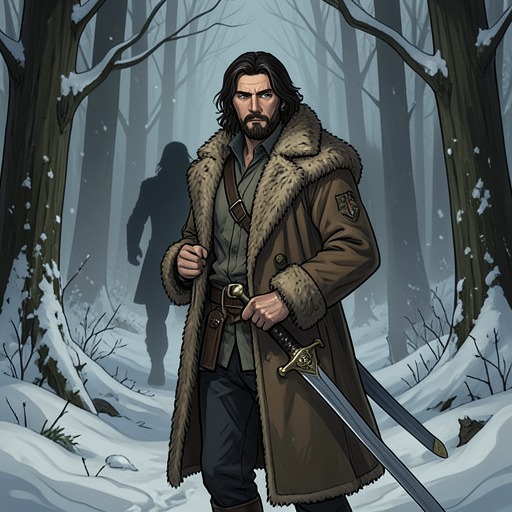
Cnut appears as one of the larger men in the woodland settlement, yet he is physically overshadowed by Ragnar Stormbringer: his head does not reach Ragnar’s shoulder. The contrast establishes their different kinds of authority. Ragnar is the imposing outsider whose reputation comes from exploits and distant lands, while Cnut is a local man whose knowledge is rooted in the settlements and whose concern is directed toward the people disappearing around him. When Ragnar examines broad claw marks beside blood and staggered human footprints, Cnut identifies them as belonging to a Mayak, a creature no one remembers seeing in the area for as long as living memory extends. His knowledge supplies the first decisive interpretation of the tracks, even though it is delivered through fear.
Cnut’s fear is especially visible when he looks up at Ragnar with glistening eyes while discussing the enormous impressions in the snow. He does not pretend to understand what has happened or disguise the danger behind confident language. That frightened recognition makes him a credible witness: the threat is not merely Ragnar’s discovery, but something the local people have encountered through its consequences and understand as almost impossibly rare.
The Disappearances and the Search for Heimval
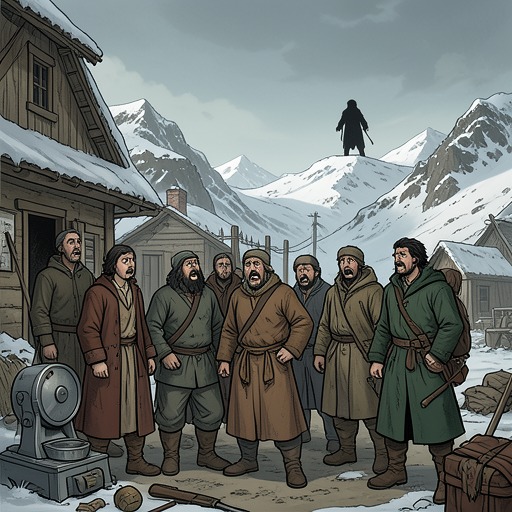
Cnut becomes central when eight men vanish from villages over the course of several weeks. No cause has been found and no witness has appeared. He and others discuss forming a large armed search party, but the disappearances unsettle the settlers so thoroughly that several more days pass without anyone venturing out. Cnut therefore occupies a difficult middle position. He understands that collective action is necessary, yet he cannot make the community overcome its fear.
Heimval’s decision exposes that failure. Unwilling to wait for general agreement, Heimval declares that he will search alone and leaves early the next morning. Cnut wants to catch up with him, but refuses to enter the wilderness by himself. He tries to gather companions and receives no support, then turns to Ragnar Stormbringer, whose stories of travel and exploits have fascinated the settlers. This appeal is an act of practical judgment rather than cowardice alone: Cnut knows the danger is too great for a solitary search, and he recognizes that Ragnar possesses the experience and skill the settlement lacks.
Ragnar agrees to accompany him partly because weeks of winter idleness have left him eager to stretch his limbs, and partly because solving the disappearances may protect the villagers. Cnut’s intervention thus converts a local rumor into an organized investigation. The search quickly reveals the blood, predator tracks, and remains associated with Heimval, confirming that the missing men have not simply wandered away.
Heimval’s Death and Cnut’s Grief
The discovery of Heimval gives Cnut a personal and moral dimension beyond that of an informant. Ragnar finds the dead man’s silver amulet, fashioned as the rune of the northern god Tireya, and identifies Heimval from the object. Cnut responds with horror and asks why Heimval did not listen to his warning. He believes that, had Heimval waited, many people might eventually have joined him; instead, Heimval leaves behind a wife and two healthy children.
Cnut’s lament contrasts sharply with Ragnar’s respect for Heimval’s courage. Ragnar admires the dead man for acting while others, including Cnut, remained timid, but he also wishes Heimval had followed Cnut’s plea for caution. The contrast does not reduce Cnut to a foil for bravery. It presents two valid responses to danger: Heimval’s solitary action produces a tragic result, while Cnut’s reluctance to go alone preserves the possibility of coordinated resistance. The silver amulet becomes the concrete point where investigation, family loss, and communal responsibility meet.
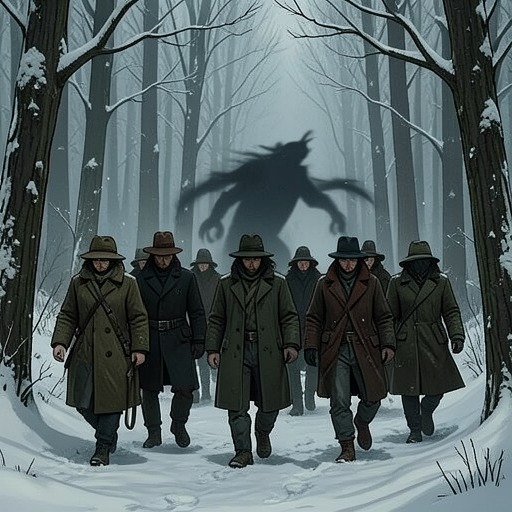
After Heimval’s remains are burned, Ragnar encounters Cnut with a large group of armed men gathered around a makeshift pyre. The flames have already consumed what was left of Heimval. Cnut and the others are elated to see Ragnar, but Ragnar immediately quiets their greetings and tells them what happened in the woods and what threat is approaching. Cnut’s gathering has therefore become the first visible form of collective defense, even though it arrives amid grief and before the full danger has reached them.
Cnut in the Fortress Crisis
Later, within the threatened fortress, Cnut remains an active messenger between Ragnar Stormbringer and the settlement. He approaches Ragnar at speed with a worried expression and insists that there is something Ragnar must see immediately. The urgency of this summons shows that Cnut has learned to act on information rather than wait for authority to interpret events for him. His role is not limited to reporting the original disappearances; he continues to identify developments that may determine whether the people survive.
Ragnar’s exchanges with the old man reveal how limited the fortress’s position has become. Even Ragnar admits that he cannot force his way through the wights to seek aid: there are too many, the distant settlements are many days away by horse, and no horse can pass through the hidden tunnel. Cnut’s presence in this wider crisis is important because he belongs to the community whose survival gives these calculations their urgency. The problem is not simply whether Ragnar can win a fight, but whether any aid can arrive before the people inside the fortress are overwhelmed.
When Ragnar finally returns after the battle, Cnut is among the sentries on the wall-walk. He calls down in relief, saying that it gladdens his heart to see Ragnar and praising the gods and goddesses. Ragnar answers by demanding that the gates be opened and joking that, if the fortress has no meat, honey, and drink, he will ransack it himself. Cnut replies that all three remain available and that no one would dare prevent Ragnar from taking as much as he wants. Their exchange releases tension through familiar camaraderie: after disappearance, pursuit, siege, and slaughter, Cnut helps reassert the ordinary social world of food, welcome, and shared relief.
Relationships and Narrative Role
Cnut’s most consequential relationship is with Ragnar Stormbringer. He approaches Ragnar because Ragnar is both an outsider and a credible protector, but the relationship develops into mutual reliance. Cnut supplies local knowledge, warnings, and access to the community; Ragnar supplies mobility, combat ability, and the confidence to investigate what others fear. Neither can solve the crisis alone. Cnut’s request begins the expedition, while Ragnar’s return repeatedly brings knowledge and action back to the settlers.
Cnut is also connected to Heimval through disagreement that becomes grief. He urges Heimval to wait for companions, but Heimval leaves alone, and Cnut must confront the result of that decision. The dead man’s widow and children remain in Cnut’s account, making clear that the disappearances damage a network of families rather than producing anonymous bodies. His response preserves the social consequences that a purely heroic narrative might otherwise overlook.
Finally, Cnut functions as a bridge between separate circles of knowledge. He recognizes the Mayak tracks, guides Ragnar into the local crisis, gathers armed men after Heimval’s death, summons Ragnar during the fortress emergency, and welcomes him back after the beasts and wights have fought. Through him, the narrative’s network expands from frightened villagers to Ragnar, from Ragnar to Dvar and Belshezan, and from Belshezan to the animals summoned against the wights. Cnut is not the strongest node in that network, but he is one of its essential human connectors.
Change and Significance
Cnut begins as a fearful local man who cannot persuade others to join a search and who will not follow Heimval alone into the wilderness. Yet his caution leads him to seek the right ally, and his repeated acts of communication help transform fear into organized response. He does not become a legendary warrior; his development is instead social and practical. He learns, or demonstrates, that survival depends on recognizing limits, preserving testimony, assembling people, and calling for help before danger becomes irreversible.
His final appearance beside the fortress gates completes that function. Cnut’s relief at Ragnar’s return and his assurance that food and drink are still available mark a return from catastrophe toward communal life. The exchange does not erase the dead or the devastation surrounding the stronghold, but it gives the victory a human aftermath. Cnut represents the settlement’s capacity to remain connected under pressure: cautious without being useless, frightened without surrendering responsibility, and ordinary enough to make survival mean more than merely outlasting the enemy.