Mayak
When the Cold Breathes A Ragnar Stormbringer Tale A Ragnar Stormbringer TaleThe Mayak is a rare, fearsome creature of the far northern wilderness, combining the physical traits of several predators with an unsettling supernatural dimension. Its discovery transforms a series of disappearances from an ordinary frontier mystery into evidence of a danger that can stalk settlements, overpower armed men, and conceal a human intelligence beneath an animal body. Later appearances broaden the creature’s significance: Mayaks are not merely monsters to be hunted, but inhabitants of the forest capable of joining other predators in a united defense against the dead.
Rarity and Reputation
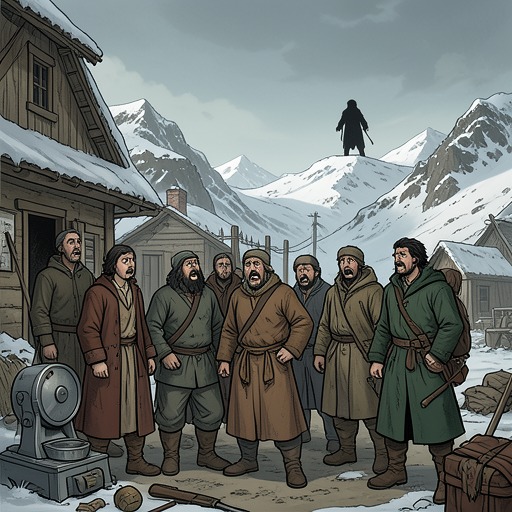
The first evidence of a Mayak is found in the snow near blood and staggered human footprints. Ragnar Stormbringer identifies the marks as belonging to a lone great beast and notes that they are not the prints of a Snow tiger. Cnut explains that no Mayak has been seen in the region for as long as anyone can remember, and not since Jarl Thryggvi came to the northern lands. The tracks therefore signify both an ancient wilderness presence and an extraordinary disturbance in the settlement’s recent history.
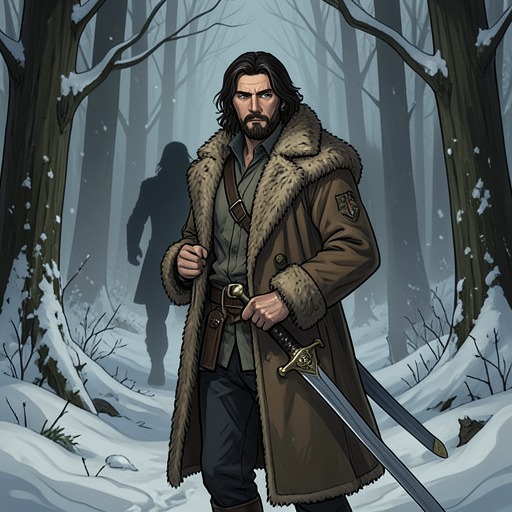
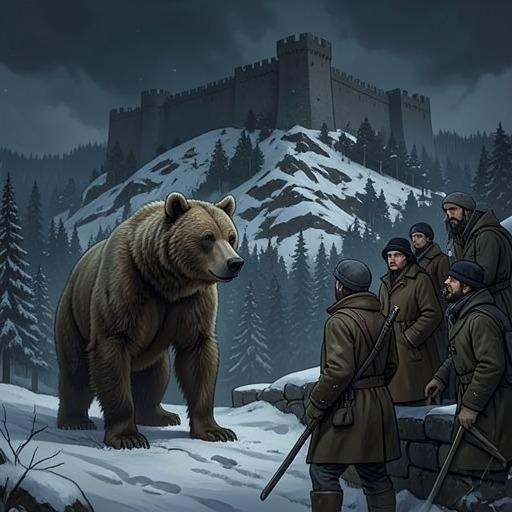
Although Ragnar Stormbringer has never encountered one, he knows enough of the rare animals to understand the danger. He remains calm rather than frightened, but recognizes that caution cannot be relaxed for even a moment: an attack might offer only a heartbeat of warning. The creature’s tracks suggest a mass comparable to that of the great brown bears of Ragnar’s homeland, while its observed violence reveals bone-crushing jaws and claws capable of opening a man’s torso from neck to gut in a single swipe. In open country, Ragnar believes, the Mayak could run down almost anything.
The predator’s first human victim confirms the severity of that reputation. What remains of the man is an eviscerated torso, with every limb severed and the shattered pieces of his skull scattered across the snow. A spear lies beside a severed hand, but its blade carries no blood, showing that the victim never managed even one strike against the beast. Ragnar judges that the killing occurred late that morning and suspects that the Mayak may still be nearby, though the scant flesh left on the bones indicates that it has fed thoroughly.
Physical Form and Hunting Ability
When the Mayak emerges from a cave into moonlight, its camouflage is nearly perfect. Its long body sits low to the ground on four stout legs, each ending in broad sets of claws, and its white fur matches the surrounding snow so closely that it can blend into open terrain. To Ragnar Stormbringer, its shape resembles a wolverine in some respects and a great hunting cat in others. The combination makes the animal difficult to classify: it possesses the compact ferocity of one predator while carrying the speed and killing structure of another.
Its head reinforces that hybrid design. The Mayak has a short, broad snout and huge fangs that catch the moonlight when its jaws part. Yet its considerable bulk does not make it clumsy. It prowls down the slope with smooth, nimble movements, carrying its size with feline grace and ease. This contrast between squat mass and effortless motion gives the creature a distinctive hunting advantage: it can disappear against the snow, approach with controlled silence, and then unleash the strength of a much larger predator.
The Mayak follows Ragnar’s tracks to the place where they end near the cave. Though the wind carries his scent away from it, the creature realizes that prey is close, stopping with a rumbling snarl and searching the area. Ragnar’s confidence does not erase his respect for what confronts him. The bloodshed he has examined has already shown him that the Mayak is not simply large; its jaws can crush bone, its claws can tear through a human body, and its speed makes the open landscape especially dangerous.
The Beast Beneath the Beast
The creature’s eyes reveal that the danger is not purely animal. When Ragnar Stormbringer faces it in combat, a strange quality in its pale gaze troubles him. He recognizes the presence of something more than a feral predator and understands that, if the Mayak survives, many men, women, and children in the surrounding villages may be slaughtered. The encounter consequently becomes more than a contest between hunter and quarry: Ragnar sees himself as the sole barrier between the creature and a mass killing.
After Ragnar wounds it, the Mayak appears to collapse, but its body begins to tremble and draw inward. What first looks like a sinking form is revealed as a shrinking, condensing transformation. Ragnar has witnessed such changes before and keeps his distance, allowing the metamorphosis to run its course. The beast finally becomes a naked man covered in angular symbols branded into his pale skin. Beneath him lies a thick white pelt large enough to wrap around his body like a cloak, and Ragnar knows without examining it that the fur came from a Mayak.
The transformed man preserves the creature’s pale eyes and its hatred. Coughing blood, he fixes his gaze on Ragnar and forms a grin without goodwill; then his light-gray pupils and eye whites fade into a solid coal black. His screech sounds as though many voices have joined in one hellish cry, and the air seems to shimmer while Ragnar is overcome by dizziness. Clinging to the haft of Raven Caller, he recognizes sorcery and struggles to keep his thoughts from dissolving into paralysis. The Mayak is thus exposed as the outward form of a supernatural adversary, linking the predator’s physical violence to magic, deception, and bodily transformation.
Mayaks Among the Forest Predators
The later appearance of several Mayaks changes the meaning of the creature’s earlier association with slaughter. During the attack on Jarl Thryggvi’s Hill-Fort, Belshezan summons a force that includes wolves, bears, Snow tigers, wolverines, Sabre-toothed cats, and at least two Mayaks. Ragnar Stormbringer recognizes the Mayaks by their broad bodies, low stance, and mixture of wolverine and hunting-cat features. Their presence establishes that the supernatural shape encountered earlier is not the only possible expression of the species: Mayaks also belong to the living wilderness and can act as members of a wider animal community.
When the forest predators engage the Wights, the Mayaks fight as direct participants rather than as passive symbols of the wild. They leap upon the dead creatures, driving in claws and fangs amid the general melee, while the Wights answer with their own talons and crushing bites. The struggle costs many animals their lives, but the predators gradually gain the advantage as the Wights’ numbers diminish. The battle also reveals coordinated behavior across species. A Mayak intervenes when a wolf is threatened from two sides, striking one Wight hard enough to engulf and tear into it while the wolf attacks the other. The pair then withdraw together, leaving two headless corpses in the snow. In this scene the Mayak’s power is not confined to solitary hunting; it participates in mutual defense and responds to the peril of another species.
The Mayaks therefore occupy a double position in the narrative. One form is linked to disguise, sorcery, human dismemberment, and the threat of mass slaughter; the others appear among the rightful inhabitants of the forest, answering Belshezan’s summons against entities belonging to the realm of death. After the battle, the surviving animals depart together, with wolves beside bears, wolverines beside Mayaks, and Sabre-toothed cats shoulder to shoulder with Snow tigers. Their silent procession makes the species part of an unprecedented multi-species alliance, while preserving the unsettling ambiguity first created by the transformed Mayak: the same outward creature may signify either predatory menace or the living wilderness’s resistance to the dead.
The Mayak as a Boundary Creature
The Mayak’s importance lies in the unstable boundary it creates between animal life, human identity, and supernatural corruption. Its physical design is already a composite: a low, long body recalls a wolverine, while its fangs, motion, and hunting structure suggest a great cat. That hybridity becomes literal when the wounded creature contracts into the form of a branded man. The transformation does not erase the animal body so much as reveal it as a concealment, making fur, flesh, and sorcery part of the same deceptive surface. The Mayak can therefore signify the wilderness in its own right, yet its likeness can also be appropriated by an intelligent enemy whose blackening eyes and many-voiced screech expose a presence beyond ordinary predation.
The Mayak’s importance lies in the unstable boundary it creates between animal life, human identity, and supernatural corruption. Its physical design is already composite: a low, long body recalls a wolverine, while its fangs, movement, and hunting structure suggest a great cat. That hybridity becomes literal when the wounded creature contracts into the form of a branded man. The transformation does not simply replace the animal body with a human one; it reveals the beast as a concealment, making fur, flesh, and sorcery part of the same deceptive surface. The Mayak can therefore signify the wilderness in its own right, yet its likeness can also be appropriated by an intelligent enemy whose blackening eyes and many-voiced screech expose a presence beyond ordinary predation.
The Mayak as a Boundary Creature
The Mayak’s importance lies in the unstable boundary it creates between animal life, human identity, and supernatural corruption. Its physical design is already composite: a low, long body recalls a wolverine, while its fangs, movement, and hunting structure suggest a great cat. That hybridity becomes literal when the wounded creature contracts into the form of a branded man. The transformation does not simply replace the animal body with a human one; it reveals the beast as a concealment, making fur, flesh, and sorcery part of the same deceptive surface. The Mayak can therefore signify the wilderness in its own right, yet its likeness can also be appropriated by an intelligent enemy whose blackening eyes and many-voiced screech expose a presence beyond ordinary predation.