Ragnar Stormbringer—Belshezan alliance
When the Cold Breathes A Ragnar Stormbringer Tale A Ragnar Stormbringer TaleThe Ragnar Stormbringer–Belshezan alliance is forged in a siege and confirmed in a later meeting. Ragnar arrives seeking help for the people trapped in the stronghold; Belshezan responds by treating his wound and summoning the forest’s predators to fight the Wights. Their alliance is not simply an agreement to fight side by side: Belshezan keeps Ragnar from joining a battle where the animals might mistake him for an enemy, while Ragnar later honors Belshezan as a fellow warrior and ally. Their final exchange makes that bond explicitly mutual.
Formation in a Crisis
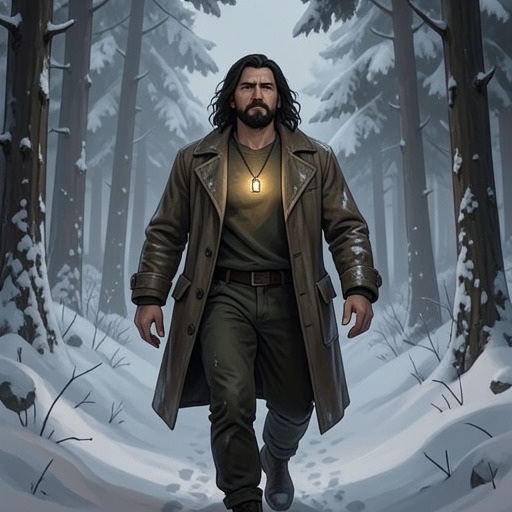
Ragnar’s connection to Belshezan begins before they meet, in the chain of events that leads him to seek the sorcerer. At the site where Heimval has been killed, Ragnar finds a silver amulet bearing the image of the rune for the northern god Tireya. Heimval’s death, and the danger facing the settlers, sharpen Ragnar’s resolve to help them and avenge the dead man. He later carries another amulet, given to him by Dvar, as a token to present to Belshezan. Its significance is practical as well as symbolic: it conveys the seriousness of the peril to someone who might otherwise remain apart from the settlements’ troubles.
When Ragnar finishes recounting the shape-shifter, the Wights, the tunnel, and his journey east with a bite wound, he holds out Dvar’s amulet. Belshezan understands that Dvar would not have entrusted it to Ragnar unless the situation were dire. Rather than demand further proof or delay, he immediately says that Ragnar’s wound must be tended and that a ritual must follow before they go to aid the others. Their first cooperation therefore takes shape through urgent, complementary action: Ragnar brings news and a request for help; Belshezan recognizes the danger and prepares to act.
Care, Trust, and the Summoning
Belshezan treats the bite before leading Ragnar from the cave. He uses materials from a birch-bark basket and a clay jar, then cuts a strip from Ragnar’s cloak with a small bone-handled knife and binds the wound. He tells Ragnar that he will heal and that the treatment will speed the healing of the places where the creature’s claws pierced his chest. Ragnar expresses gratitude, but Belshezan insists there is no time to rest and takes him into the forest. The prompt treatment has observable effects: Ragnar’s dizziness and elevated body heat fade, the wound stops throbbing, and only a dull ache remains.
At a clearing near the cave, objects of bone and wood hang from the branches, and symbols have been carved into the surrounding trunks. Belshezan tells Ragnar to remain at the perimeter and not fear what he sees: he must take another form to summon the aid they need. He walks to the center, raises his arms, speaks a few words in an unfamiliar language, and falls into a trance. Ragnar watches uneasily but with fascination. The ritual turns Belshezan’s promise of help into a visible undertaking, while Ragnar’s role is to witness and trust rather than direct it.
The summons is answered by calls spreading through the woodlands: first a chorus of wolves, then separate roars, some bear-like and others unfamiliar. In bear form, Belshezan growls to draw Ragnar after him. Their coordination is clear, but it is not an invitation to fight shoulder to shoulder. Near the stronghold, Ragnar sees many more Wights among the trees than he had expected and takes out his axe to follow the bear. Belshezan stops him by stamping his forepaws and roaring. Ragnar makes clear that he does not avoid battle, yet Belshezan refuses to let him proceed. The restraint is a point of friction, but the later fighting explains its purpose: the summoned predators treat everything on two legs among the trees as an enemy, and Ragnar could have been caught between them and the Wights.
A Shared Cause, Different Roles
Belshezan continues downhill alone, apparently unconcerned by the approaching Wights. Ragnar soon hears a different wave of howls and roars, then sees animals pour through the trees: sleek predators of several colors, larger dark shapes bounding through the snow, and great white forms running ahead of the rest. Their arrival changes the siege into a battle on a far larger scale than Ragnar could have managed alone.
The animals fight in combinations that overturn their ordinary enmities. A Mayak saves a hard-pressed wolf by striking one Wight while the wolf attacks another. A snow tiger breaks a three-Wight assault on a brown bear, after which tiger and bear attack together. Ragnar recognizes that the predators have put aside hostility for a common purpose: driving the Wights from the lands they hunt. That realization also clarifies why Belshezan barred him from the slope. In the confusion, the summoned animals could not distinguish a human ally from the enemies they had come to destroy.
The Wights do not retreat. They keep fighting with bites and claws until their cries cease, leaving a hush over the fortress and surrounding woods. Ragnar watches the surviving predators gather beyond the gates. He identifies the great bear before them as Belshezan, the one who called them together to defend the land. Once the animals have assembled, Belshezan leads them east in a single multitude: wolves beside bears, wolverines beside Mayaks, and sabre-toothed cats alongside snow tigers. The alliance between the two men thus operates through different forms of service. Ragnar brings the danger to Belshezan and remains present at the stronghold; Belshezan’s response is to mobilize a force that Ragnar could neither summon nor safely direct.
Recognition and Reciprocal Allegiance
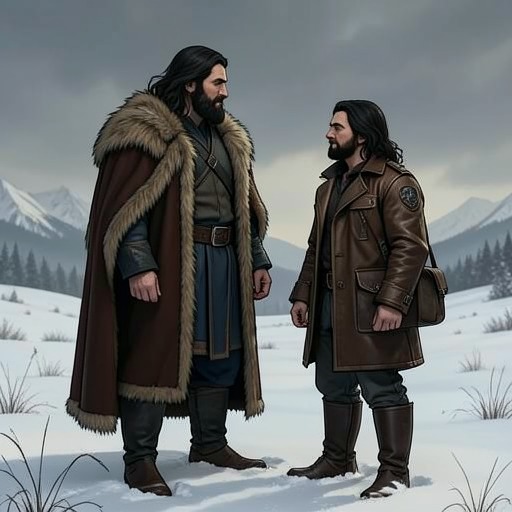
Ragnar and Belshezan meet again after their shared crisis. Ragnar says he has made two journeys to the area since their last parting and had not found Belshezan there. Belshezan offers little explanation for his absence: he had many matters to attend to, including making certain that nothing remained beneath the barrows, and then returned to the cave. He has little interest in village and settlement affairs and is content to live as he chooses. This distance from settled life sets a limit on the alliance; Belshezan does not present himself as a permanent member of the community or as someone who will routinely involve himself in its affairs.
Even so, Ragnar has come to thank him. He explains that Belshezan left before Ragnar could come down the hill, and describes his gratitude as honoring a fellow warrior and ally who came to his aid in a great hour of need. Belshezan turns the recognition back toward Ragnar, saying that Ragnar had also come to his aid. The exchange does not reduce their bond to a tally of favors. Instead, each sees the other as more than the recipient of help: both have acted in a perilous moment, and each regards the other’s action as grounds for allegiance.
Their conversation ends by making the relationship an explicit promise rather than a bond confined to the earlier battle. Belshezan says Ragnar will always have an ally in him if he returns to those lands, and Ragnar answers with the same pledge. Ragnar must leave, with a full day’s march ahead, but says that visiting Belshezan has left him more at ease. Their alliance consequently joins a concrete history of assistance to an open-ended commitment: Belshezan retains his solitary way of life, while both men recognize that, should their paths cross again, neither will face the other as a stranger.