Raven Caller
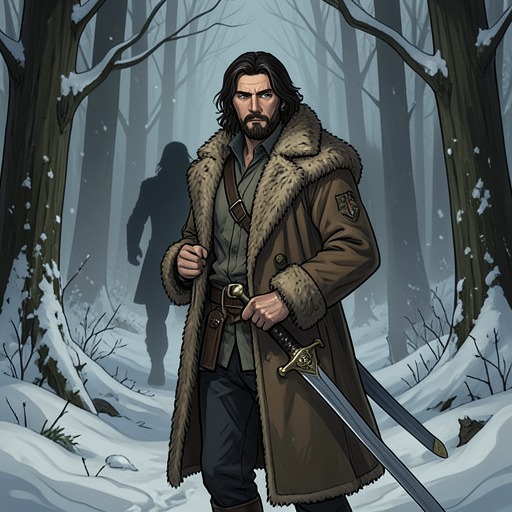
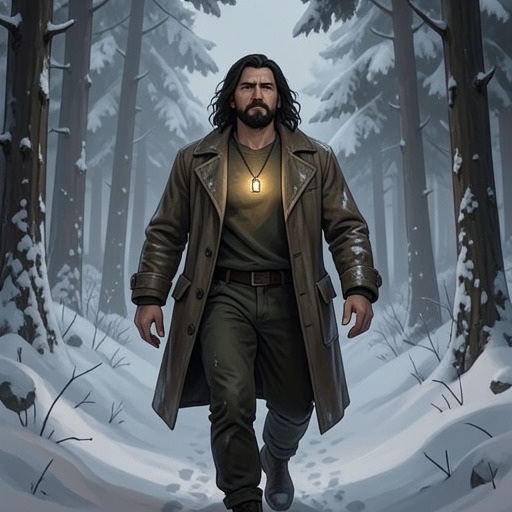
When the Cold Breathes A Ragnar Stormbringer Tale A Ragnar Stormbringer TaleRaven Caller is Ragnar Stormbringer’s great war axe, the weapon that accompanies him through the northern wilderness, the Mayak hunt, the assault of the wights, and his return to the fortress. Its decisive significance lies in the way it joins physical violence to mental discipline: Ragnar does not merely wield the axe to kill, but repeatedly uses its weight, haft, and familiar movements to preserve his judgment when fear, sorcery, or overwhelming numbers threaten to master him.
Identity and Presence
Raven Caller first appears as a substantial, dependable weapon held in readiness against the rare beasts of the far north. When Ragnar notices several dark objects lying across the snow and sees human and animal tracks converging on them, he tightens his grip on the axe’s haft before approaching. He keeps the weapon raised in both hands while investigating the remains, treating it as an immediate answer to the possibility that the Mayak is still stalking nearby. The axe therefore enters the narrative not as an ornament or a named relic whose history is explained, but as a practical extension of vigilance: its presence makes the dangerous approach possible without removing the danger.
The weapon also gives Ragnar’s courage a language that others can understand. After discovering the remains of Heimval and sending Cnut back toward the villages, Ragnar acknowledges that the Mayak may still be close. When he says, “I have Raven Caller with me,” he presents the axe as the condition that makes confrontation possible, but immediately refuses to treat that condition as a guarantee of victory: “That gives me a chance ... and a chance is all I ever need.” The weapon’s significance is thus defined by possibility rather than certainty. It cannot promise safety, yet it permits Ragnar to meet a threat that would drive ordinary men toward retreat.
The Mayak Hunt
Raven Caller becomes most visibly consequential when Ragnar chooses to confront the Mayak. Having hidden near the cave entrance, Ragnar sees that the creature is moments from discovering him. He removes the brooch holding his cloak, lets the cloak fall, and then charges from the trees roaring at the top of his lungs, gripping Raven Caller with both hands. The axe transforms concealment into an intentional provocation: instead of waiting passively for the beast to find him, Ragnar uses the weapon as the foremost sign of an attack the Mayak cannot mistake.
When the Mayak lunges, Ragnar raises Raven Caller above his head and brings the blade down with all the force he can muster. The creature moves its head at the last instant and avoids a split skull, but the axe still bites through its thick white fur and deep into the sinew, muscle, and flesh between the neck and left shoulder. The blow does not end the fight, yet it changes the encounter from a hunt in which Ragnar is prey into a close struggle in which the beast can be wounded. Raven Caller’s effectiveness depends not only on sharpness but on timing, commitment, and Ragnar’s willingness to meet the Mayak’s charge rather than evade it.
Sorcery and Mental Discipline
The axe’s most important function appears in Ragnar’s confrontation with the shape-shifting sorcerer. Sorcery clouds his mind with a fog that threatens to dissolve thought into paralysis. Clenching Raven Caller’s haft, Ragnar recognizes the attack and searches for a way to overcome it. He deliberately thinks through movements, possible swings, strikes, and fighting stances, invoking the ordered logic of combat against the miasma in his mind.
The tactile familiarity of Raven Caller reinforces that recovery. The feel of its haft in Ragnar’s hands helps the order he is constructing gain a hold until the power working against him breaks. At the instant clarity returns, he raises the axe and kills the laughing figure by driving the blade into the man’s face. The weapon is therefore both instrument and anchor: its physical contact recalls a sequence of trained actions when language, perception, and self-command are under assault. The scene gives Raven Caller a role beyond ordinary equipment, while keeping that role materially grounded in grip, movement, and remembered technique.
Ragnar then uses the axe to prevent the sorcerer’s body from reconstituting. He tears the blade free, severs the corpse’s neck, and hacks the body apart until he judges it almost impossible for the dead man to assume any form again. He scatters the limbs in different directions after kicking the separated halves across the snow. In this aftermath, Raven Caller is not simply a means of defeating an enemy; it is the tool by which Ragnar attempts to make the defeat final, countering the shapeshifter’s defining capacity with dismemberment and dispersal.
The Wight Assault
During the assault on Jarl Thryggvi's Hill-Fort, Raven Caller becomes a weapon of containment as well as slaughter. The wights can endure wounds that would kill living people: axes remain buried in their skulls, throats are opened, and bodies are gutted without stopping their advance. Even creatures missing an eye, hand, or arm continue climbing toward the defenders. Against enemies whose damaged bodies remain active, the axe's work must be judged by whether it removes a threat from the wall rather than merely injures it.
When a wight reaches the palisade, Ragnar swings Raven Caller hard enough to lop off its head. The headless body and severed head tumble down the rampart into the ditch, knocking other attackers from the slope and adding their weight to the heap below. Later, after a wight tears away the nose and most of a man's facial skin, Ragnar cannot save the dying defender, but he answers the attack immediately: he advances in fury and beheads the assailant with one blow. Grabbing the clammy corpse by the shoulder, he hurls it down the slope, dislodging more wights from the rampart. The axe thus serves the living defenders by interrupting the press of bodies, turning each decisive cut into a momentary clearing of space.
Wight Pursuit and the Fortress Aftermath
Raven Caller remains essential after the immediate defense of Jarl Thryggvi's Hill-Fort, when Ragnar leaves the concealed entrance and tries to pass through the forest. A shriek reveals two wights approaching between the trees, and Ragnar recognizes that he cannot outrun them. Holding the axe firmly, he preserves his strength and waits until the separation between the creatures gives him the chance to fight them individually. Raven Caller makes that tactical patience possible: its presence turns flight into a controlled engagement, allowing Ragnar to meet the first attacker before the second can overwhelm him.
The first wight survives long enough to crawl after Ragnar with one leg and both arms, its cold-lit eyes fixed on him. When Ragnar turns, he does not merely repel it. With a crazed grin, he grips Raven Caller in both hands, leaps toward the creature, and answers its guttural screech with a concentrated torrent of blows. The axe reduces the wight to pieces within moments. This repeated chopping matters because the wights have already been shown to continue fighting despite wounds that would kill ordinary people; against such bodies, Raven Caller must destroy rather than simply strike. When the clearing falls silent, Ragnar lowers the weapon and surveys the surrounding carnage with a trace of a smile, the axe marking the completion of another violent passage through the undead threat.
The Weapon as Companion and Continuity
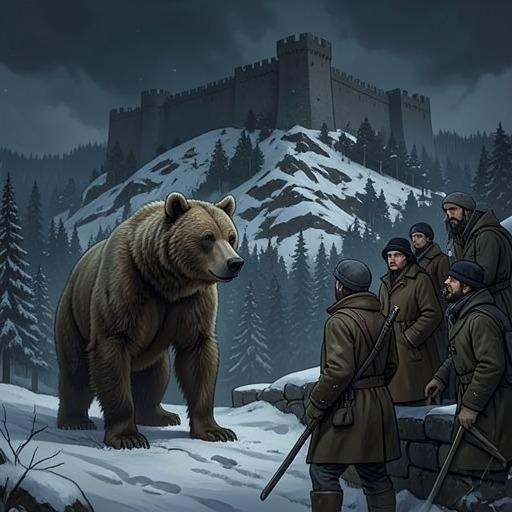
Raven Caller remains with Ragnar beyond the individual fights, carrying the memory of each ordeal into the changing circumstances of his journey. On the night when Belshezan approaches Jarl Thryggvi's Hill-Fort in the form of a great bear, the distant shrieks of the wights warn that the fortress is near, and Ragnar keeps the axe in hand as a precaution while following the animal through the hills. He does not know whether the bear is leading him toward safety or into a mass of enemies, so Raven Caller occupies the narrow space between trust and readiness: Ragnar accepts Belshezan's direction, but remains physically prepared for the danger that may emerge from the darkness.
When Belshezan’s gesture persuades Ragnar not to enter the fortress immediately, Raven Caller also becomes a measure of disciplined trust. Ragnar insists that he does not avoid battles and initially wants to go down the hill, but after understanding the bear’s warning, he nods, slides the axe back into the loop at his belt, and steps away. The action is significant because readiness no longer requires immediate violence. Raven Caller remains available, yet Ragnar accepts that the sorcerer’s plan demands restraint. The weapon’s presence therefore accommodates both impulses that define Ragnar’s conduct: the refusal to retreat from danger and the ability to suspend combat when another course is judged wiser.
After Belshezan descends and summons the beasts with a sustained roar, Raven Caller accompanies Ragnar into the aftermath rather than disappearing from the narrative once the battle has been won. Ragnar takes up the axe and walks down the hill toward the fortress gates, crossing a vast field of carnage left by the conflict between the beasts and the wights. He keeps it in hand while examining the corpses, even though nothing moves around him. The axe preserves a defensive tension within the apparent victory: the battlefield is quiet, but Ragnar does not assume that quiet means safety.
That continuity reaches its most intimate form when Ragnar is finally given food and rest inside the fortress. After eating salted fish, mushroom soup, honey, berries, hazelnuts, and several cups of kvas, he returns to the hut where he has been sleeping. He removes his cloak, boots, and main tunic, places Raven Caller beside him, and lies down before falling into much-needed sleep. The weapon is not abandoned at the threshold of exhaustion; it is brought into the sleeping space and set within immediate reach. Its position beside Ragnar connects the public violence of the ramparts with the private vulnerability of rest, showing how completely vigilance has entered the material arrangement of his life.
Symbol of Resolve
Raven Caller ultimately becomes the clearest physical expression of Ragnar’s continuing identity. After surviving the Mayak, the shape-shifting sorcerer, the wights, and the battle around the fortress, Ragnar reflects that his path will continue into an unknowable future and that an even greater challenge may already be near. He does not take comfort in the possibility that later ages might tell stories about him; what matters is the next test, not posthumous reputation. His certainty is narrower and more demanding: he will meet whatever comes with a raging fire in his heart and Raven Caller in his hands.
The phrase binds inward resolve to outward equipment. The fire belongs to Ragnar’s will, while the axe supplies the weight, edge, and practiced order through which that will acts. Raven Caller has not made him invulnerable, and its earlier blows have not guaranteed effortless victories. It has instead accompanied decisions to approach the remains of Heimval, challenge the Mayak, resist sorcery, break the bodies of the wights, trust Belshezan’s warning, and return to the fortress after the beasts’ departure. As Ragnar leaves Jarl Thryggvi’s settlement when winter gives way toward spring, carrying only essential items in the pouches at his belt, Raven Caller stands as the durable remainder of the northern ordeal: a weapon carried forward, and a material pledge that the next challenge will be met rather than evaded.
Symbol of Resolve
Raven Caller ultimately becomes the clearest physical expression of Ragnar Stormbringer’s continuing identity. After surviving the Mayak, the shape-shifting sorcerer, the wights, and the battle around the fortress, Ragnar reflects that his path will continue into an unknowable future and that an even greater challenge may already be near. He does not take comfort in the possibility that later ages might tell stories about him; what matters is the next test, not posthumous reputation. His certainty is narrower and more demanding: he will meet whatever comes with a raging fire in his heart and Raven Caller in his hands.
The phrase binds inward resolve to outward equipment. The fire belongs to Ragnar Stormbringer’s will, while the axe supplies the weight, edge, and practiced order through which that will acts. Raven Caller has not made him invulnerable, and its earlier blows have not guaranteed effortless victories. It has instead accompanied decisions to approach the remains of Heimval, challenge the Mayak, resist sorcery, break the bodies of the wights, trust Belshezan’s warning, and return to the fortress after the beasts’ departure. As Ragnar Stormbringer leaves Jarl Thryggvi’s settlement when winter gives way toward spring, carrying only essential items in the pouches at his belt, Raven Caller stands as the durable remainder of the northern ordeal: a weapon carried forward, and a material pledge that the next challenge will be met rather than evaded.