Winter
When the Cold Breathes A Ragnar Stormbringer Tale A Ragnar Stormbringer TaleWinter frames Ragnar’s northern stay as a season of shelter turned into ordeal. He initially delays his southward journey to avoid traveling through the far north at its harshest, but the same snow, cold, and isolation later make the Mayak’s trail dangerous, intensify the Wights’ siege, and leave the besieged settlement short of resources. The season ends only when spring draws near and Ragnar sets out again.
A Season of Shelter
Ragnar chooses to remain for a time as a guest of Jarl Thryggvi rather than begin a southward trek in the depths of the northern winter. His decision is practical, but also comfortable: he has grown fond of the region’s rye-grain drink, honey, pickled cabbage, and other local fare, and prefers warm fires, food, and companionship to the bitter cold and dangers of pressing on. With the worst of winter expected to pass soon, he anticipates resuming his journey refreshed and in good health.
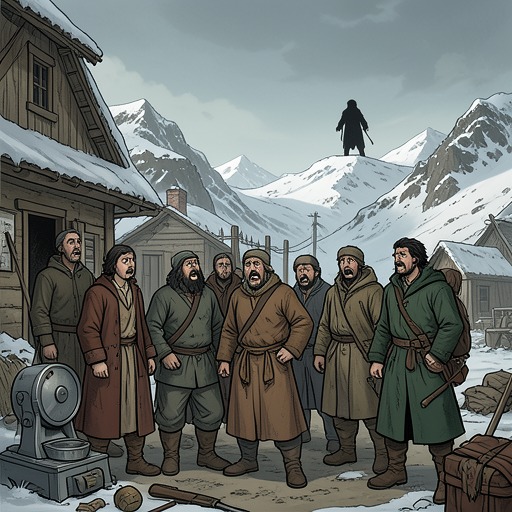
The settlement that hosts him stands along a route used by northerners preparing to cross the river-cut grasslands to the south. It offers rest and sustenance in an otherwise harsh, frigid wilderness. Its history is one of displacement and accommodation: Jarl Thryggvi, driven from his lands after a conflict with a northern king, traveled east with his family, retainers, and loyal warriors. They settled among the remnants of a forest-dwelling tribe, whose people welcomed the jarl in hopes of ending their longstanding hardship. With the tribe’s assent, he came to rule them; over the following years, his followers and the tribespeople established villages and homesteads. Winter makes this outlying community a refuge on the route south, while also emphasizing how exposed it is to the surrounding wilderness.
Cold as a Physical Threat
The change from sheltered winter to dangerous exposure comes with Cnut’s urgent appeal. As Ragnar investigates the Mayak, snow provides both evidence and risk: human and animal tracks lead toward scattered remains, and Ragnar follows the predator’s broad paw prints deeper into the woods. The kill is recent, perhaps from late that morning, and the scant flesh left on the bones suggests the beast has fed thoroughly. Among the remains Ragnar finds a silver amulet bearing the rune of the northern god Tireya. Cnut recognizes it as Heimval’s, and laments that the dead man has left a wife and two healthy children. Ragnar resolves to avenge him and aid the settlers, honoring Heimval’s courage even while judging his decision to face the wilderness alone with a family to care for as reckless.
The pursuit turns into a night vigil. The Mayak’s tracks climb a hill to a cave entrance among jutting rocks; unwilling to confront the predator in its lair, Ragnar backs away and hides among pines within sight of the opening. Twilight gives way to night, but a bright full moon and snow-covered ground preserve visibility across the woods. They do not make the cold less dangerous: gusts lash Ragnar’s face as the chill deepens. Winter here is not simply scenery around a hunt. It limits what can be seen and endured, while the tracks in the snow offer Ragnar his best means of following the creature without losing his way.
The Siege and Its Compounding Hardships
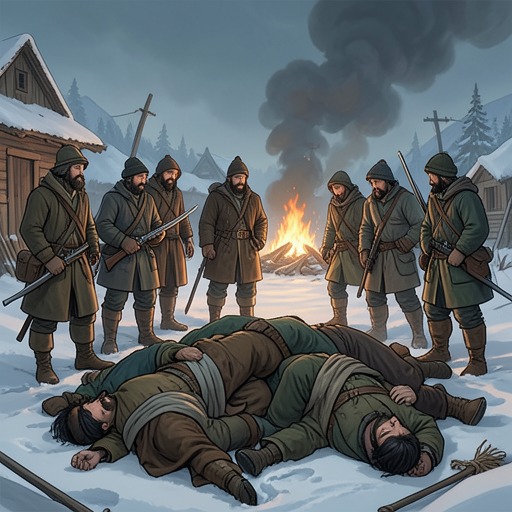
Later, the season’s cold becomes part of the larger crisis at Jarl Thryggvi’s Hill-Fort. Ragnar and the others identify the attackers as Wights, likely raised from barrows by dark sorcery. As the entities gather below the fort, their numbers greatly exceed those of the villagers. The horde swarms the ditch and climbs the rampart with unsettling ease, bringing the danger directly to the settlement that had offered shelter.
The fort’s defenses cannot resolve the siege’s practical problems. Too little food has been brought inside to sustain the occupants for long, while the Wights outside do not need food or rest. Nor can the villagers safely fight their way out, and no reachable force is strong enough to break the encirclement. Winter adds a second pressure: the occupants lack deep stocks of wood, and cannot go beyond the walls to cut more. As the cold continues, fuel will become another dwindling necessity. Howls, wails, and screeches from beyond the ramparts remind those inside that the enemy cannot be bargained with or bribed. The fort protects the villagers from immediate assault, but snowbound exposure and scarcity threaten to make endurance impossible.
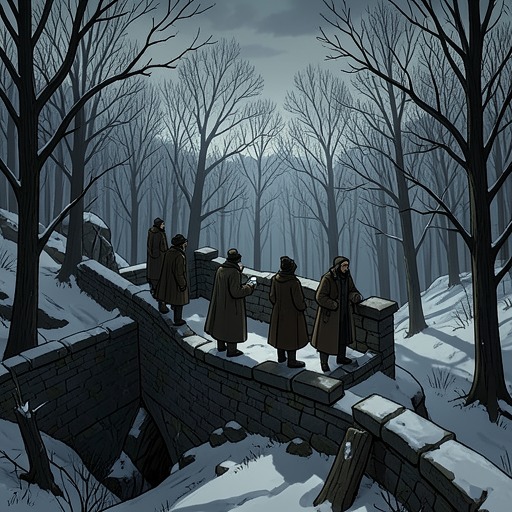
The danger also draws attention to the old landscape beneath the settlement. An elderly tribesman explains that the fort was built on an ancient site where his people had dug an outer ditch and formed an earthen rampart; as a child, he discovered a concealed tunnel leading from inside the fort to a place deep among the trees. He cannot guarantee that it reaches beyond the ring of Wights, and Ragnar recognizes that it could also provide a way into the fort if the creatures find it. In a winter siege, this buried passage offers a possible route through the encirclement, but carries a corresponding risk.
From Winter Crisis to Spring Departure
The season’s cold does not prevent a reversal in the battle. Belshezan’s summoned beasts join the struggle against the Wights, and Ragnar sees predators aid one another: a Mayak saves a hard-pressed wolf, while a snow tiger breaks a group of attackers away from a bear. Their cooperation astonishes him; natural enmities give way to a common effort against beings that belong to the realm of death. The fighting continues until the Wights, which do not flee, are cut down to the last. Winter’s wilderness, initially a source of threat and isolation, becomes the ground on which the animals’ alliance helps end the siege.
When winter at last draws toward its end and spring looms near, Ragnar leaves Jarl Thryggvi’s settlement to continue south with only essential items in his belt pouches. He first takes a different route west, then, after finding a familiar stream running with clear water, turns north to revisit the woodland sorcerer who aided the villagers. The shift in season marks a change in his movement: the period when he had chosen to stay sheltered is over, and the journey he postponed can resume. Yet his return to the cave shows that departure does not close every matter raised during the winter. Spring opens the road onward while drawing Ragnar back toward an unanswered question.