A Sand County Almanac
Where the Crawdads SingA Sand County Almanac is the first book Kya learns to read, using Tate’s father’s copy during lessons Tate gives her in the marsh. It is both a practical primer and a work of natural history: its opening sentence helps Kya cross the threshold into written language, while its accounts of wetlands, soil, and wildlife deepen her knowledge of the living world around her. The book’s importance lies in that double passage, from letters to meaning and from familiar surroundings to a wider understanding of ecological life.
The First Book and the First Sentence
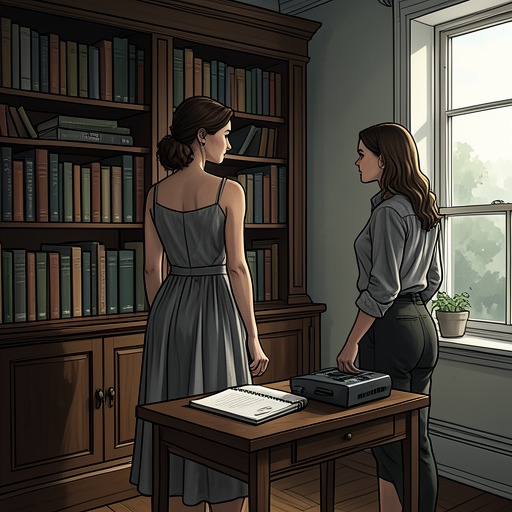
Tate has no grammar reader when he begins teaching Kya, so he chooses his father’s copy of A Sand County Almanac as her first book. He points to its opening sentence and asks her to read it aloud. The first word, “There,” sends her back to practicing the alphabet and the sounds of individual letters. Tate patiently explains the sound of “th”; when she finally manages it, Kya throws up her arms and laughs, and Tate watches her beam with pleasure.
She then works her way slowly through the whole sentence: “There are some who can live without wild things, and some who cannot.” The effort makes the sentence more than a sample of print. Kya has to assemble it letter by letter, and her response—an astonished “Oh”—marks the moment when reading begins to open into comprehension. Tate tells her that she can read and that there will never again be a time when she cannot. The book thus enters her life at the point where a skill becomes a lasting possibility.
A Text Read Through the Marsh
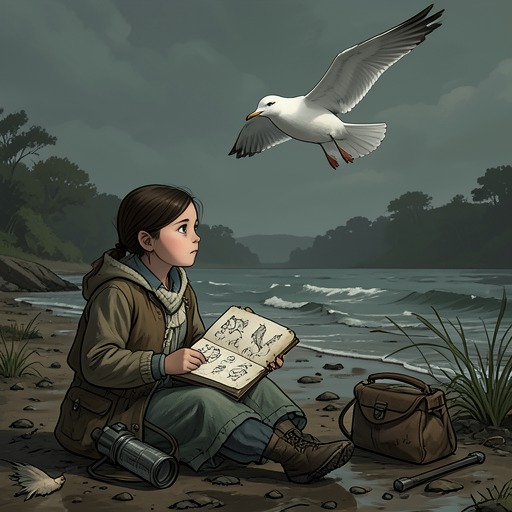
Over the following days, Tate teaches Kya to read words about Geese and cranes while the birds are real presences around them. Lessons take place in the shade on an oak knee or in the sun on the shore; the book’s subjects are not remote from their setting. Kya can connect what she reads to what she sees and hears, and she wonders what it would mean if the music of the Geese were ever gone. Reading gives her questions about the natural world as well as names for it.
The lessons become a recurring part of their visits. Tate comes to Kya’s place several times a week, between helping his father and playing baseball with his friends. As she weeds the garden, feeds the chickens, or searches for shells, Kya listens for his boat coming up the channel. The book is therefore associated not only with solitary study but with a regular exchange: Tate brings instruction, and Kya attends to both the printed words and the world they describe.
At night she revisits the lessons at the kitchen table by kerosene lamp, carefully writing and repeating each word. Tate explains that long words are little ones strung together, so she does not let their length frighten her; she moves directly from learning “sat” to attempting “Pleistocene.” Reading becomes the most enjoyable activity she has known. The book is part of this broader practice of learning, which continues beyond the hours spent with Tate and into Kya’s own effort to master words.
Ecological Knowledge in the Lessons
By mid-August, after lessons through the summer at the tumbledown cabin, Kya and Tate have read through the book. She still cannot read every word, but she understands most of it. Through Leopold’s account, she learns that floodplains are living extensions of rivers, liable to be reclaimed by the water, and that people living on them are exposed to that changing boundary. The book gives language to the dependence between land and water rather than treating the ground as separate from the river that shapes it.
It also teaches her where Geese go in winter and what their music means. Its descriptions of soil convey that soil is packed with life and is among the Earth’s most precious riches. Kya learns that draining wetlands can dry land for miles beyond them, killing plants and animals along with the water. The book further describes seeds that remain dormant in desiccated earth for decades and begin to grow when water returns. These lessons connect the marsh’s visible life to processes that may be hidden or delayed: wetlands sustain more than the ground immediately beside the water, and apparent barrenness need not mean that life has vanished.
The knowledge feels to Kya like a discovery of truths that should be widely known but somehow remain concealed, like seeds waiting in dry earth. This response is grounded in the contrast between the book’s lessons and the familiarity of the landscape around her: ecological principles become newly legible even though their evidence lies all around her. The book does not replace her experience of the marsh; it helps her interpret that experience and recognize connections that direct observation alone had not yet named.
From Reading to Naming
The book’s influence also belongs to Kya’s growing ability to work with written language. Once she can read, she labels her treasured specimens: feathers, insects, shells, and flowers. She consults Ma’s books to find the spellings and writes each name carefully on her brown-paper-bag paintings. That later practice is distinct from reading Leopold, but it extends the literacy begun with his opening sentence. Words let Kya organize and preserve her attention to the things she collects.
A Sand County Almanac therefore occupies a particular place between instruction and independent learning. It is borrowed from Tate’s father, introduced because there is no grammar reader, and read together in lessons that gradually take root in Kya’s solitary study. Its content also meets the conditions of her life: the book’s accounts of rivers, wetlands, soil, and birds are relevant to the landscape she inhabits. The first sentence gives her an entry into reading; the rest of the book demonstrates how reading can make a familiar world more intelligible. In Kya’s education, the text and the marsh continually illuminate one another.