Abandoned Fire Tower
Where the Crawdads SingThe Abandoned Fire Tower is a decaying structure at the meeting point of bog, forest, and marsh, a place where a high, open view conceals a lethal drop. Its platform and floor grates make it both a landmark in Kya Clark and Chase Andrews’s story and the physical center of the investigation into Chase’s death on October 30, 1969.
Setting and Approach
The tower stands in a low, swampy forest beyond Barkley Cove, above a bog whose dark mud and tendrils of mist contrast with the broad, bright marsh beyond. On the morning Chase’s body is found, the forest around the tower is hushed except for crows. Two ten-year-old boys, Benji Mason and Steve Long, ride out from the village and climb its damp staircase. From the third switchback, they spot Chase’s denim jacket; after reaching the ground and circling the tower’s base, they find him lying in the mud.
The site is difficult to separate from the landscape that surrounds it. When Chase later brings Kya to the tower, they travel north past the village, land at a small bay tucked into deep forest, and follow an overgrown path through wax myrtle and prickly holly. Thin runnels of backwater thread beneath the brush before the path reaches the true swamp. Kya has not visited this forest before: it lies across the village, close to people, beyond the familiar routes of her marsh life. From the tower’s fifth switchback, she sees oak forest extending west and, in the other directions, slipstreams, lagoons, creeks, and estuaries crossing green grass toward the sea. The height gathers the landscape into a view she has never had before.
Structure and Physical Danger
The tower is old enough to show its decay in its basic supports and walking surfaces. Its rough-cut poles straddle the bog; damp rot has eaten along the beams, and the stairs switch back as the structure narrows toward the top. At the platform, an iron grate covers the stairwell. The platform itself combines splintered, grayed wooden planks with square grates around its perimeter. When the grates are down, they can be walked on; if one is left open, a person can fall sixty feet to the ground.
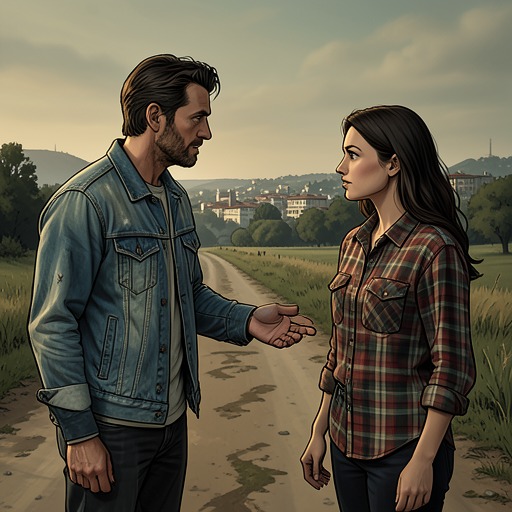
That danger is present even during Kya and Chase’s visit. After opening the stairwell grate and climbing onto the platform, Chase lowers it back into place. Before stepping onto it, Kya tests the grate with her toes. Chase reassures her, then leads her to the railing. Their view of two red-tailed hawks passing at eye level briefly makes the platform seem less like a decaying structure above a bog than an elevated vantage within the birds’ airspace. But Kya’s cautious test also establishes that the floor cannot simply be trusted: the danger is built into the tower’s ordinary arrangement.
Chase Andrews’s Death and Discovery
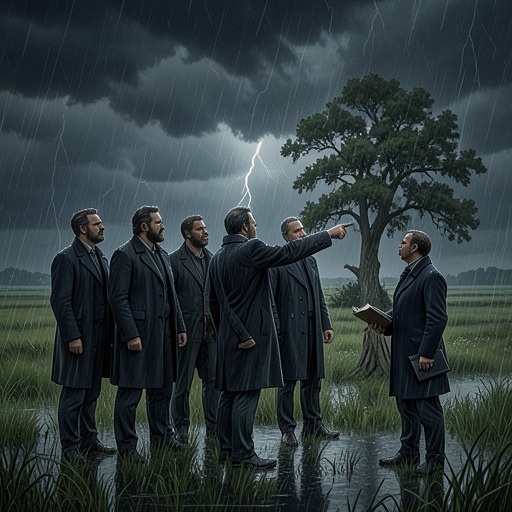
On the morning of October 30, 1969, the tower and bog together conceal the immediate circumstances of Chase’s death. His body lies flat on its back, his left leg turned forward from the knee, with his eyes and mouth open. The boys retreat when they recognize him. Later, Ed Jackson points out that their deep tracks cross the mud toward the body, while no other fresh footprints lead to it, away from it, or toward the stairs. If someone had been with Chase after he fell, the sheriff reasons, that person would likely have approached or moved around him. The missing tracks also leave an unanswered question: how did Chase cross the mud and reach the tower without leaving footprints?
The investigators climb the stairs and find one of the perimeter grates open. Beneath it, Chase’s body has left a clear outline in the mud; yellowish goo and duckweed have splashed around the impression. A support beam beneath the opening is bashed in and splintered, consistent with Chase striking it as he fell. The open grate creates two competing possibilities. A fall through it could account for his death, but the investigators doubt that Chase could have closed the grate after falling. Ed therefore considers that someone might have left it open to make a deliberate push look accidental. The tower does not settle the question; its construction makes both the fall and the possibility of staging legible.
The Tower as Investigative Evidence
The tower’s role in the case extends beyond the discovery of Chase’s body. Joe Purdue proposes that a woman could have lured Chase to the platform, opened the grate before he arrived, and pushed him through when he approached in the dark. Ed regards the scenario as possible but, at that point, has little beyond the absent shell necklace to support it. The physical layout supplies a possible method, not proof of who used it.
Later, a shrimper tells the sheriff that at about 1:45 a.m. on the night Chase died, he and a colleague saw a boat motoring toward the fire tower. They believed the boat was Kya’s and remembered that it had no lights on; only afterward did the witness connect the sighting to Chase’s death. The report places Kya’s boat on a route that could have taken it to the bay near the tower. Fibers from her hat are also reported on Chase’s jacket, while the shell necklace she made for him has disappeared. Together, these clues strengthen the tower’s place in the prosecution’s theory, but they remain circumstantial links to a location whose most decisive evidence—the open grate and the absence of other footprints—admits inference rather than identifying an actor.
Narrative Significance
The tower gives the story a stark vertical contrast: the marsh spreads outward in waterways and grass, while the structure narrows upward to a platform bordered by openings through which a person can fall. It first offers Kya a new, panoramic view of the world she knows, during a visit in which Chase apologizes and she remains silent and guarded. Later, that same platform is reconstructed as the site of his death. The shift from lookout to suspected murder scene makes the tower’s physical features carry the investigation: a grate that can be tested, opened, and left open; a drop that can kill; and mud that preserves some tracks while withholding others. Its elevation gives the characters a commanding view, but it does not give the authorities a complete account of what happened.