Amanda Hamilton's hidden poetry manuscript
Where the Crawdads SingAmanda Hamilton's hidden poetry manuscript is the collection of poems Kya Clark wrote under the name Amanda Hamilton and concealed beneath the floorboards of her home. Discovered by Tate Walker after her death, it changes the meaning of the name attached to a local poet and of a small box stored alongside the pages: within the same hidden compartment, Tate finds the shell necklace Chase Andrews wore until the night he died. The manuscript is therefore both a private record of Kya’s inner life and part of the revelation that she killed Chase.
Hidden in the House
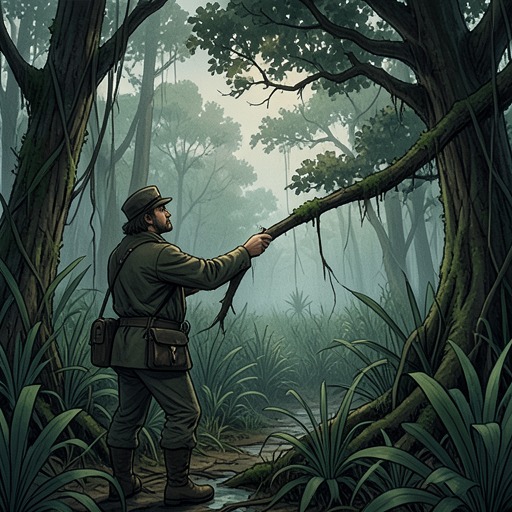
Late in the day, while stirring corn mush for the gulls, Tate notices that the linoleum does not run beneath the woodpile and the old stove. Kya had kept firewood stacked high even in summer, but now the pile has dwindled. Moving the remaining logs, he sees the edge of a cutout in the floorboard and opens a trapdoor in the plywood. In the space between the joists sits a dusty cardboard box.
The hiding place is made from the ordinary architecture of Kya’s home: concealed below the boards and partly covered by the wood kept for the stove. Inside the old box are scores of manila envelopes marked with the initials A.H. and a smaller box. The manuscripts are not simply a handful of stray verses. They include completed poems and unfinished drafts, with lines crossed out and words rewritten in the margin. Kya has kept published clippings by Amanda Hamilton, too, so Tate finds both the public traces of the poet and the private labor behind them.
The discovery takes place among other remnants of Kya’s life. Earlier, Tate had opened her old cigar box, where he found feathers, insect wings, seeds, the ashes from Ma’s letter, and a bottle of Barely Pink nail polish. The poetry is hidden separately, under the kitchen floor, but its concealment extends the same pattern: intimate pieces of Kya’s past survive in carefully kept objects and secluded spaces. The trapdoor turns the house itself into a repository for a life she did not openly disclose.
Kya and Amanda Hamilton
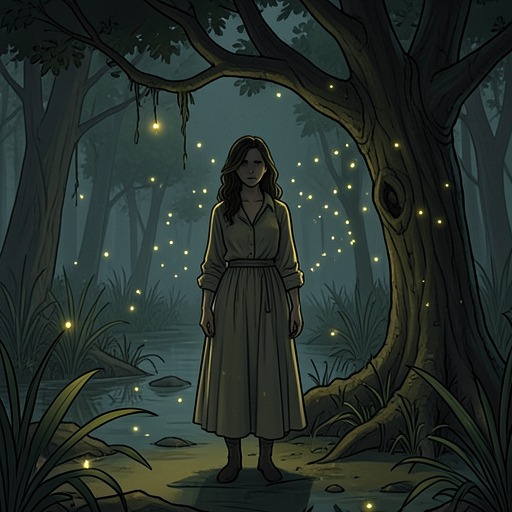
Tate recognizes the poems as the work of Amanda Hamilton, a local poet whose simple verses had appeared in regional magazines. He had thought the published poems weak, and Kya had saved their clippings; only after finding the manuscript does he understand that the name concealed its author. The pages carry Kya’s handwriting, including her revisions to drafts. The revelation is direct: Amanda Hamilton was Kya.
The envelopes suggest that Kya submitted poems to local publications through the rusty mailbox, using a pen name to keep her identity safe. Tate can only infer the route from the evidence he finds; the manuscript does not provide a full account of every submission. Yet the difference between the public byline and the hidden pages is striking. Kya’s poems circulated under another name, while the work that made them hers remained out of sight in her own home.
The poems are mostly about nature or love. Tate understands the secret authorship not only as a literary disguise but as a possible form of reaching beyond the life Kya shared with the marsh and its birds. The poems gave her words somewhere to go, though the evidence does not establish who, if anyone, knew their author. In that sense the manuscript records both expression and separation: Kya made work for readers while withholding the name that would connect it openly to her.
The Poem and the Necklace
Among the pages is one poem folded neatly inside its own envelope, titled “The Firefly.” Tate reads it twice. The surviving lines describe luring a male with the ease of flashing valentines and conclude, “To whatever it was before it began. A.H.” The poem’s image of attraction as a lure gives the discovery a sharp connection to Chase’s death, without making the poem itself a written confession.
Tate then opens the smaller box. On cotton inside lies the shell necklace Chase wore until the night he died. Its presence beside the poems changes the stakes of the find: the box joins Kya’s concealed literary identity to an object connected directly with Chase. Tate imagines her traveling at night, timing her actions around the moon and the tide, calling to Chase, pushing him backward, then retrieving the necklace from the mud and covering her footprints. The account presents this as Tate’s reconstruction as he takes in the evidence, not as a separate confession by Kya.
Destruction and Afterlife
Tate breaks kindling and builds a fire in the old woodstove. He burns the poems envelope by envelope, recognizing that he might have destroyed only the poem that implicated Kya, but acting without clarity. The yellowed pages flare and smolder. He removes the shell from the rawhide, drops the rawhide into the fire, and replaces the boards over the floor compartment. The concealment that had preserved the manuscript now helps erase it.
At dusk, Tate carries the shell to the beach. He looks at it in his open palm and drops it onto the sand, where it resembles the other shells and disappears from view. The destruction is consequential and irreversible: Kya’s unpublished pages are gone, while the necklace is returned to a landscape that can conceal it. The manuscript’s contents have allowed Tate to recognize a secret, but his response prevents that secret from becoming public evidence.
The ending places the vanished shell among the tide and the gulls that gather above Tate. Kya’s voice survives for him only through what he has read and remembered; the physical poems no longer remain to be read by anyone else. The hidden manuscript thus has a double role in the novel’s close: it reveals the private author behind Amanda Hamilton and helps Tate understand Chase’s death, then disappears through the act that protects Kya’s secret.