Chase Andrews
Where the Crawdads SingChase Andrews moves through Barkley Cove as both a familiar local success and a man whose private conduct contradicts his polished public standing. A charming child, popular teenager, star quarterback, and handsome adult who works for his parents, he is remembered by the town as a life of easy advancement. Yet the same reputation that makes him a civic favorite also supplies the investigation with possible motives: he pursues women before and after marriage, and his relationship with Kya Clark exposes the distance between his social respectability and his behavior toward her. His death beneath the old fire tower makes that distance central to the novel’s mystery.
Public Image and Early Encounters
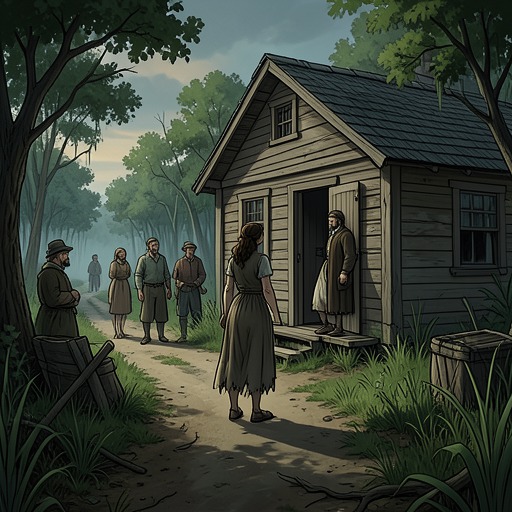
Chase first enters Kya Clark’s life as one of three older boys racing bicycles along a Barkley Cove sidewalk. When their reckless riding nearly knocks down Miss Pansy Price, Chase blames Kya, who is standing nearby, rather than accept responsibility. The moment is small but revealing: even as a boy, he can direct blame toward a socially vulnerable girl while remaining part of the town’s confident, mobile crowd. His sleek bicycle, with its raised chrome handlebars and red seat, marks him as conspicuously at home in the public world from which Kya feels excluded.
Years later, Kya watches Chase and his friends at the beach. She knows him from that near collision and from seeing him around town, but now she studies him apart from the group: his athletic body, dark hair, pale blue eyes, and self-assured manner. As he comes near her tree to catch a football, he notices her and holds her gaze without drawing the others’ attention to her. For Kya, accustomed to being treated as marsh trash, this private acknowledgment carries the force of recognition. The scene initiates their attraction, but it also establishes the asymmetry that will mark their relationship: Chase can move easily between public belonging and private attention, while Kya remains exposed to the town’s stigma.
The town remembers him as a popular athlete who grew into a handsome man and married a beautiful woman. Sheriff Ed Jackson and Dr. Vern Murphy have known him since birth; to them, his corpse makes the abrupt end of a familiar success story. Their reaction contrasts the community’s affectionate memory with the indignity of his body in the swamp. The narrative’s opening distinction between the bright, flowing marsh and the dark, still swamp gives his death a setting that seems to absorb it without judgment. Two boys from the village nevertheless discover his denim jacket from the third switchback of the old fire tower, turning a death the swamp might have hidden into a public case.
Courtship and Coercion
During their courtship, Chase offers Kya an experience of abundance that is almost unimaginable in her isolated life. At a picnic, they share a carefully packed meal of fried chicken, ham, biscuits, potato salad, pickles, cake, and soda. They talk about the sea, and when their shoulders brush, Chase kisses her. The scene moves from gentle closeness to physical advances that Kya does not accept. When he tries to pull up her blouse, she jerks away, pulls her clothes back into place, and springs out of his reach. His tenderness does not erase the pressure of the encounter; her clear withdrawal establishes that attention and consent are not the same thing.
The relationship continues, and Kya makes Chase a rawhide necklace with a shell, an intimate object that becomes one of the story’s most consequential clues. He wears it regularly. To Kya, the gift belongs to a period when she believes their intimacy might become a shared future; to the authorities, it later connects her directly to the dead man. Chase’s mother, Patti Love Andrews, eventually tells the sheriff that Kya made the necklace while the two were seeing each other. Her account also exposes how thoroughly the relationship had been hidden from respectable company: she had heard rumors but denied that her son was involved with the Marsh Girl.
Chase’s engagement to Pearl Stone breaks Kya’s understanding of their relationship. She discovers the announcement in a newspaper, alongside a photograph of Chase with Pearl, whose pearl necklace gives the image an almost painful contrast with Kya’s own shell gift. Kya has spent her savings preparing food for a meeting with him; after seeing the announcement, she leaves the store and retreats to her shack. Chase comes to find her, but she hides from him. The announcement recasts his earlier promises and private courtship as a life he has been willing to keep separate from his public future.
In August 1969, Chase encounters Kya at Cypress Cove while she is drawing mushrooms. She tells him to leave and confronts him about the marriage he had once discussed and the engagement she learned about from the newspaper. He dismisses the impossibility of their relationship and presses for a return to the old arrangement. When Kya refuses, he grabs her, kisses her against her will, and forces her to the ground. She struggles, tells him to stop, and resists him as he begins to assault her. The scene transforms the earlier breach of consent into overt violence: Chase treats a past intimacy as entitlement, while Kya’s refusal makes plain that their history gives him no right to her body.
Death and the Investigation
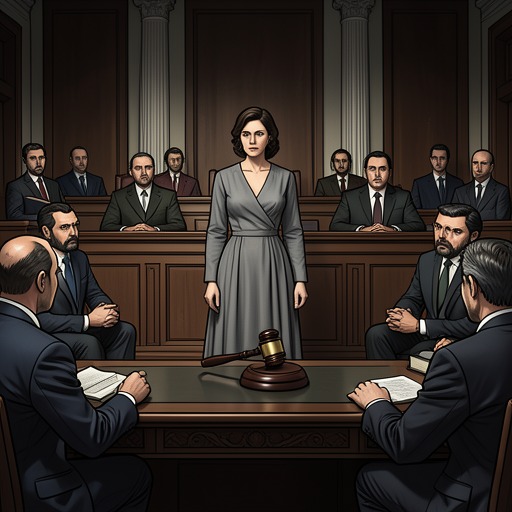
On the morning of October 30, 1969, Chase is found at the base of the fire tower. His body lies on its back, one leg grotesquely turned, his eyes and mouth open. The coroner later places his death between midnight and two in the morning, after a fall of sixty-three feet through an open grate. Chase struck the tower’s support beam with the back of his head; blood and hair on the beam match his, and the injuries to his brain and spinal cord are consistent with a fatal fall. The medical findings establish that he died where the boys found him and that his body had not been moved, but they do not settle why he fell.
The first investigation turns his sexual reputation into a possible source of enemies. Deputy Joe Purdue points out that Chase pursued single women and married women alike, before and after his own marriage. He suggests that a jealous husband or someone Chase knew could have had reason to kill him. Ed Jackson is more cautious about treating that reputation as a sufficient motive, but the conversation establishes that Chase’s charm was not universally experienced as harmless. At the scene, Ed also notices footprints leading from the tower stairs toward Chase and cautions the boys not to disturb the tracks. Later reports say the relevant foot- and fingerprints were destroyed.
The case against Kya is built from circumstantial links to Chase. A shrimper is expected to testify that he saw her boating toward the fire tower shortly before Chase fell, with a colleague to support his account. Patti Love identifies Kya as the maker of the shell necklace, which disappears on the night of Chase’s death. Fibers from Kya’s red hat are found on Chase’s jacket. The sheriff’s summary brings these points together as evidence of opportunity, connection, and a possible motive in the rejected woman. The chain is persuasive to investigators, but it also depends on reading their relationship through rumor and betrayal rather than examining the violence Chase had shown Kya.
The Meaning of the Necklace
The shell necklace connects Chase’s courtship, Kya’s suspected involvement, and the novel’s final disclosure. During the trial, the coroner’s account describes a fall through the open grate and the fatal impact against the beam, while the prosecution’s case asks how such a fall occurred. The physical account can establish the mechanics of death without explaining the human act behind it. Meanwhile, Kya’s long absence from the courtroom’s ordinary world is felt through her thoughts of the gulls she has missed; Tate Walker has been feeding them, so even the apparent abandonment of those birds proves incomplete.
After Kya’s death, Tate discovers a small box beneath the floorboards. It contains the shell necklace Chase wore until the night he died, beside papers bearing her poems. Tate reads one of the papers again, holds it to his chest, and imagines Kya traveling by night, planning around the moon, calling to Chase, pushing him backward, and recovering the necklace from his body. The scene presents those details through Tate’s imagination, but the hidden necklace supplies the material fact that changes their meaning: Kya had kept the object associated with Chase’s death, rather than surrendering or discarding it. Tate burns the poems and removes the shell from its rawhide, destroying the concealed evidence he has found.
Narrative Role and Significance
Chase is more than the victim whose death drives the investigation. His public identity as a star athlete, local favorite, and respectable husband sits beside a pattern of sexual pursuit and a private relationship he does not carry into his engagement to Pearl Stone. His attention first offers Kya a rare sense of being seen; his later coercion shows the danger of mistaking that recognition for care. The novel lets the same necklace function first as a love token, then as evidence, and finally as the object that reveals what Tate believes Kya did.
His death also makes the difference between a visible explanation and a complete one. The fall, the beam, and the matching blood and hair account for how Chase died, while the destroyed tracks, missing necklace, and fibers on his jacket feed competing interpretations of who brought him to the tower. The final discovery does not restore the public record or produce a courtroom confession. Instead, it reframes the mystery through an intimate object hidden for years, leaving Chase’s charm and violence together in view and showing how the town’s story of him could never encompass the whole of his life.