Clark family shack
Where the Crawdads SingThe Clark family shack is the rough-cut home of Kya Clark and her family, set between oak woods, palmetto flats, and the lagoons of the marsh. It holds the ordinary traces of a crowded household, but it also becomes the setting for Kya’s first night alone: a vulnerable domestic space whose isolation is gradually eased by the familiar life outside its walls.
Setting and Structure
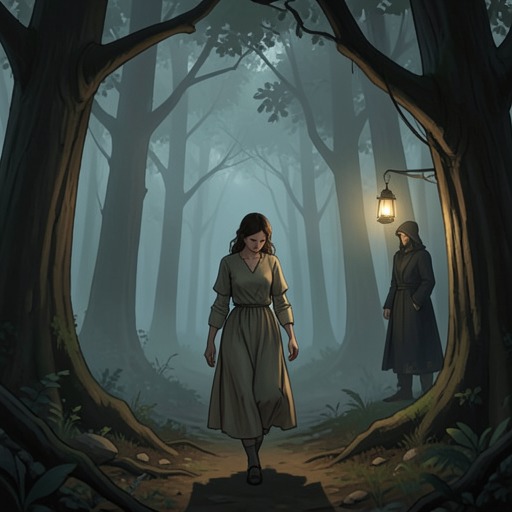
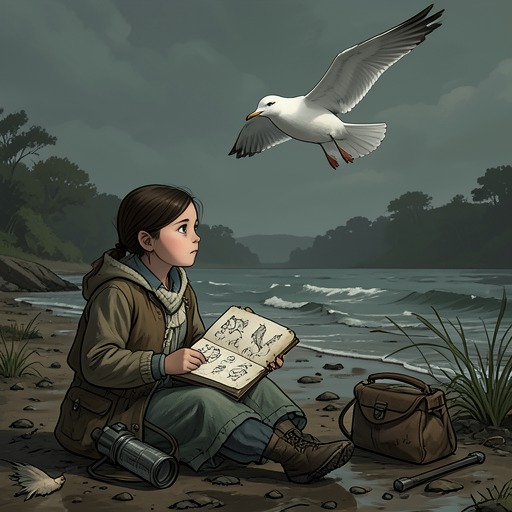
The shack sits back from the palmettos, beyond which sandy flats lead toward a necklace of green lagoons and, farther off, the marsh. Oak forests gather around its other sides and shelter the nearest lagoon, whose surface is rich with life. Salt air and gull-song reach the house through the trees, placing it within a landscape that is not merely its backdrop but an immediate presence around it.
The house is described as rough-cut, with a screened porch beneath the oaks. That porch faces outward toward the lane and woods, making it a threshold between the family’s domestic life and the routes through which people come and go. When Kya’s mother leaves carrying a blue train case, Kya watches from the porch steps and then runs to the place where the lane opens onto the road, searching for the familiar farewell wave. The shack’s position makes departure visible, but cannot make a departing person return.
A Crowded Family Home
Kya is the youngest of five children, and the older siblings are much older than she is. The family lives together in the small shack, crowded close like penned rabbits. Her brother Jodie, seven years older and the sibling nearest to her, shares her dark eyes and black hair; he has taught her birdsongs, star names, and how to steer a boat through saw grass. The house is therefore not only shelter but the setting of a childhood organized around family presence and instruction.
That household presence thins. On the first night Kya sleeps alone, her bed is a lumpy mattress on the porch floor, made less bare by real sheets with little blue roses that Ma had found at a yard sale. The domestic object carries a small remnant of care into an otherwise frightening change: Kya repeatedly sits up to listen for footsteps, then hears the familiar tree frogs and katydids. As fog gathers around the shack, the marsh’s night sounds become more comforting than the stories she has heard, and she finally sleeps.
Improvised Domestic Life
The shack has no electricity. Kya lights a candle, stirs the hot ashes in the woodstove, adds kindling, and works the bellows until the flame catches. The Frigidaire serves as a cupboard rather than a refrigerator, and its door is propped open with a flyswatter to limit mold; greenish-black mildew nevertheless spreads through the crevices. These details show a household maintained through adaptation rather than modern conveniences.
After the rain eases, Kya cleans the kitchen and the rest of the house. She empties the cupboard, mops the stained plywood floor, and scrapes months of caked grits from the stove burners. She washes her father’s sheets, which smell of sweat and whiskey, and hangs them over the palmettos. In the brothers’ small room, she dusts and sweeps around dirty socks, scattered comic books, and two soiled mattresses. The work is practical, but it also exposes the house as a place whose inhabitants are disappearing from Kya’s daily life: even Jodie’s face is already beginning to blur in her memory.
Shelter and Isolation
The shack’s meanings shift with Kya’s circumstances. At first it is a shared family home, crowded with older siblings and shaped by Ma’s presence. After Ma leaves, and as other members of the household become absent, its rooms preserve material traces of those who are gone: the brothers’ belongings, the worn sheets, and the everyday mess Kya tries to put in order. The house makes abandonment tangible without explaining it away.
Yet the shack is not sealed off from the living world. Through its screen and windows, Kya watches the woods and listens for footsteps; beyond it, the frogs, salamanders, and insects continue their nightly lives. The first night ends not with a human return but with Kya settling into the familiar rhythms of the marsh. In this way the home marks both her exposure to loneliness and the beginning of her reliance on the natural surroundings that envelop it.