Jake Clark
Where the Crawdads SingJake Clark, known within the family as their father, is both a source of brief companionship and the central force of danger in Kya Clark’s childhood home. His recurring shifts from relative kindness to drunken violence shape the family’s separations: Ma leaves, the children are beaten, and a threat against Ma’s return helps keep her away. The tenderness Kya sometimes receives from Jake does not undo that pattern; it makes the possibility of a family reunion seem, for a time, almost within reach.
Identity and Family Life
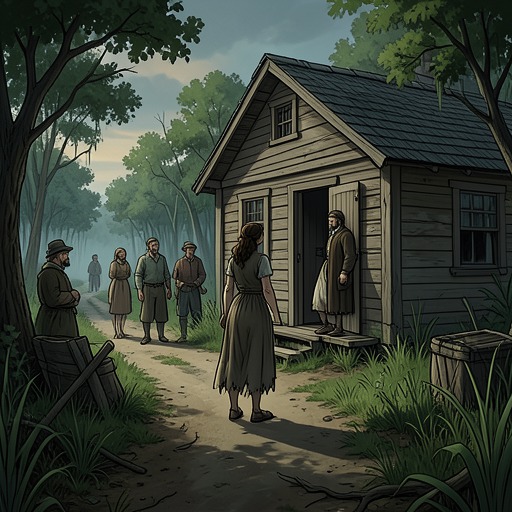
Jake Clark is Kya Clark’s father and Ma’s husband. He lives with his family in the marsh, where his drinking and violence govern the household. Kya remembers that he beat all the children, mostly when drunk, and that Ma was also a target. His conduct is not presented as a single rupture but as a repeated cycle: periods when he could seem decent gave way again to drinking, shouting, and physical assault.
That cycle leaves the children exposed to danger within their own home. Jodie Clark eventually leaves, and years later tells Kya he regrets leaving her alone with Jake. His account makes the household’s violence part of the reason the children’s departures carry such lasting guilt and grief, even though Kya tells her brother she never blamed him.
Violence and the Easter Assault
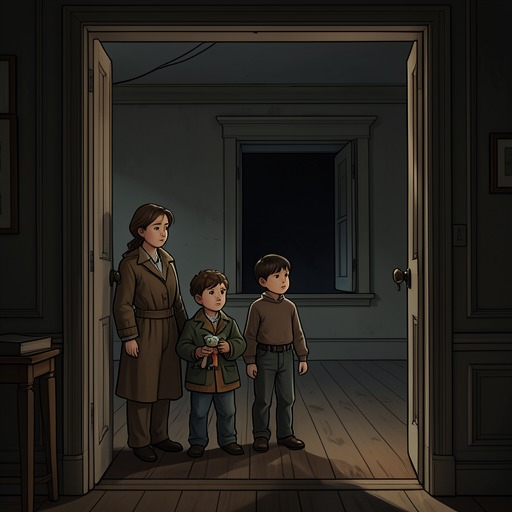
One of Kya’s sharpest memories comes from Easter Sunday, about six months before Ma left for good. Jake sees Ma and Kya carrying painted eggs and chocolate bunnies and demands to know where she got the money. He pulls Kya’s Easter bonnet from her head, accuses Ma of infidelity, and shakes her. When Kya cries out, he slaps her and orders her to take off her dress and shoes.
The assault escalates when Jake takes an iron fire poker and strikes Ma across the chest. Kya grabs at his arm; Jodie intervenes, tackling their father and giving Ma and Kya time to run. Jake then hits Jodie in the face with the poker. Kya and Ma hide in the brush, frightened that Jodie may be dying, and return only after checking that Jake has gone. The painted eggs rolling across the floor and the blood on Ma’s sundress fix the violence against the ordinary preparations for a family holiday: the home’s apparent domesticity cannot protect its occupants.
Kya also remembers Jake turning violence directly on her in another episode. When she tried to stop him from beating Ma, he grabbed her, ordered her to bend over the kitchen table, and struck her with his belt. The pain was vivid, but so was the image of her jeans pooled around her ankles. Such details show how bodily fear and humiliating particulars remain joined in her recollection.
Intermittent Kindness and Kya’s Hope
Jake is not violent at every moment. For stretches he drinks less, fishes with Kya, takes her by boat across the marsh, and shares meals with her. They once fly a kite on the beach. On another evening they play gin rummy; he laughs when she wins, and she giggles behind her hands, feeling like a regular girl. These episodes give Kya a glimpse of a father she can enjoy being with, and she begins to imagine that the family might be repaired.
That hope persists alongside her longing for Ma. Kya looks down the lane expecting to see her mother walking home, while wondering whether the improved relationship with Jake might allow them to begin again as a family. But the good intervals do not last. Kya later explains to Jodie that Jake drank less and taught her to fish for a while, then returned to drinking and left her to fend for herself. The contrast matters: kindness is real in Kya’s memory, but it does not become dependable care.
Ma’s Letter and the Family’s Separation
After leaving, Ma spends months largely silent and barely eating at her parents’ home. Nearly a year later, she tells her sister Rosemary that she remembers leaving her children. With Rosemary’s help, she writes to Jake asking to return for them and take them to live with her in New Orleans. Jake replies that if Ma returns or contacts any of the children, he will beat them unrecognizable. Ma knows he is capable of carrying out the threat and does not come back.
Kya eventually learns what the letter meant: Ma had wanted to see her and bring the children away, rather than simply abandoning them. The letter’s arrival enrages Jake and sends him back to drinking; after that, Kya loses him as well. She does not tell Jodie that she has kept the letter’s ashes in a small jar. Jake’s threat thus has consequences beyond the immediate menace: it blocks a possible reunion, feeds the circumstances of his renewed drinking, and becomes part of the loss Kya carries privately.
Disappearance and Lasting Significance
Jake continues to disappear for days at a time, sometimes returning to eat and talk rather than collapsing drunk. Eventually he disappears from Kya’s life, leaving her alone to manage the practical work of survival. Jodie describes having left with only seventy-five cents, scraping by in Atlanta before the Army took him in; when he later returned, he assumed Kya had already run away. His remorse underscores the damage left by a household in which children had to escape or endure, and in which absence could follow violence without bringing repair.
Jake’s characterization rests on this unresolved contradiction. He can play cards, fish, and share a meal with Kya, yet he also beats his family and threatens Ma to prevent her return. The novel’s account does not treat the gentle intervals as proof that the violence was exceptional: Kya’s hope grows precisely because those intervals recur, while the renewed drinking and abuse repeatedly destroy its promise. By the time Jake is gone, the father who sometimes made her feel like a regular girl has also left her to live without a reliable adult or a safe family home.