Joe Purdue
Where the Crawdads SingJoe Purdue is a deputy in Barkley Cove and a central working partner to Sheriff Ed Jackson in the investigation of Chase Andrews’s death. Small, with thick sideburns, he arrives quickly at the fire lookout and brings both methodical attention to physical evidence and a readiness to reason from what is missing. His role matters because the case turns on the tension between a death that looks accidental and traces—or absences—that suggest someone else may have been involved.
Identity and Investigative Role
Joe enters the investigation in a patrol truck less than fifteen minutes after the discovery of Chase’s body. His first reaction registers the shock felt by the town: Chase had been its celebrated quarterback, and his death seems profoundly out of place. But Joe moves from that response to work, joining Ed in examining the scene rather than treating the death as settled.
The two officers’ partnership is direct and practical. Ed leads the inquiry and dictates notes; Joe searches, photographs, measures, and discusses possible explanations with him. The investigation is not presented as Joe’s case alone, but his observations and judgments repeatedly shape its direction. He is neither simply a subordinate carrying out orders nor the final authority: he tests what the evidence might mean and urges action when he believes the pieces are coming together.
At the Fire Lookout
The first question is whether Chase fell from the tower by accident or was pushed. Ed says that, on the surface, the death looks accidental, but he has found no footprints leading toward the steps and no prints belonging to anyone else. Joe joins the search. After the two lawmen comb the area for ten minutes, he confirms that they have found no prints except those made by the boys who discovered the body. Ed also finds no sign that anyone brushed footprints away. The absence is important but inconclusive: it does not establish what happened, and the officers leave the possibility of further investigation open.
Joe then volunteers to climb out to the damaged support beam and look for blood or hair, while collecting splinters. The beam below the hole in the tower is bashed and splintered; Ed considers that Chase may have struck his head against it during the fall. Joe’s proposed search would test the physical scene rather than settle for that explanation. Ed arranges to get a rope to spot him and warns against producing another body in the muck. He also lists further evidence to collect, including fingerprints from the grate, stair grate, railing, and banisters, as well as hair and thread samples. The exchange shows the investigation widening from the body’s position to whatever a person might have touched or left behind.
The body is photographed, including its position relative to the steps, the head wounds, and the wrongly bent leg. Joe takes notes as Ed dictates and participates in measuring the distance from the body to the trail. Their attention to position and injury gives the scene a procedural precision; their initial lack of footprints does not become proof of a particular culprit, but a problem they have to keep testing. Four days later, Joe enters Ed’s office waving the first laboratory reports. The evidence here establishes that results have begun to arrive, but does not disclose their findings.
Suspicions About Chase and the Expanding Inquiry
Joe’s account of Chase is less forensic than his work at the tower, but it helps explain why he thinks the field of possible suspects may be wider than an accident investigation would suggest. He describes Chase as habitually pursuing women before and after marriage, including single women and married women, and says that some people disliked him. Joe speculates that a jealous husband might have had a motive, while also arguing that the killer would probably be someone Chase knew: it seemed unlikely, in his view, that Chase would have climbed the tower with a stranger.
Ed resists turning Chase’s reputation into a conclusion. He acknowledges that Chase was known as a ladies’ man but doubts that anyone in town would commit murder for that reason. This contrast marks a distinction in their reasoning: Joe is willing to use local knowledge of Chase’s behavior to generate possible motives, while Ed cautions that dislike or jealousy does not establish murder. Joe’s suspicions remain hypotheses, not findings, and the inquiry continues to seek evidence that can support or rule them out.
Later, the investigation turns on a witness’s account of the night Chase died. Hal says he was crewing for Tim with Allen Hunt when, at about 1:45 a.m., they saw the woman known as the Marsh Girl motoring just outside the bay. After Hal leaves, Ed tells Joe what he witnessed. Joe reacts that the account may be decisive. Ed is more guarded: he thinks a judge may issue a warrant, but wants to be sure before asking for one. He wants to search Kya Clark’s home for red fibers matching those found on Chase’s clothes and to establish her account of that night.
The Arrest and the Limits of Suspicion
Before deciding whether the witness’s timing ruled out Kya, the officers check the bus schedule. Joe returns fifteen minutes later and reports that travel from Greenville to Barkley Cove and back in one night is possible. The schedule therefore does not exclude her from the scene; as he puts it to Ed in substance, there would be enough time to push someone from the fire lookout. He urges the sheriff to obtain a warrant. This is a consequential turn in the case: a possible alibi route becomes, instead, a reason to continue investigating. The bus information establishes opportunity, not guilt, but Joe treats it as sufficient to justify further scrutiny.
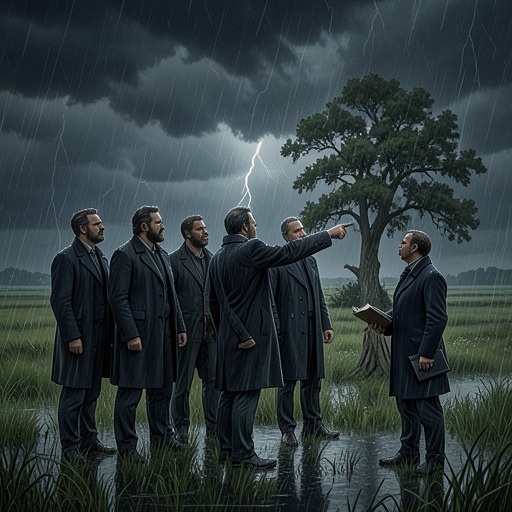
When Kya is eventually pursued by boat through a storm, the deputy announces her arrest for Chase’s murder as two men climb into her boat. The scene completes Joe’s movement from the first search for footprints to the physical apprehension of the person suspected. It does not make the earlier gaps in the evidence disappear: the case has advanced through the officers’ accumulated observations, competing interpretations, and efforts to test whether Kya could have been present. Joe’s significance lies in that process. He is an energetic investigator whose guesses can sharpen the inquiry, but the distinction between a lead, an opportunity, and proof remains essential to the story’s account of how suspicion becomes an arrest.