Kya runs away from school after her first day
Where the Crawdads SingKya runs away from school after her first day in 1952, an encounter that turns a brief attempt at formal education into a lasting retreat. At six, she wants to learn to read, but the school offers her neither a place suited to her circumstances nor a way to belong. After classmates laugh at her, girls taunt her on the bus, and she breaks down at the beach, she avoids the officials sent to find her. She never returns to school, choosing the marsh and its wildlife as her own sources of knowledge.
The summons and the school
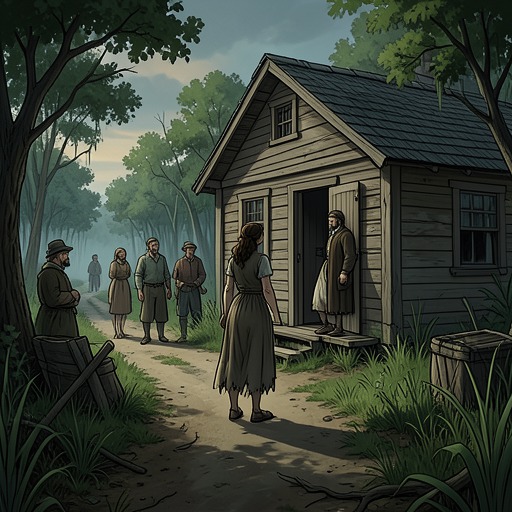
A few days after her birthday, Kya is barefoot in the mud, watching a tadpole develop frog legs, when an unfamiliar car churns along the sandy lane. She hears a man and a woman approaching and hides in the brush, keeping both a view of them and a route of escape. The tall woman who steps from the car wears high heels, like Kya’s mother once did on the lane. Kya assumes the visitors have come from an orphanage to take her away. Instead, the woman identifies herself as a truant officer and says she has come to take Catherine Clark to school.
Kya understands that she is supposed to attend school at six and recognizes that the visit has come a year late. She wants to learn to read and what comes after twenty-nine, but has little sense of how to speak to other children or a teacher. Sally Culpepper takes her by the hand and leads her to a car. Kya has not touched another person in weeks and has never touched a stranger before. In the back seat, she does not feel sheltered or reassured.
Barkley Cove’s schools are segregated: white children attend a brick school on Main Street, while Black children attend a separate cement-block school near Colored Town. At the white school, officials find Kya’s name but no birth date in county records. They place her in second grade despite her having never attended school, saying that first grade is crowded and implying that children from the marsh may not stay long. The principal leads her down an echoing hallway and pushes open a classroom door. Kya has no belongings to put in the cubbyhole, and a room full of staring children makes her feel more exposed than welcomed.
A day among strangers
When the teacher asks Kya to spell dog, she stands silent at first. Jodie Clark and her mother have taught her some letters, but she has never had to spell a word aloud. She tries and says, “G-o-d.” Laughter runs through the rows. The teacher, Mrs. Arial, tells the class not to laugh at one another, but the correction cannot undo the humiliation: Kya learns at once that the classroom can make her ignorance public.
At lunch, the other girls pass her table to sit with their friends. Hungry but unable to swallow easily, Kya eats only a few bites, drinks her milk, and hides pie and a roll in a milk carton and napkin. For the rest of the day she does not speak, even when the teacher asks her a question. In her thinking, speaking up would only expose her to more ridicule; she believes she has come to learn from the children, not to give them another reason to laugh.
The return journey extends the rejection beyond the classroom. The bus will take Kya only to a point three miles from her lane because the road beyond it is too sandy, so she must walk to the bus each morning if she returns. As it sways over rutted roads and past cord grass, children call out her full name and mock her as a “marsh hen” and “swamp rat.” At an unmarked intersection deep in the woods, she gets off and runs nearly half a mile before jogging to the lane. Rather than stop at the shack, she runs through the palmettos and sheltering oaks to the ocean.
Flight to the beach and into the marsh
At the tide line, Kya calls to the birds and throws the food she has saved onto the beach. The gulls land and peck near her toes. Their presence makes her laugh, and then sob; she has been afraid throughout the day that, like everyone else, they will leave her. They remain around her, preening, while she sits with them and imagines gathering their warm, feathered bodies into her bed. The beach offers a response the school has not: company without questions, correction, or ridicule.
Two days later, when the car returns, Kya runs into the marsh and deliberately obscures her trail. She leaves footprints across sandbars, enters the water to erase them, doubles back, circles through mud to confuse her pursuers, and crosses hard ground without leaving a clear trace. The officials return every two or three days for several weeks. The man in the fedora searches and chases, but never comes close. Then, one week, no one returns. Kya stares at the empty lane as crows call; the pursuit, and with it the possibility of another school day, has ended.
The marsh as an alternative education
Kya never goes back to school. She returns to watching herons and collecting shells, reasoning that she can learn from those pursuits. This is not simply a rejection of knowledge: the day has shown her the social cost of being unprepared in a classroom, while the marsh gives her room to observe without having to perform for an audience.
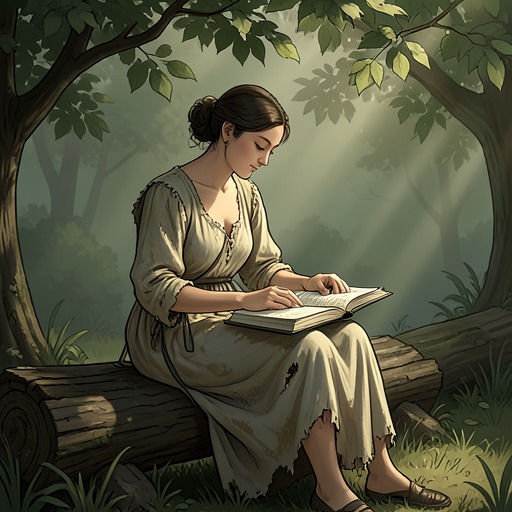
Later, her learning becomes increasingly deliberate. She seeks scientific books through the librarian, including texts on organic chemistry, coastal-marsh zoology, and ecology. Outside the abandoned cabin, she reads about reproductive strategies and notices how animals use signals in courtship and competition. She also studies fireflies: different species communicate through distinct patterns of flashes, and a female can change her signal to lure and eat a male of another species. From these observations, Kya develops a view of survival in which nature does not follow human moral categories. Her education grows from close attention to living things—the kind of attention already present when she watched a tadpole on the morning the school came for her.
The episode therefore marks more than an absence from school. Kya’s first encounter with an institution that might have taught her to read instead combines administrative disregard, public embarrassment, and social exclusion. Her flight establishes a pattern of evasion when the outside world seeks to claim her, while her return to the marsh begins a different path toward knowledge, built from observation, collecting, reading, and inference.