North Carolina Coastal Marsh
Where the Crawdads SingThe North Carolina Coastal Marsh is not merely the backdrop to Kya’s life: it is a working landscape with its own boundaries, histories, and rules, and it becomes her refuge and teacher after her family abandons her. The novel distinguishes the bright, moving marsh from the enclosed swamp, then lets that distinction complicate the village’s ideas of wilderness, civilization, and moral judgment. The land shelters people whom society leaves at its edges, while its living systems make survival and loss part of the same cycle.
Landscape and Ecological Character
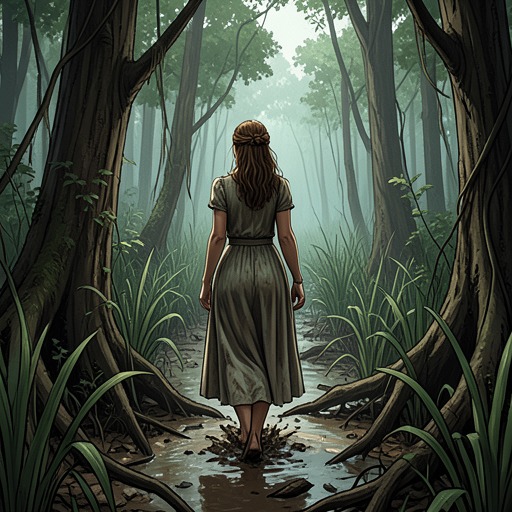
The marsh is presented as a space of light and movement. Grass grows in water, creeks carry reflections toward the sea, and long-legged birds rise against the sound of snow geese. Swamp, by contrast, occupies low bogs and hidden forests: its water is still and dark, and decay returns life to the soil. These environments belong to the same larger landscape, but the contrast gives them different narrative charges. The open marsh offers movement and visible abundance; the swamp conceals, absorbs, and holds what has been lost.
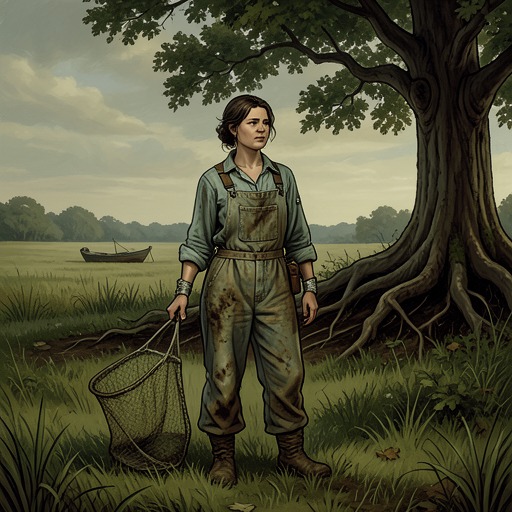
The terrain around the Clark family home in the marsh gives this broad distinction a particular shape. The shack stands beyond palmettos and sand flats, with green lagoons and the wider marsh beyond; oak woods shelter the nearest lagoon, while salt air and gulls connect the inland home to the sea. The landscape is not a uniform wilderness. It is a network of water, sand, grass, trees, and shore, each with its own conditions and forms of life. The coastline’s riptides, winds, and shoals also make the edge between land and sea dangerous, a setting marked by both abundance and exposure.
Human Settlement and Marginal Land
The marsh’s history is inseparable from the people who found a place there because more settled country offered them little welcome. Its holdings were often not legally recorded or surveyed; people marked territory by natural features such as creeks and dead trees. Earlier arrivals included sailors, castaways, debtors, and fugitives avoiding wars, taxes, or laws. Runaway enslaved people, known as maroons, and freed people with few options also dispersed into the water-land. Over generations, the region gathered people of several races and cultures into a hard-edged community of separate territories and practical skills.
The land’s reputation as undesirable helped those informal claims persist. By 1952, some holdings had passed through a long succession of disconnected, unrecorded occupants, including men who arrived broke after the World Wars. The marsh was treated as wasteland bog, and few outsiders disputed possession because few wanted the land. Yet it was not barren: crabs, crayfish, waterfowl, fish, shrimp, oysters, deer, and geese made its waters and ground materially rich for anyone willing to forage. Its apparent marginality and its capacity to sustain life exist side by side.
Kya’s Home and Teacher
When the daily sounds associated with Ma’s cooking disappear, Kya turns to the lagoon and the surrounding land. Through the winter, the marsh catches her when she stumbles; gradually, her acute grief sinks deeper rather than vanishing. The novel describes this change through her physical contact with the wet earth and her recognition of the marsh as a maternal presence. That bond is more than a metaphor for comfort: the landscape supplies food, shelter, and knowledge, and its rhythms become the setting in which she learns to live without dependable human protection.
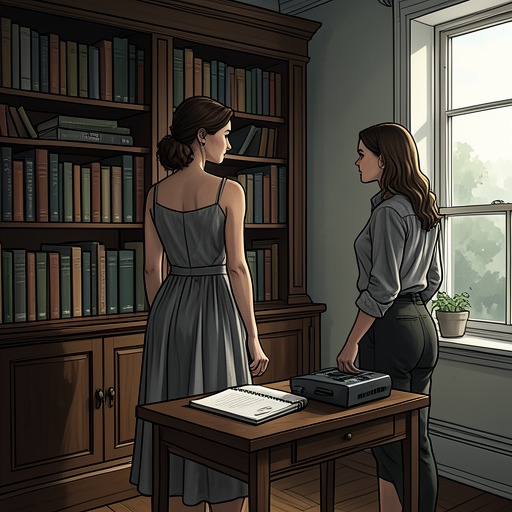
The marsh also becomes a classroom. During reading lessons with Tate at the tumbledown cabin, Kya reads A Sand County Almanac and learns about floodplains, soil, geese, and the consequences of draining wetlands. The book connects what she reads to the land she already observes: wetlands support life beyond their visible boundaries, and dry ground can retain seeds that emerge when water returns. Her ecological understanding therefore develops through both study and close attention to the place where she lives. The marsh is not simply something she knows about; it is the source against which knowledge can be tested.
Nature’s Rules and Human Judgment
Kya’s observations of fireflies give the marsh an active role in her reflections on behavior. She watches females use different patterns of light to attract males, including a sequence in which a female mates and then lures and eats a male of another species. The encounter prompts her to understand that natural processes do not sort themselves into human categories of good and evil. Elsewhere, scientific writing about deceptive mating signals and reproductive strategies extends this attention from insects and amphibians to broader questions about behavior. These examples inform Kya’s thinking, but they do not turn nature into a simple moral excuse: her explanation of Ma’s departure considers survival pressures while still recognizing that the choice caused pain and that its meaning remains unresolved.
The community’s treatment of Kya supplies a contrasting system of judgment. Pansy rebukes boys who blame Kya for their own behavior, rejecting their attempt to make her responsible even while invoking the insult of swamp trash. Later, boys approach her shack calling her the Marsh Girl, turning her isolation into a taunt. At the murder trial, the courthouse gallery’s racial arrangement reflects the village’s entrenched exclusions, while Tom Milton argues that the community labeled and rejected an abandoned child rather than helping her. The marsh’s mixed human history and the village’s prejudices thus meet in a sharp contrast: the landscape sustains lives at the margins, while the social world helps create the outsider it then fears.
Narrative Significance
The marsh’s distinction from swamp frames the novel’s treatment of death without making the two places morally interchangeable. On October 30, 1969, Chase Andrews’s body lies in the swamp, where decay would ordinarily conceal it; two boys instead discover him near the old fire tower. That opening joins a specific human death to the landscape’s ordinary cycles, while the discovery pulls the secluded marsh into public investigation. The swamp’s silence and the marsh’s visible life become part of the same setting, but neither determines how the human community will interpret what happened.
Across Kya’s life, the North Carolina Coastal Marsh functions at once as habitat, home, archive, and alternative source of instruction. It holds informal human histories, sustains those with few resources, and offers patterns through which Kya considers abandonment, courtship, and survival. Its importance lies partly in refusing to remain scenery: water, animals, weather, and soil have material effects on what characters can do and understand. The landscape protects Kya from some forms of human neglect, but it cannot erase that neglect; instead, it gives her the means to endure and a language for interpreting the world that excluded her.