Tate Walker
Where the Crawdads SingTate Walker is Kya Clark’s first teacher, first love, and a rare companion who meets her not as the town’s “Marsh Girl” but as someone whose intelligence and knowledge of the natural world deserve to be cultivated. Their bond begins in small gestures across the water and grows through exchanged feathers, lessons, and shared attention to marsh life. Its defining rupture is Tate’s failure to return as promised: Kya experiences his absence as another abandonment, and his later apology must contend with a hurt shaped by her family’s earlier departures.
Identity and First Encounters
Tate first appears as a boy fishing from a battered boat near the marsh grass. Kya, alone in her boat and wary of encountering a boy, has to pass close by him. He is older than she is, with golden curls beneath a red baseball cap; instead of frightening or mocking her, he smiles warmly and touches the brim of his hat in greeting. The courtesy is modest, but it stands out in a life where contact with other people has often meant danger or uncertainty.
When they meet again, Tate recognizes her as Jodie Clark’s sister. Kya answers that she used to be, because Jodie is gone. Tate begins to respond that she is still Jodie’s sister but lets the thought drop. The pause matters: he does not force comfort on her or argue with the blunt account she gives of her family. Before leaving in the approaching storm, he tells her his name in case they meet again. Kya says little, yet watches him go and worries that he will be caught in the rain.
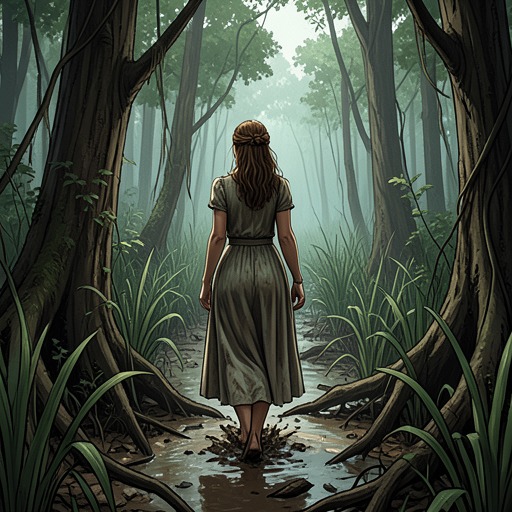
Years later, Kya realizes that the quiet boy who had once guided her home through the marsh is the person behind the anonymous gifts she has been finding at the oak clearing. A red-and-white milk carton holds seeds—turnips, carrots, and green beans—as well as a spare spark plug for her boat. The spark plug is not decorative kindness: Kya needs such parts, and replacing one would mean a trip to town and cash she must earn. The extra part gives her the unfamiliar comfort of having a surplus. A night-heron feather accompanies the gifts, continuing the wordless exchange that has made the clearing a meeting place without requiring either of them to speak.
Teacher and Companion
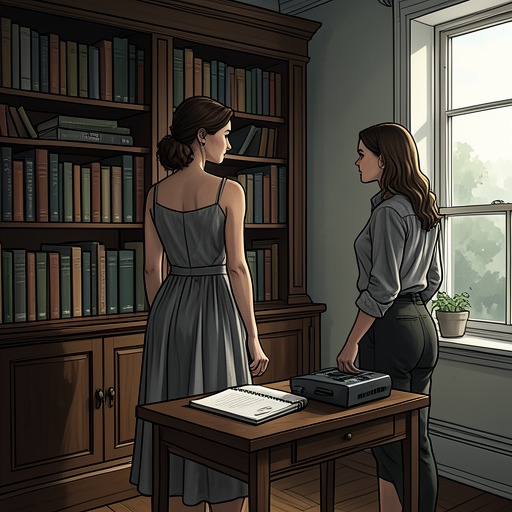
Tate offers to teach Kya to read. At the oak by the lagoon, he brings a faded alphabet book and a lined writing pad, slowly forms letters, says them aloud, and lets her practice. Kya recalls some letters from Ma and Jodie, but has not learned how to assemble them into words. Tate’s patience turns a basic lesson into a new means of independence: reading gives her access to knowledge beyond what she can observe directly, while her own close knowledge of the marsh gives her a foundation for understanding what she reads.
As their lessons continue, Tate brings school and library books, especially books about marsh creatures and biology. Kya’s progress is rapid. She reads by lantern light about adaptation, specialized cells, and the ways birdsong carries in cool, moist morning air. She takes these ideas seriously because the living world is already familiar to her at eye level. At the same time, she searches biological explanations for a question that learning cannot simply settle: why a mother would leave her offspring.
Their closeness includes a disclosure of Tate’s own grief. He tells Kya that his mother and little sister, Carianne, died in a car wreck in Asheville, and says he has never spoken about it to anyone before. Kya responds with sympathy, imagining his mother as kind and beautiful. The exchange gives their intimacy a reciprocal quality: Tate is not only the person who teaches and gives; he also entrusts Kya with a sorrow he has kept private.
First Love and Its Limits
Tate and Kya’s first kiss comes amid falling sycamore leaves. They have been playing at catching the leaves before they reach the ground when they collide, stop laughing, and kiss. Kya is stiff with inexperience; afterward, both look uncertain about what has happened. She asks whether she is his girlfriend now. The scene makes their romance a change in their relationship rather than a sudden escape from the conditions around them: Kya remains timid and inexperienced, while Tate recognizes that his wishes carry responsibilities toward her.
He makes repeated trips to see her, sometimes spending a long time boating for only a short walk on the beach. They hold hands and kiss, with little time to spare before he has to boat back. Tate desires greater physical intimacy but restrains himself because Kya is young and he fears doing harm. When Kya is fifteen and presses him to go further, he dresses her and carries her to the creek bank, then explains that he wants her but will not have sex with her because she is too young and could be harmed. His refusal is an act of care, though Kya does not yet understand the meaning of love that he invokes. The difference between his desire and his decision is central to how the relationship is presented: affection is measured not only by what he wants, but by what he refuses to take.
Tate’s lessons also shape how Kya reads courtship in nature. Waiting for him one night, she watches female fireflies use species-specific flashes to attract males; one female changes her signal after mating, draws in a male of another species, and eats him. Kya sees the episode as biological survival rather than moral wickedness. Later, while reading a scientific digest at the old cabin, she encounters an article on deceptive mating strategies and recalls Ma’s warning that unworthy boys make a lot of noise. These observations do not establish Tate as a deceiver; rather, they give Kya a vocabulary for considering courtship, signals, and the possibility that apparent promises may not mean what they seem. The natural world helps her interpret human behavior, but does not remove the pain of being left.
Departure, Injury, and Apology
Kya does not know that Tate came back to see her before he was due to take a bus home for the Fourth of July. The day before his planned departure, Dr. Blum, who had hired Tate in a protozoology lab, offers him a place on a birding expedition with a group of ecologists. The account places this opportunity beside Tate’s intended return, while Kya remains unaware that he has come back. When he fails to return as she expects, she understands his absence as another choice to leave without goodbye. Her attachment to him is entangled with his importance as her first love, her teacher, a fellow devotee of the marsh, and a small remaining connection to her vanished family. That combination makes the silence especially difficult to bear.
When Tate reappears years later, Kya confronts him directly. She accuses him of leaving, failing to write, and lacking the courage to end the relationship face to face. Tate does not counter her account or excuse himself. With his palms open, he admits that what she has said is true, acknowledges that he had no right to criticize Chase Andrews, and asks to explain and apologize. Kya’s anger begins to loosen, not because the past has been undone, but because the person who hurt her finally accepts responsibility for it. She still sees him as more than an old boyfriend: he is tied to her learning, her love of the marsh, and the family history from which she has been cut off.
Tate’s return does not produce immediate ease. After Kya publishes her book, he sends a note to her mailbox thanking her for inviting him to collect a copy and saying he will visit that afternoon. The formality feels strange because their earlier messages belonged to the feather stump. Kya waits with one of the six copies supplied by the publishers. When Tate’s boat arrives, they wave and smile, but both are guarded; the last time he had come to her place, she had thrown rocks at him. He praises the book and leans as if to hug her, while the hardened rinds of her heart hold her back. Their renewed contact is real, but trust has to be approached rather than presumed.
Nature, Abandonment, and the Meaning of Care
Tate’s teaching encourages Kya to use biology as a way to think about human behavior, especially abandonment. In a later conversation about Ma, Kya draws on what she has read about animals that leave offspring under severe stress. She suggests that such behavior can increase a mother’s chances of surviving and breeding again, so the trait may persist even when its consequences for the abandoned young are devastating. Applying this reasoning to Ma, Kya can imagine that terror and danger in life with Pa may have helped drive her mother away. She insists that an explanation does not make the choice right, and remains unable to understand why Ma never returned or wrote.
This distinction between explanation and forgiveness reflects the limits as well as the value of Tate’s influence. Biology supplies Kya with a way to study survival without treating every harsh act as simple evil; it cannot tell her what happened in every private human choice, or make the harm disappear. Tate has helped give her the tools to read books and the language to think through nature’s patterns, but his own disappearance has made him part of the human problem those tools must confront. His character’s significance lies in that tension: he offers attentive care and genuine restraint, yet also leaves Kya to experience a silence that resembles the abandonment she has spent her life trying to understand.