Tate abandons Kya
Where the Crawdads SingTate’s abandonment of Kya in 1961 turns a missed return into a decisive rupture: Kya waits for him at the lagoon, while Tate, having chosen an opportunity at college, later sees her and slips away without facing her. The separation repeats the departures that have shaped her life, but this time it also transforms her belief that love might offer a way out of loneliness.
The expected return
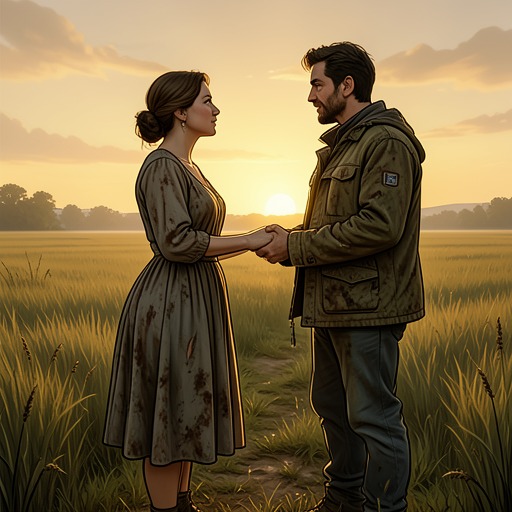
On July 4, Kya goes barefoot to the lagoon in a peach chiffon dress that has become too short and sits on the reading-log, with the books Tate gave her. The heat presses down as the last fog lifts; the air is so humid that breathing is difficult. She kneels to splash cool water on her neck, but keeps listening for the hum of Tate’s boat. Waiting is not yet despair: she reads, tolerates the slow hours, and even rushes back to the shack for leftover sausage and a biscuit because she is afraid he might arrive while she is away.
The day ends without him. At dusk, Kya stands still, watching the empty channel, then steps out of her dress and swims in the lagoon’s dark coolness. She sits on the mossy bank until she dries and the moon has slipped beneath the earth. She returns to the same expectation the next day, waiting through noon, sunset, and another sunrise. As hope drains away, the boat remains absent. The scene measures the failure not through an announcement but through the duration of Kya’s vigil: each passing hour makes the silence more conclusive.
Waiting and the old pattern of loss
After another morning at the water’s edge, Kya listens for a boat coming down the channel or across the distant estuaries. At noon she cries, “TATE, TATE, NO, NO,” drops to her knees with her face against the mud, and feels a strong pull beneath her—the familiar pull of the tide. The physical force of the tide does not explain Tate’s absence, but its familiarity places her distress back inside the landscape she knows how to read.
For three days, Kya stays in bed, damp with sweat and unable to find a cool place beneath the sheets. She does not follow the marsh’s ordinary signs: moonrise, bird movement, or the gulls calling over the beach. Their songs hurt, and she does not go to them as she normally would. This withdrawal marks the depth of the break: the natural world remains audible beyond the bed, but for once it cannot draw her back into its rhythms.
In her listless thoughts, Tate’s departure joins the family losses that came before it. She remembers her mother, her sisters, and the rest of the family leaving; Jodie, too, is part of that history. What remains of those departures is lodged in small, unfinished images: a white scarf trailing through leaves, socks left on a floor mattress. Kya has long had to understand absence by its traces. Now Tate’s disappearance gives that pattern a new and intimate repetition.
Tate’s choice and secret return
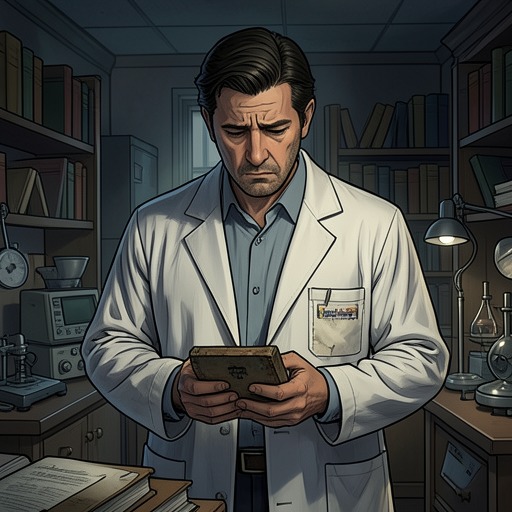
Kya does not know that Tate had come back. The day before he was due to bus home for the Fourth of July, Dr. Blum invited him to join renowned ecologists on a birding expedition over the weekend. Dr. Blum had noticed Tate’s interest in ornithology and offered him the single student place. Tate accepted immediately; alone in the laboratory afterward, he recognized how quickly the invitation and the pride of being chosen had carried him into the opportunity he wanted.
Tate’s decision is not presented as indifference to Kya. He thinks about the choice as Kya or everything else, and his college life has opened onto the work he imagines for himself: biological research among scientists and questions he longs to pursue. But that aspiration does not erase the consequence of his choice. His next chance to go home comes fifteen days later, and only for one night. He is frantic to apologize, believing Kya will understand when he explains the invitation.
On the way back, Tate spots Kya’s boat concealed in tall cord grass. She is kneeling on a sandbar, absorbed in a small crustacean, and has neither seen him nor heard his slow-moving boat. He turns his skiff into the reeds and hides from view. He knows that Kya sometimes watches him from the brush; on impulse, he reverses that familiar arrangement and watches her. When she moves away, he gets back into his boat and motors toward the ocean. He whispers, “Kya, Kya, I just can’t do this,” and apologizes, but he does not tell her goodbye. His remorse is real; so is the silence he chooses instead of a face-to-face explanation.
The rupture and its meaning
The account places Kya’s experience before Tate’s hidden return, so the reader first shares her uncertainty and only later learns that he came back within reach. That difference in knowledge sharpens the abandonment: the silence is not simply a failure of the boat to appear. Tate sees Kya and still leaves without speaking to her. His later explanation clarifies his competing ambitions and regret, but cannot undo the days she has already spent waiting or the meaning she has made of them.
Kya’s response is absolute. Into the sheets she asks why Tate could not be different, recalls that he said he loved her, and concludes that there is no one on Earth she can count on. She promises herself never to trust or love anyone again. The vow connects this particular loss to the earlier departures that taught her to expect people to vanish; Tate’s absence makes the possibility of trust seem not merely risky, but disproved.
Even the lagoon’s fireflies deepen the contrast between signals and understanding. Kya watches females flash species-specific patterns to attract males, a language Jodie taught her, and knows that the insects can recognize the signals meant for them. But no pattern of light can make sense of Tate’s unexplained absence. The scene thus turns a missed meeting into more than romantic disappointment: Kya can read the marsh’s signs, yet she is left to interpret a person’s silence alone.