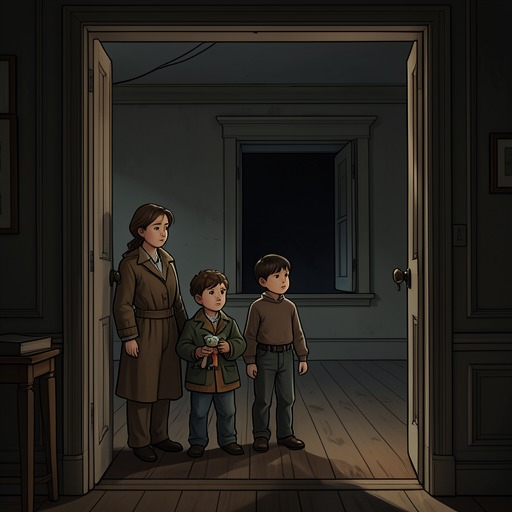
The Clark siblings leave home one by one
Where the Crawdads SingThe Clark siblings leave home one by one in 1952, driven from the family home by Jake Clark’s escalating violence. Their departures reduce Kya’s family to a succession of absences: first the nearly grown older children, then Jodie, the last sibling beside her. His departure leaves Kya alone with Jake, and turns her knowledge of how to hide in the marsh into a means of surviving the abandonment.
The older siblings’ departures
After their mother had left, Kya’s oldest brother and two sisters drifted away over the following weeks. Jake’s rages began with shouting and escalated to blows, including fist-slugs and backhanded punches. The siblings had endured this violence, but, nearly grown, they left one by one. Their departures follow their mother’s and take place without any account of a shared plan to take Kya with them.
The children’s identities fade in Kya’s memory along with their ages. She later cannot recall their real names, remembering the sisters only by the names Missy, Murph, and Mandy. What remains materially is a small pile of socks her sisters left on the mattress on the porch. The ordinary clothing makes their absence tangible: they have gone, while Kya is left with a few traces rather than an explanation or a companion.
Jodie as the last sibling
On a morning when Jodie is the only sibling still at home, Kya wakes to the clatter of breakfast and the smell of hot grease. Thinking their mother has returned to fry corn fritters or hoecakes, she rushes into the kitchen. Instead she finds Jodie at the woodstove, stirring grits. The expectation and disappointment are held in a small gesture: Kya smiles to conceal how let down she is, and Jodie pats her head and hushes her so they can eat without waking Jake.
Jodie makes grits and scrambled eggs in lard; there is no bacon, and he does not know how to make biscuits. The two eat together, exchanging glances and smiles in silence. Their meal briefly gives them a private life apart from their father: they wash the dishes quickly and head toward the marsh, Jodie in the lead. Jake’s shout interrupts them before they can get away. The scene sets the warmth of their brief companionship against the violence that governs the household.
Jodie leaves
Later, near sunset, Jodie finds Kya on the beach, where she is staring out at the sea. She does not look at him, yet recognizes from the way he speaks that Jake has struck him in the face. Jodie tells her he cannot live there any longer. Kya wants to ask him not to leave her alone with Jake, but cannot make herself say it; the silence leaves the plea unspoken as Jodie explains that she will understand when she is older.
Kya already understands the immediate reason: Jake is why the others have left. What she cannot understand is why none of them took her along. She has thought of leaving herself, but has nowhere to go and no money for a bus. Her situation is therefore more than a child’s failure to follow her siblings: the departures expose the difference between their ability to escape and her lack of any destination or means to do so.
Before he goes, Jodie gives Kya instructions for staying safe. If anyone comes, she is not to go into the house, where they could get her; she should run deep into the marsh, hide in the bushes, and cover her tracks. He adds that she can use the same knowledge to hide from Jake, saying that he taught her how. Kya remains silent as he says goodbye and crosses the beach toward the woods. Only just before he enters the trees does she turn to watch him leave. When she breaks her stillness, she runs back to the shack and calls his name, but his belongings are already gone and his floor bed has been stripped bare.
What remains after the departures
As Jodie disappears, Kya says to the waves, “This little piggy stayed home.” The nursery-rhyme fragment gives words to the place she has been left in: her siblings have gone, while she remains. She does not follow Jodie into the woods or find a route out of the marsh. The emptied bed confirms the departure more decisively than his goodbye, and the contrast with their quiet breakfast makes the loss immediate: a moment of shared care has ended in solitude.
Jodie’s advice is both an act of protection and a measure of what he cannot provide. He passes on practical knowledge—where to hide and how to cover her tracks—but leaves Kya behind in the home ruled by Jake’s violence. The siblings’ departures establish the conditions of her isolation: family members escape separately, while Kya, too young and without money or a place to go, must rely on the marsh and on the survival skills she has learned. In this sequence, leaving is not a single family decision but a pattern of successive exits, each making the last person left more vulnerable.