The Marsh's Development Threat
Where the Crawdads SingThe Marsh's Development Threat is the prospect of draining and building over a wetland that the novel presents as both a living ecological system and Kya Clark’s home. Its force comes from a clash of descriptions: developers see a “murky swamp” to be altered, while the marsh’s inhabitants and Kya’s hard-won knowledge reveal what that label leaves out.
A Living Wetland Labeled Wasteland
The development plans arrive against the background of a landscape long treated as unwanted. For generations, marsh residents occupied land that had passed through disconnected, often unrecorded claims; few outsiders cared who held it because the area was regarded as wasteland bog. That history of neglect makes the new plans more than a change in scenery: the same low valuation that left the land available to squatters now makes it easier to imagine it as raw material for construction.
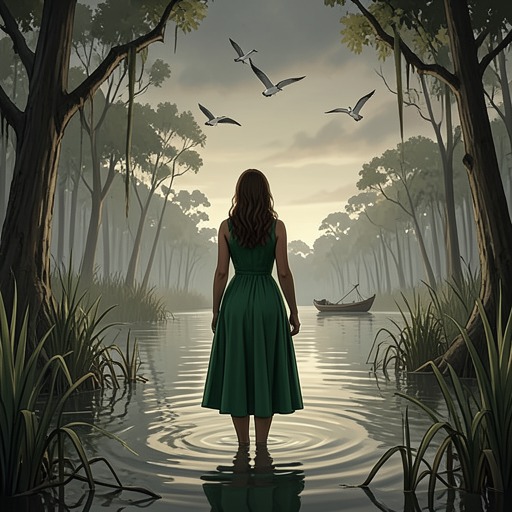
The marsh’s apparent meanness conceals abundance. Its layers of life include sand crabs, crayfish, waterfowl, fish, shrimp, oysters, deer, and geese; someone willing to gather and hunt could find food there. The contrast matters to the development threat: land dismissed as barren is, in the novel’s account, densely productive, though its riches do not resemble the kinds of value that developers seek to build on.
Drainage and the Signs of Change
Jumpin’ warns Kya that developers are coming with plans to drain the marsh and build hotels. The warning connects to changes she has already witnessed over the previous year: large machines cut entire stands of oaks within a week, then dug channels to dry the land. After each operation they moved on, leaving tracks of thirst and hardpan behind. The sequence makes the threat gradual and cumulative rather than a single dramatic act: trees disappear, channels redirect water, and the altered ground records what has been done.
Kya’s reading of A Sand County Almanac gives her a language for understanding those changes. Through the book, she learns that floodplains are living extensions of rivers, that draining wetlands can dry land for miles and kill plants and animals, and that seeds may lie dormant in desiccated soil for decades before water returns. These are lessons she receives as knowledge of the marsh’s connected systems, not as an account that every predicted consequence has already occurred at the development site. The machines’ channels and hardpan nevertheless make the book’s warning immediate.
Land, Ownership, and Ecological Stakes
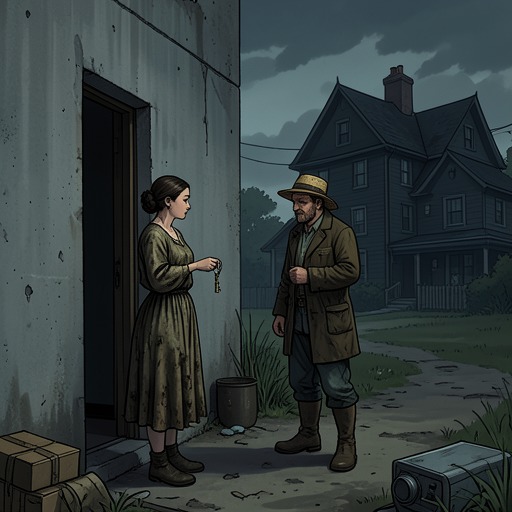
The threat also meets a question of who can claim the marsh. Kya does not know whether her family owns its land or merely squats there, and years of searching the shack’s papers for news of her mother have yielded no deed. At the Barkley Cove courthouse, however, the county clerk locates a deed showing that Kya’s grandfather, Napier Clark, bought the property in 1897. The clerk calculates about eight hundred dollars in accumulated taxes, with many years assessed at roughly five dollars because the property was classified as wasteland.
Kya leaves the courthouse with a deed in her own name to 310 acres: lagoons, marsh, oak forests, and a long private beach on the North Carolina coast. The paperwork gives her formal title to a place whose value the tax classification had minimized. At dusk, returning to her lagoon, she tells a heron that its spot is safe. That gesture places the animal within her sense of home and makes clear that the land’s significance is not exhausted by its status as property. The deed establishes Kya’s ownership, but the evidence does not say that it prevents the proposed development or guarantees the marsh’s protection.
Significance
The threat exposes a conflict over what counts as value and who bears the consequences of changing the land. Developers’ plans prioritize drainage and hotels; Kya’s experience and reading direct attention to water, soil, plants, animals, and the longer effects of drying a wetland. The signs she has seen—felled oaks, channels, thirsty ground—show environmental damage accumulating in ordinary increments, while the category of wasteland makes those losses easier to disregard.
The marsh is therefore not a passive backdrop to Kya’s life or a vacant space awaiting improvement. It sustains human and nonhuman life, holds the history of people who found refuge there, and gives Kya both knowledge and belonging. Development threatens that interdependence, even as her newly documented title marks a limited counterclaim: the place dismissed as wasteland is also her ancestral home.