Bee’s heart condition
Where'd You Go BernadetteBee’s heart condition is both a recurring medical reality of her childhood and a lens through which she understands her survival and her bond with Bernadette Fox. Cyanosis, operations, and the prospect of another procedure mark her early years; a memory of being mocked while awaiting surgery becomes, instead, a lasting account of her mother standing firmly beside her.
Diagnosis and Medical Routine
Off and on through preschool and into the beginning of kindergarten, Bee’s skin turned blue because of her heart condition. Sometimes the discoloration was barely visible; at other times it became pronounced enough to signal that she needed another operation. Her childhood therefore included recurring changes in how her body looked and repeated preparations for surgery, rather than a single medical crisis. Before her Fontan procedure, she was given steroids to prepare for the operation, leaving her puffy as well as blue.
The Seattle Center Memory
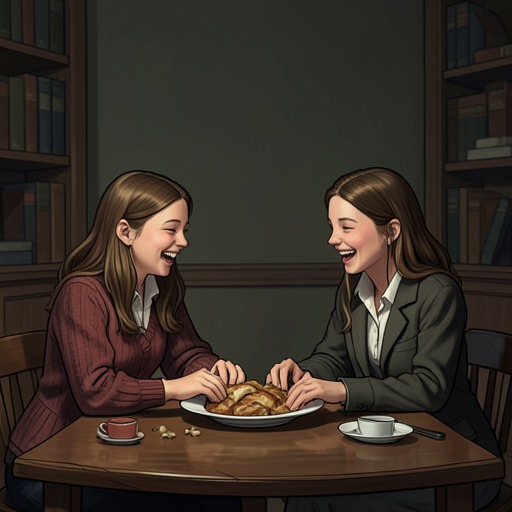
Before that procedure, Bernadette took Bee to the Seattle Center, where Bee played in the musical fountain in her underwear, running up and down its steep sides to evade the shooting water. An older boy compared her to Violet Beauregarde, the character from Willy Wonka and the Chocolate Factory who turns blue and swells. Bee ran to her mother and cried. Bernadette answered the boys with a sarcastic retort instead of reporting them to their mothers, puncturing the insult without making Bee’s body the spectacle’s only subject.
Bee later identifies this as the happiest moment of her life. Bernadette’s defense made Bee feel that her mother would always support her; the memory turns a visible consequence of illness and preoperative treatment into an experience of protection. Bee ran back down the concrete ramp faster than before, understanding her mother’s presence as the assurance that she could move through the world without falling.
Illness and Bee’s Sense of Family
At fifteen, Bee reads documents that reveal Bernadette had experienced other pregnancies and miscarriages. The discovery changes how Bee interprets her own survival: she imagines children her mother might have had and loved, and describes herself as the one who lived, yet as broken because of her heart. Her condition is thus not only a history of medical procedures; it enters her understanding of whether she was wanted and what survival cost. Elgin Branch responds that the documents were not meant for her to read, but Bee is glad she did, even as the knowledge unsettles her.
A Bond Made Visible
The Seattle Center episode gives Bee’s heart condition an intimate family meaning without reducing the condition to the operation itself. The blue skin and steroid-related swelling expose Bee to other people’s cruelty; Bernadette’s quick intervention answers that exposure with unmistakable loyalty. Years later, Bee’s account of feeling broken shows how survival can carry a different, private weight. Together, the memories hold both the practical recurrence of illness and the emotional contradictions Bee associates with being the child who lived.