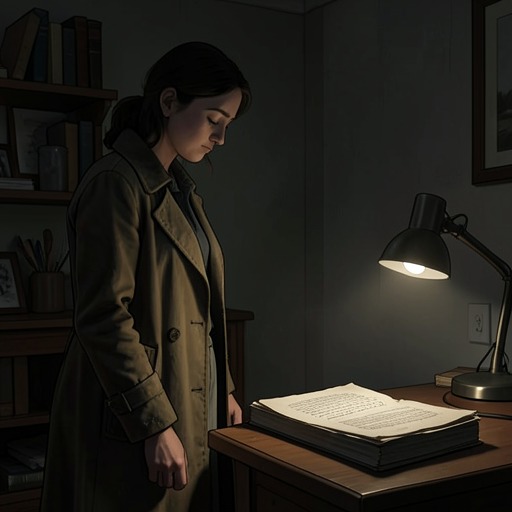
Bernadette Fox and Audrey Griffin's escalating neighborhood conflict
Where'd You Go BernadetteBernadette Fox and Audrey Griffin’s escalating neighborhood conflict turns a practical complaint about encroaching blackberry vines into a bitter dispute over property, responsibility, and belonging. A school-pickup encounter gives the conflict its first public charge; later, a hillside slide brings both women face to face in the mud, where Bernadette’s offer to make amends collides with Audrey’s anger about the house, the neighborhood, and Bee Branch.
The blackberry dispute and school pickup
Audrey’s initial grievance is concrete: Bernadette’s blackberry bushes grow down the hill, beneath Audrey’s fence, and into her garden. Audrey says she hired a specialist who warned that the vines would damage her home’s foundation. She presents her decision to approach Bernadette as an attempt at a friendly conversation, but also explains why she chose the school pickup line: Bernadette was difficult to catch elsewhere. In Audrey’s account, Bernadette stayed inside her car, did not acknowledge her, and drove away after Audrey knocked on the windshield.
The same encounter becomes a dispute over whether Bernadette ran over Audrey’s foot. Audrey tells Soo-Lin Lee-Segal that the allegation is true, says she went to the emergency room, and complains that the doctor would not accept that anything was wrong. The surviving accounts do not settle precisely what happened to her foot. Bee Branch recalls a delay getting into the car because Ice Cream had claimed the front seat and resisted being moved; when Audrey later approaches the car again, Bee jokes about watching out for Audrey’s foot. The recurrence of that joke shows how the pickup accusation remained part of the family’s understanding of the feud, even as the accounts leave the original injury contested.
A conflict made public
The quarrel expands beyond the garden and pickup line when an enormous billboard appears overnight above Audrey’s house. Ollie Ordway reports the development to the prospective-parent brunch committee, describing Audrey as hysterical and her husband as contacting the city attorney. The report frames the billboard as an alarming escalation in a neighborhood dispute that now threatens to intrude on a Galer Street School community event.
The later confrontation establishes Bernadette’s responsibility for the sign. She tells Audrey she is sorry and explains that she put it up impulsively after finding Audrey on her lawn with her gardener. This admission supplies a personal trigger, but Bernadette does not use it to excuse the sign: she says she is blaming herself and later promises to take responsibility in money and time, including addressing the situation with Gwen Goodyear and Galer Street School. Her willingness to accept the costs contrasts with the anger Audrey directs at what she sees as Bernadette’s habit of remaining apart from the people around her.
The hillside slide and the face-to-face reckoning
After Bee and Bernadette return toward their home on Queen Anne Hill, they find Audrey walking up to their car. The encounter follows a day when Bee and Bernadette had planned to take the ferry to Bainbridge Island, but the ferry line had not moved and they turned back. Bee recognizes Audrey’s approach as a repetition of the earlier pickup confrontation, making the driveway an unlikely stage for a conflict that began at school.
This time Audrey arrives barefoot, with mud on her hair and pants, and cries that Bernadette’s hillside has slid into her home during a party for prospective Galer Street School parents. Bernadette responds that she will pay for everything. Bee observes that her mother is often impatient with ordinary annoyances but becomes exceptionally calm in a genuine crisis, a composure Bee associates with the years they spent partly at Seattle Children’s Hospital. Here, that calm does not soothe Audrey. She takes the offer as evidence that Bernadette thinks money can substitute for presence and respect, and accuses her of living above the neighborhood in a gigantic house while writing checks rather than joining the community.
Responsibility, status, and Bee
Audrey’s anger broadens from the damage to her home into a charge about class and local belonging. She stresses that Bernadette and her family came from Los Angeles, bought a twelve-thousand-square-foot building, and called it a home in a neighborhood where Audrey says generations of her own family lived within four miles. Bernadette acknowledges the force of that local history, but the exchange does not resolve the difference between Audrey’s demand for recognition and Bernadette’s attempt to answer for the immediate damage through payment and practical help.
The dispute becomes most personal when Audrey invokes Bee. She describes Bee as a child who has endured a great deal, praises her resilience and school performance, and says she would never send her own daughter away to boarding school. Bernadette, who has already apologized for the sign and offered to cover the damage, finally swears at Audrey for bringing Bee into the argument. Bee then states that she wants to go to boarding school. Her response makes clear that Audrey’s attempt to speak on her behalf does not represent Bee’s wishes, while Bernadette’s outburst marks the point at which a neighborhood quarrel becomes a direct conflict over who has the right to define Bee’s life.
The shape of the conflict
The relationship is marked by competing accounts and mismatched forms of repair. Audrey wants acknowledgment that the vines, the pickup encounter, and the hillside damage are not isolated inconveniences; she reads Bernadette’s distance and wealth as part of the injury. Bernadette accepts responsibility for the sign and offers to pay for the damage, but her practical response cannot answer Audrey’s deeper accusation that she has failed to participate in neighborhood life. The slide therefore magnifies an existing divide rather than creating one from nothing.
Bee’s perspective gives the conflict its recurring pattern: Audrey approaches the car again, the earlier foot allegation returns as a joke, and the later driveway meeting replays the sense of an unwanted confrontation. Yet the final exchange also prevents the conflict from being reduced to a simple quarrel between two adults. Audrey invokes Bee to criticize Bernadette; Bernadette defends Bee; and Bee answers for herself. The episode leaves the women’s grievances unresolved, but clarifies the stakes: property and money matter, while recognition, community membership, and Bee’s independence are also at issue.