Griffin Family Prospective Parent Brunch Landslide
Where'd You Go BernadetteThe Griffin Family Prospective Parent Brunch Landslide is the catastrophic reversal of a school-recruitment event at Audrey Griffin and Warren Griffin’s home: a gathering meant to present Galer Street School to prospective families becomes a scene of shattered windows, rushing mud, and an improvised evacuation. In Audrey’s retrospective account, the danger arrives with the storm, but the damage also lays bare tensions around the school, its ambitions, and who is understood to belong in the neighborhood.
School Ambitions and the Brunch Setting
Galer Street School was trying to improve its standing among Seattle families. A consultant’s research among 25 prospective parents with household incomes above $200,000 found that the school was regarded as a second-tier fallback rather than a first choice. The consultant urged the school’s Parent Association to attract wealthier families, arguing that private-school decisions were shaped by fear of missing out and by the presence of other affluent families. In that strategy, a successful incoming kindergarten class could help the school build support for purchasing a larger campus.
The brunch brought prospective parents into the Griffins’ home on Queen Anne Hill. Audrey’s account recalls a bus ride from Galer Street School, driven by Mr. Kangana, and an arrival in heavy rain. The house and garden initially presented a welcoming scene: flower-filled planters and the smell of burning wood. About fifty guests attended. Audrey noticed tension among Head of School Gwen Goodyear, Audrey Griffin, and Ollie-O, though nothing that would have been apparent to a kindergartener.
The children were to perform in the sunroom, where Mr. Kangana had arranged his marimbas the night before. The shades had been drawn, leaving the room dark enough that the children struggled to find their mallets. When Audrey began raising the shades, Ollie-O stopped her and turned on the lights. After Gwen Goodyear introduced the performance, the children began a song called “My Giant Carp.” For roughly a minute, the presentation went smoothly. The cheerful school occasion and the storm outside occupied the same house, but had not yet collided.
The Storm Breaks into the House
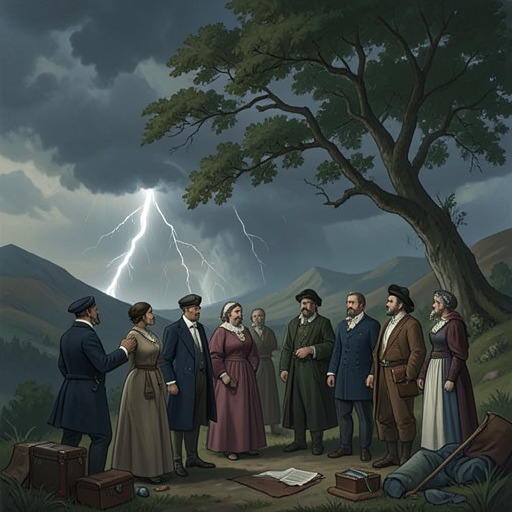
The weather had already become a warning that the brunch’s orderly plan could not contain. In a blog post, Cliff Mass described a complex storm whose track had shifted: the low-pressure center was expected to pass north of the region, drawing warm, moist air into western Washington. He reported sustained winds of 40 to 50 miles per hour, gusts of 70 to 80, and two inches of rain in Seattle between 7 p.m. and 7 a.m. He warned that the rain could continue for hours as the flow stagnated over Puget Sound. The media had previously treated his warnings as an alarm that would come to nothing; the developing storm proved more serious.
During the performance, a commotion began in the backyard near the caterers. Guests heard shouts from outside, but the children remained absorbed in the music. Audrey went through the laundry room toward the back door, intending to quiet the disturbance. When she tried to open it, a steady, powerful pressure pushed back from the other side. She tried to close the door and braced her foot against it, but the hinges began pulling from the frame. The pressure made the threat immediate and physical: this was no longer noise from the garden, but a force bearing against the house.
Before Audrey could make sense of what was happening, the music stopped. Pops and pings came from the sunroom, followed by a child’s distressed squeal. Audrey abandoned the back door and ran toward the children. Glass shattered as the kindergarteners fled their instruments, screaming. With their own parents elsewhere in the crowd, the children burrowed among prospective families, while adults tried to force their way through the small doorway to the living room. The crush made trampling a real danger.
Mud, Flight, and the Billboard Dam
Audrey’s daughter, Ginny, reached her and clung to her legs, her back wet and muddy. The sunroom shades had risen, and the windows gave way. Mud poured through the opening: watery and thick, carrying rocks, grass, broken beveled glass, window muntins, barbecue utensils, and a mosaic birdbath. The inventory makes the destruction more than a wall of brown water. Objects from the garden and fragments of the house were swept together into a single moving wreckage, and furniture joined the debris as adults and children tried to escape.
Mr. Kangana stayed in the mud to gather the marimbas. He had brought the instruments from Nigeria when he emigrated, making their rescue a matter of personal history as well as property. Audrey remained with him for a time. Then the flow stopped as abruptly as it had begun: an upside-down billboard had come to rest across the sunroom opening, forming a dam. Its red surface bore a private-property warning and a threat to arrest and haul trespassers off to “Gnat Jail.” The sign, previously an expression of hostility toward neighborhood trespassers, now served an unintended practical purpose by blocking the mud.
The guests fled through the front door and drove away. Mud-covered caterers and chefs whooped, while Gwen Goodyear tried to maintain a brave face and handed out Galer Street School gear. Ollie-O, apparently overwhelmed, repeated fragments of institutional language about biodegradability, downstream consequences, and optics before getting stuck on the phrase “epic fail.” Mr. Kangana continued to retrieve his instruments. Audrey, meanwhile, saw Audrey Griffin running away from her own home and called after her, but Audrey Griffin turned the corner and disappeared from view.
Evacuation and Immediate Aftermath
Audrey was left responsible for thirty traumatized kindergarteners. Her first suggestion—that they find their boots and raincoats—only highlighted how impossible that was: some children were barefoot or in socks, and broken glass lay across the route. She changed the plan, gathered cushions, and laid them from the house to the sidewalk. The children walked over this makeshift path and lined up by a hedge.
Because the children knew how to line up, Audrey could move them one at a time. She carried each child down the street to the bus, then drove the bus back to Galer Street School. The children were returned to their parents shoeless, jacketless, muddy, and full of stories. In her account, Audrey also explains her actions through her work as a counselor specializing in post-traumatic stress disorder: carrying each child gave her a chance for physical contact in the immediate aftermath, which she understood as potentially healing for children after trauma.
The brunch therefore ends not with a polished introduction to the school but with a rescue operation and a conspicuous failure of the event’s intended image. The school’s branded gear is distributed amid mud, damaged instruments, and frightened children. The children’s safe return is a concrete accomplishment, but it cannot restore the house or turn the gathering back into the controlled display its organizers planned.
Neighborhood Conflict and Narrative Significance
The disaster occurs against a broader contest over Galer Street School’s social position. Its fundraising strategy depends on attracting families who can help move it into Seattle’s elite first-choice group; the brunch is one setting where that ambition meets the visible realities of place, class, and neighborhood history. The consultant’s account contrasts “Subaru Parents” with “Mercedes Parents,” treating wealth and peer status as forces shaping school choice. The landslide interrupts that strategic language with an event no one at the brunch can manage through presentation or persuasion.
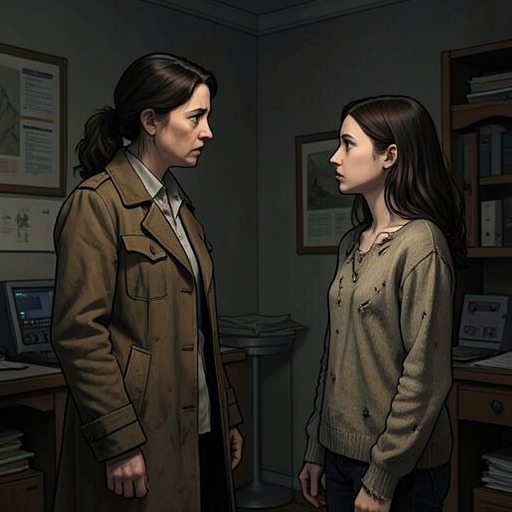
In a later confrontation, Audrey tells Bernadette Fox that the school might not have accepted Bee Branch had it known the family lived in the former industrial building they had bought after coming from Los Angeles. Audrey emphasizes her family’s multigenerational ties to the area, contrasting them with the Branches’ Microsoft money and newcomer status. That exchange gives the damaged house a social dimension beyond the storm: the brunch disaster takes place within a neighborhood already divided over belonging, and the mud does not settle that division.
The event also changes the meaning of the billboard. Its warning against trespass, associated with conflict over access and property, becomes a barrier that temporarily holds back the flood. That reversal condenses the scene’s larger movement: carefully arranged boundaries, whether school hierarchies, neighborhood claims, or the house’s windows, prove vulnerable to forces beyond their control. What remains afterward is not a successful recruitment performance but a record of who ran, who stayed, and who carried the children out.