Kennedy
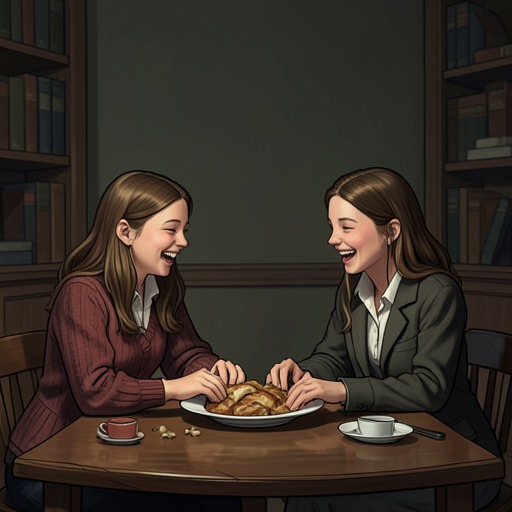
Where'd You Go BernadetteKennedy is Bee Branch’s close friend and a recurring presence in her life outside the Branch household. Their bond is built less through declarations than through rituals and shared jokes: birthday dinners with Bee’s mother, Friday evenings at Youth Group, and the familiar ease of teasing one another. Kennedy can also be blunt or suddenly withdrawn, so the friendship appears not as an unbroken idyll but as a close attachment that registers changes in Bee’s life.
Friendship and Everyday Rituals
Kennedy’s mother works nights, and Bee’s mother routinely takes Kennedy out for a birthday dinner. On one such occasion, Kennedy eagerly asks where they are going; when Bee’s mother names the Space Needle restaurant, Kennedy is delighted, while Bee protests that the outing is unfair. Bee’s mother promises that Bee can go there for her own birthday the following year. The small exchange captures the trio’s familiar pattern: Kennedy’s excitement, Bee’s competitive complaint, and an adult’s effort to make room for both girls.
Their friendship also shapes how they spend Fridays. Kennedy first proposes Youth Group as an alternative to visiting her house. She has begun worrying that she is fat and tells Bee she cannot eat licorice because Kennedy does not want to get fat; Kennedy then declares that they should stop going to her house and attend Youth Group instead. Bee calls this change Kennedy’s “Youth Group diet.” The explanation is comic, but it also shows Kennedy setting the terms of their shared routine and Bee following her into an activity she would not have chosen on her own.
Kennedy’s household helps explain the appeal of the old arrangement: her mother brings home large bags of candy from Costco, and the house has a large television with cable, where Bee and Kennedy watch Friends. Kennedy’s concern about eating changes that routine, but it does not end their time together. At Youth Group, the girls listen to a short Bible discussion led by Luke and Mae, then spend the remaining time watching television and playing games. Bee notes that the group includes many Galer Street students and that Friday is the one day without sports or extracurricular activities. The religious setting is therefore part of a practical friendship ritual, even as Bee’s mother dislikes it and Kennedy finds that reaction funny.
Humor, Teasing, and Care
Kennedy turns Youth Group’s anti-drug puppet show into a joke for Bee’s mother. She asks whether the adult has heard of “poop in the stew,” then recounts the lesson’s image of a donkey proposing one puff of marijuana and a lamb answering that even a tiny bit of poop would spoil the stew. The story lets Kennedy tease Bee’s mother about her objections to Youth Group while repeating the group’s warning in a deliberately memorable form. Her humor is irreverent, but it also makes her the messenger between Bee’s home life and the activities she shares with Bee.
At Kennedy’s birthday dinner, her excitement over the arrival of the birthday card becomes physical: she grabs Bee’s arm and squeezes it hard. Bee snaps back with an insult about Kennedy taking Ritalin and shutting up. The scene gives their closeness an abrasive edge; familiarity does not prevent Bee from speaking cruelly, nor Kennedy from being hurt by the contact. When Elgin Branch arrives and rebukes Bee, the birthday gathering is caught up in a larger family confrontation. Kennedy’s birthday remains the occasion, but the adults’ conflict temporarily overwhelms the girls’ celebration.
A different exchange shows Kennedy’s teasing working as care. During a Christmas performance, Bee is moved by the memory of the surgeons, residents, and nurses who helped keep her alive after she was born blue. Kennedy punches her at the side and hands her a HANGOVER bandanna as tears run down Bee’s face, telling her, “Don’t turn all Jesus on me.” The gesture is playful rather than solemn, but it gives Bee something to wipe her tears with while allowing Kennedy to meet an intense moment in the language of their friendship.
Distance and the Limits of the Record
After Bee leaves Choate and returns to Seattle, she goes directly to Youth Group on a Friday. She arrives during a game in which participants use red licorice to carry popcorn from a bowl to teammates playing baby birds. Bee is surprised to see Kennedy taking part in the childish game, but when the group notices Bee, the room goes quiet. Kennedy does not come over. Luke and Mae embrace Bee and express sympathy about her mother; Bee rejects their assumption that something has happened to her mother. Kennedy’s silence is the sharpest contrast with the earlier routines of birthday dinners and easy conversation. The scene records the distance between them without explaining its cause, and it does not establish whether or how they later repair it.
Kennedy also appears in Bee’s memory as the measure of what familiarity can conceal. Explaining how the brain discounts repeated experiences to Elgin Branch, Bee recalls asking Kennedy what the unpleasant smell in her house was, only for Kennedy not to know what Bee meant. Bee identifies the smell as her mother’s frequent frying of fish. The anecdote belongs to Bee’s explanation, not to any deliberate action by Kennedy: what is ordinary in Kennedy’s home has become invisible to her. Across these episodes, Kennedy’s importance lies in the everyday intimacy she shares with Bee—an intimacy made vivid by rituals, jokes, and practical kindness, and made newly uncertain when Bee returns to find her friend keeping her distance.