South Pole Station
Where'd You Go BernadetteSouth Pole Station is both a remote Antarctic facility and the focus of Bernadette Fox’s proposed return to architectural work. After years away from building, she wants to design a new station at the South Pole, arguing that she needs to reach the site and understand its atmosphere firsthand. The project’s force in the story lies in its collision of artistic ambition with a place where every material, journey, and design decision is constrained by the environment.
Setting and Physical Conditions
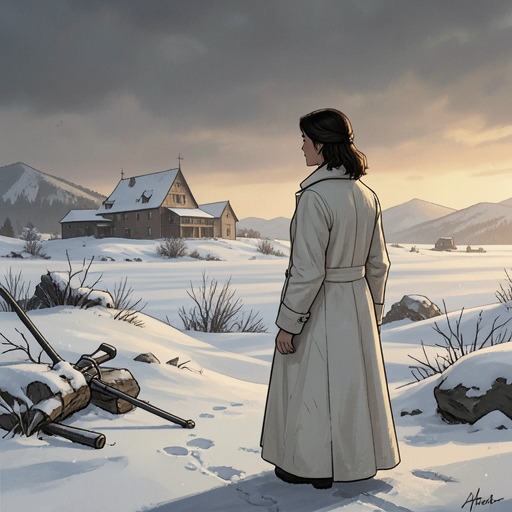
The South Pole is described as the highest, driest, coldest, and windiest place on the planet. Its average temperature is sixty below zero; hurricane-strength winds buffet a site at an altitude of ten thousand feet. The original explorers had not only to reach the Pole but also to climb serious mountains to get there. Bernadette turns that history over through a wry comparison of the explorers: Amundsen reached the Pole first, Shackleton became a celebrated figure without reaching it, and Captain Scott was honored despite failure and, in her view, his difficulty with people. The exchange places the proposed station in a landscape already shaped by the risks and competing reputations of exploration.
The ground itself is not fixed. The Pole sits on a moving ice sheet, and the official marker must be relocated each year because it can shift by one hundred feet. That instability makes a building’s relation to its site a practical problem rather than a settled premise. Bernadette wonders whether a station would need to be a wind-powered, crab-walking igloo, a comic image that also registers the challenge of designing for a location that moves beneath the structure.
Design Constraints and Materials
The station project would have to be coordinated from the United States, with every material, down to the nails, flown in. The cost of delivering supplies makes waste unacceptable. Bernadette measures the scale of the reversal against a house she built twenty years earlier: that project used no materials sourced from farther than twenty miles away, while a South Pole design would require materials from no closer than nine thousand miles. Her earlier local-material principle is not discarded so much as inverted by the site’s remoteness. Here, resourcefulness means accounting for distance and scarcity before construction begins.
The new station is also introduced through questions rather than a finished design. Bee Branch asks what will happen to the dome when it is dismantled and what materials will be used to build the replacement. Those questions establish that an existing structure is to be taken apart and a new one built, but the account does not supply the replacement’s specifications or explain what becomes of the old dome. South Pole Station therefore remains, at this point, an architectural undertaking in prospect: its demands are vivid, while its eventual form is still unknown.
Reaching the Site
Bernadette’s ambition requires more than a remote commission. She tells Ellen Idelson that she wants a chance to design South Pole Station but needs to get there in person and catch its atmosphere. The route exposes the gap between desire and access: flights to the Pole depart from McMurdo Station, 2,100 nautical miles from Palmer Station, and Pole-bound flights are restricted to essential personnel. Bernadette, Ellen explains, does not qualify as essential personnel.
Ellen nevertheless finds her a place on a Hercules aircraft departing from McMurdo Station for the Pole. The flight is scheduled for six weeks later; Bernadette must leave Palmer Station five weeks before that. The three-hour flight will be packed with weather balloons, powdered milk, and jet fuel, leaving her to stand for the entire journey. This is not an ordinary site visit arranged around an architect’s convenience: it is a narrow opening in a logistical system, made possible by Ellen’s effort and the plane’s cargo needs. Ellen also asks whether Bernadette still has all her wisdom teeth, underscoring that the trip has practical conditions beyond her enthusiasm. The account establishes the opportunity, but does not show the visit or confirm that she ultimately reaches the Pole.
A Possible Return to Building
The station gives Bernadette a concrete objective after a period in which she has described herself as more of a menace than an artist. Her excitement at the prospect of designing again is bound to physical problems she can work on: a shifting ice sheet, punishing weather, an immense distance from supplies, and a structure that must be planned from elsewhere. The project’s demands echo her earlier commitment to waste-conscious building while forcing her to imagine that principle under radically different conditions.
Bernadette frames the station as part of a conditional future she offers Bee. If Bee agrees to stay close to home, Bernadette says she will be away for an extra month, return to work on her plans for the new South Pole Station, and resume life with her family. In the same projected sequence, Bee will graduate from Galer Street and attend Lakeside School, Elgin Branch will continue making the world better at Microsoft, and the family will move into a more ordinary house. The station is thus not merely a design challenge or a distant destination: it becomes the hinge in Bernadette’s promise that she can move forward, return to artistic work, and remain connected to her daughter.