
Truth and Falsehood in the Family Record
Where'd You Go BernadetteCompeting documents reveal how partial facts and self-protective stories distort the family’s understanding of Bernadette, Elgin, and Audrey.
increasing Bearing strength in each event
 decreasing
Bearing strength in each eventdecreasingThe Reassuring Answer
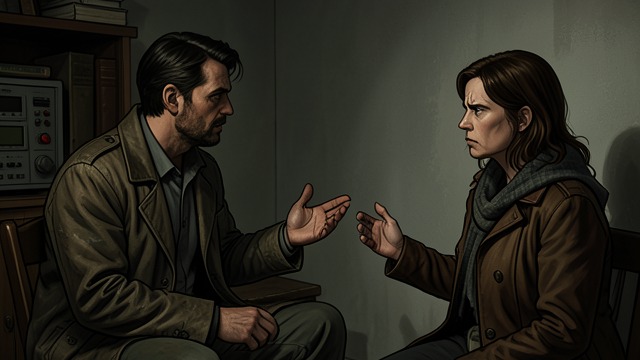
The Reassuring Answer
Comfort without explanation
Elgin tells Bee that Bernadette’s disappearance is not her fault and that the truth is complicated. Bee hears the response as an evasion of the question she actually asked.
A narrative dispute
Their disagreement establishes a central conflict over who gets to define what happened. Bee’s investigation begins as a refusal to let reassurance replace evidence.
Audrey’s Pickup Story

Audrey’s Pickup Story
An accusation circulates
Audrey tells Soo-Lin that Bernadette ran over her foot and describes the school’s response as unfair. The claim becomes part of a shared network of gossip and grievance.
A distinction obscured
Audrey’s emotional account is treated as a record even though she later admits the injury was fabricated. The episode shows how confidently delivered stories can outpace verification.
The FBI’s Partial File

The FBI’s Partial File
A dangerous disclosure
The FBI gives Elgin information about the identity-theft scheme and records concerning Bernadette’s behavior. The file is factual in parts but narrow in purpose and scope.
Context is missing
The documents do not explain the history of Bernadette’s grief, her artistic withdrawal, or Audrey’s false claim. Elgin and Audrey initially read the material through their own fears and loyalties.
A Dossier Corrects the Record

A Dossier Corrects the Record
Audrey adds context
Audrey copies the FBI file and gathers emails and notes about the blackberry dispute and her alleged injury. Her dossier places the claims in chronology rather than treating the file as a complete account.
Evidence changes allegiance
The act of documenting becomes an act of responsibility. Audrey’s fuller record shows that truth requires including her own deception, not merely collecting incriminating details about Bernadette.
Bee’s Book of Versions
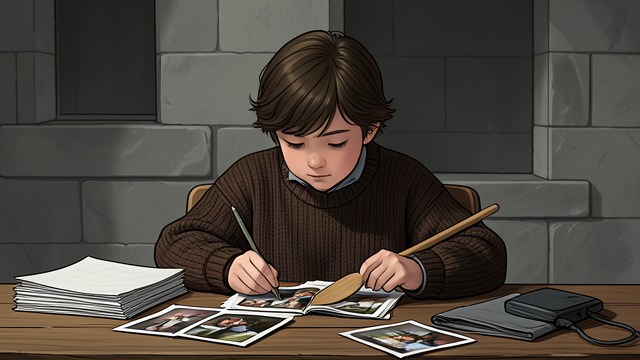
Bee’s Book of Versions
A child assembles the record
Bee connects messages, reports, architectural history, and private notes into a narrative. Her manuscript exposes both the power and the limits of documents written by adults.
Revision becomes possible
Mr. Levy invites Bee to develop the book as research. The project leaves the truth unresolved but gives Bee a way to test and revise her understanding rather than inherit one fixed version.
At the novel’s opening
Late November
Late December, before the intervention
The night before the intervention
At Choate and after her return
