Audrey Griffin’s Injury During School Pickup
Where'd You Go BernadetteAudrey Griffin’s injury during school pickup begins as a neighborhood dispute over encroaching blackberry bushes and becomes a contest over what happened beside the Galer Street School car line. Audrey said Bernadette Fox drove over her foot after she approached the car; a school notice later named Bernadette as the driver, while Bee Branch’s account insists the car did not hit anyone. The episode turns an ordinary pickup into a collision of private grievance, school authority, and incompatible versions of the same moment.
The Dispute Behind the Approach
Audrey’s account, sent to Soo-Lin Lee-Segal, locates the confrontation in an ongoing property dispute. Bernadette’s blackberry bushes were growing down the hill, beneath Audrey’s fence and into her garden. Audrey said she had hired a specialist who warned that the bushes would destroy her home’s foundation. She therefore went to the pickup line intending, as she described it, to speak with Bernadette about the plants.
Audrey portrayed the school car line as one of the few places she could reach Bernadette. In her telling, Bernadette rarely got out of her car to walk Bee into school, and Audrey likened seeing her there to seeing someone pass by only from the waist up. She described Bernadette’s silk scarf and large dark glasses as part of that fleeting view. The complaint about the bushes was thus also a complaint about the difficulty of obtaining a conversation: the neighbor was physically present, but, in Audrey’s account, inaccessible behind the car’s closed windows.
The Encounter at Pickup
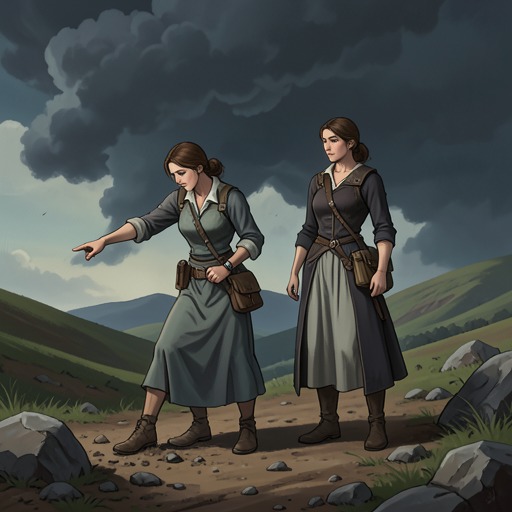
Audrey said she walked up to Bernadette’s car while it was in the pickup line, tried to speak, and received no acknowledgment. She reported that Bernadette kept the windows rolled up and pretended not to see her. Audrey then knocked on the windshield; the car drove off, and she said it went over her foot. She went to the emergency room afterward. A bill supplied by Audrey identifies her as the patient and C. Cassella as the attending physician, documenting the hospital visit without establishing the nature or severity of any injury.
Bee’s account supplies a sharply different view of the same departure. After Bee and Bernadette had got Ice Cream into the car and Bee had buckled in, Audrey ran toward them, moving stiffly and out of rhythm, while waving a piece of paper. Bee noticed Audrey’s disheveled ponytail and clogs, and saw Señora Flores, directing traffic, signal for cars to keep moving amid a long line and a traffic jam being videotaped by the Sound Seafood International employee. Audrey gestured for Bernadette to pull over. Bernadette, wearing dark glasses despite the rain, said she did not see Audrey, and the car continued away.
Bee explicitly denied that the car ran over Audrey. Her explanation was that the car’s air bags would have gone off if it had struck something as large as a human foot. That is Bee’s reasoning, not independent confirmation of what happened; set against Audrey’s report, it leaves the central physical detail disputed. The difference also reflects the limits of each account: Audrey describes her approach and subsequent emergency-room visit, while Bee recalls watching the car leave from inside it.
School Notices and Public Blame
The school’s first response did not identify either parent. In a note sent home in the weekend folders, Head of School Gwen Goodyear said word had spread about the previous day’s pickup incident, observed that nobody had been hurt, and used the episode as a reason to revisit the handbook’s pickup rules. The notice began with the rule for drivers to approach the school entrance and avoid blocking the loading dock for Sound Seafood International. Its institutional emphasis was on traffic procedure, not on deciding whose account was correct.
Audrey objected to the way the incident was handled. In her message to Soo-Lin, she said the emergency-room doctor had refused to accept that anything was wrong, and she expressed anger at both Bernadette and Gwen Goodyear for calling her out in the Friday Folder. She felt the notice had singled her out while failing to name Bernadette. Audrey also invoked her work for the school community: she said she had created the Diversity Council, started Donuts for Dads, and written Galer Street’s mission statement. Her list makes clear why public identification mattered to her: she understood herself not simply as a parent in a traffic dispute, but as someone who had contributed substantially to the school.
A later note in the Monday Messenger corrected the earlier omission. Gwen Goodyear stated that Bernadette Fox, Bee Branch’s mother, had been driving the vehicle that ran over the other parent’s foot. The correction identifies the driver and presents the injury as fact, in contrast to Bee’s denial. It does not resolve the disagreement between Audrey’s and Bee’s descriptions; instead, it turns the school’s written communication into another consequential version of events.
Conflicting Accounts and Consequences
The incident’s aftermath rests on a tension between documentation and observation. Audrey’s emergency-room bill supports that she sought medical care, but says nothing about the cause of her condition. The school’s first note says nobody was hurt; its follow-up names Bernadette and says the car ran over a foot. Audrey’s email gives her reason for approaching, her attempt to get Bernadette’s attention, and her report of being struck. Bee, who was in the car, insists no impact occurred. These materials establish the dispute and its public circulation without furnishing an independent adjudication of the collision.
The episode also changes the scale of the original grievance. What began with blackberries crossing a fence line and Audrey seeking a conversation now involves the school’s pickup rules, a medical visit, and a correction sent to parents. The car line becomes a public stage on which Audrey’s attempt to force a face-to-face exchange is met by Bernadette’s departure, then recast through school notices and competing accounts. The injury claim matters not only as a disputed physical event but as the point where a neighborly conflict becomes an institutional and reputational one.