Dreamer
White NightsThe Dreamer is the unnamed first-person narrator and protagonist of Fyodor Dostoevsky's "White Nights." A twenty-six-year-old man living in Petersburg, he is defined by his profound solitude and his elaborate inner life of fantasy, which he himself diagnoses as a "type" — an original, absurd person, a creature of an intermediate sort, neither fully human nor merely a ghost. His entire existence is a mixture of the purely fantastic and the dingily prosaic. The decisive significance of his character lies in his embodiment of the tension between the richness of inner imagination and the poverty of lived experience, a tension that the novel's four nights and one morning dramatize with devastating clarity.
Identity and Background
The Dreamer has lived in Petersburg for almost eight years but has hardly an acquaintance. He is acquainted with the city itself — its streets, its houses, and the faces of strangers he passes daily — rather than with any person. He has struck up a silent, mutual recognition with an old man he meets every day on the Fontanka, and he knows the houses intimately, treating them as friends; he was genuinely distressed when a favorite light-pink house was painted yellow. His home is a grimy room with green walls, a ceiling covered in spider's web that his landlady Matrona has "successfully encouraged," and furniture that must remain in exactly the same position or he feels unsettled. He has no history, as he tells Nastenka: he has lived "keeping himself to himself, that is, utterly alone." He has never been used to women, has never had a female acquaintance, and has only ever dreamed of meeting someone. He confesses that he has several times thought of speaking to an aristocratic lady in the street, begging her not to send him away, asking only for two or three sisterly words.
Life and Plot Trajectory
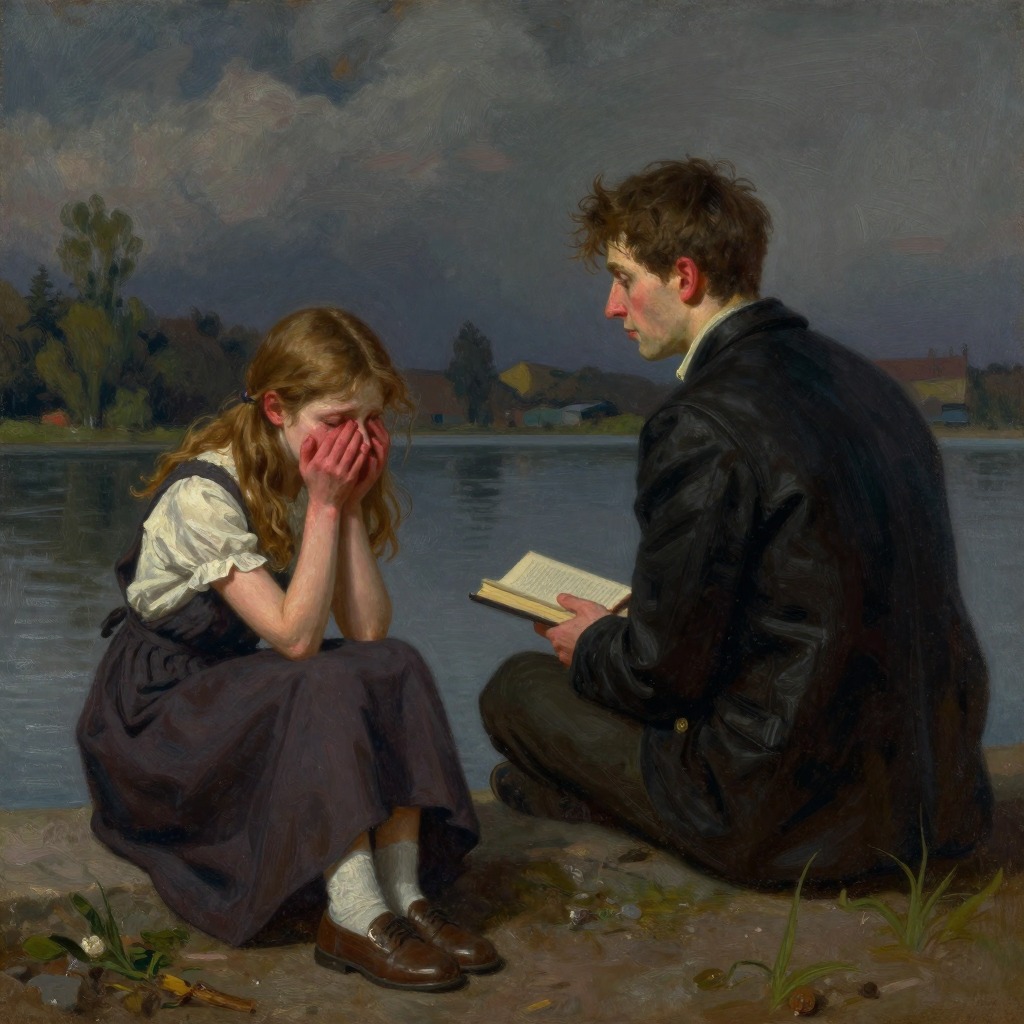
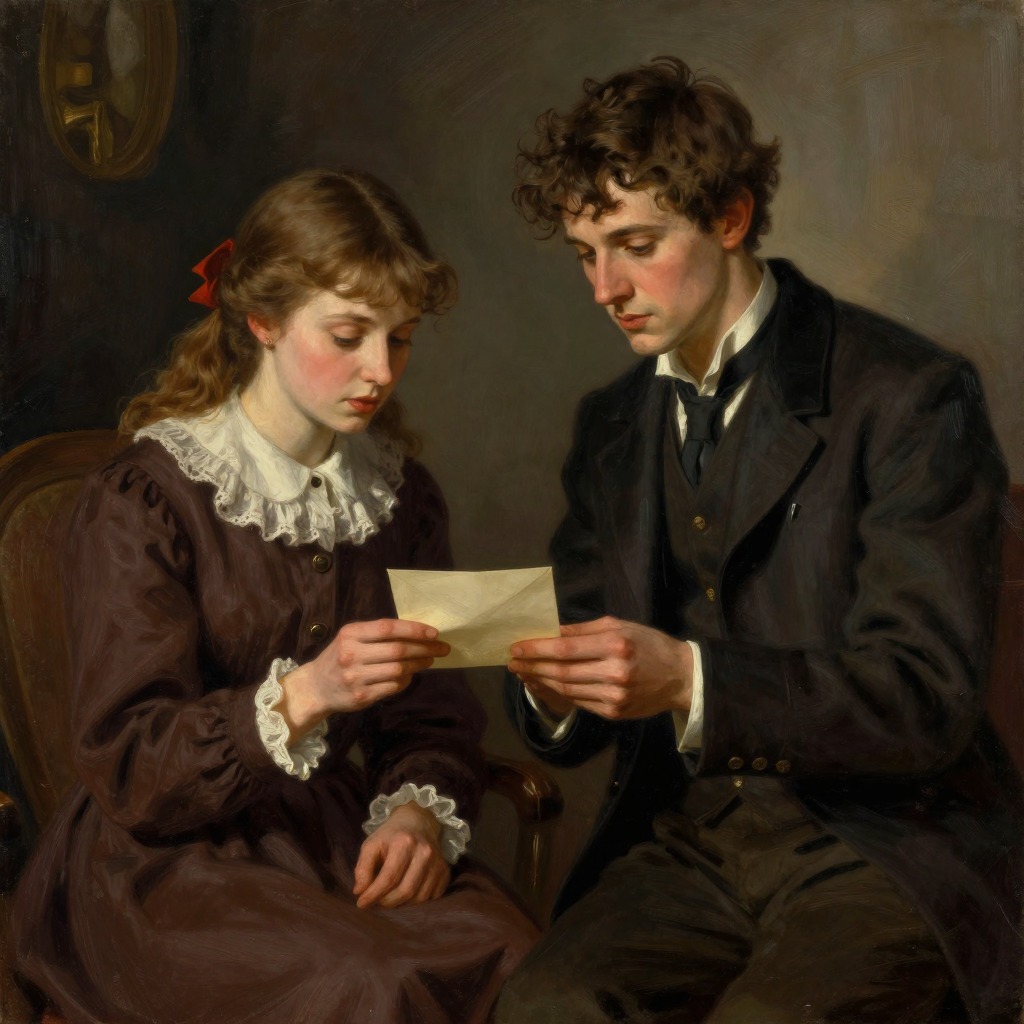
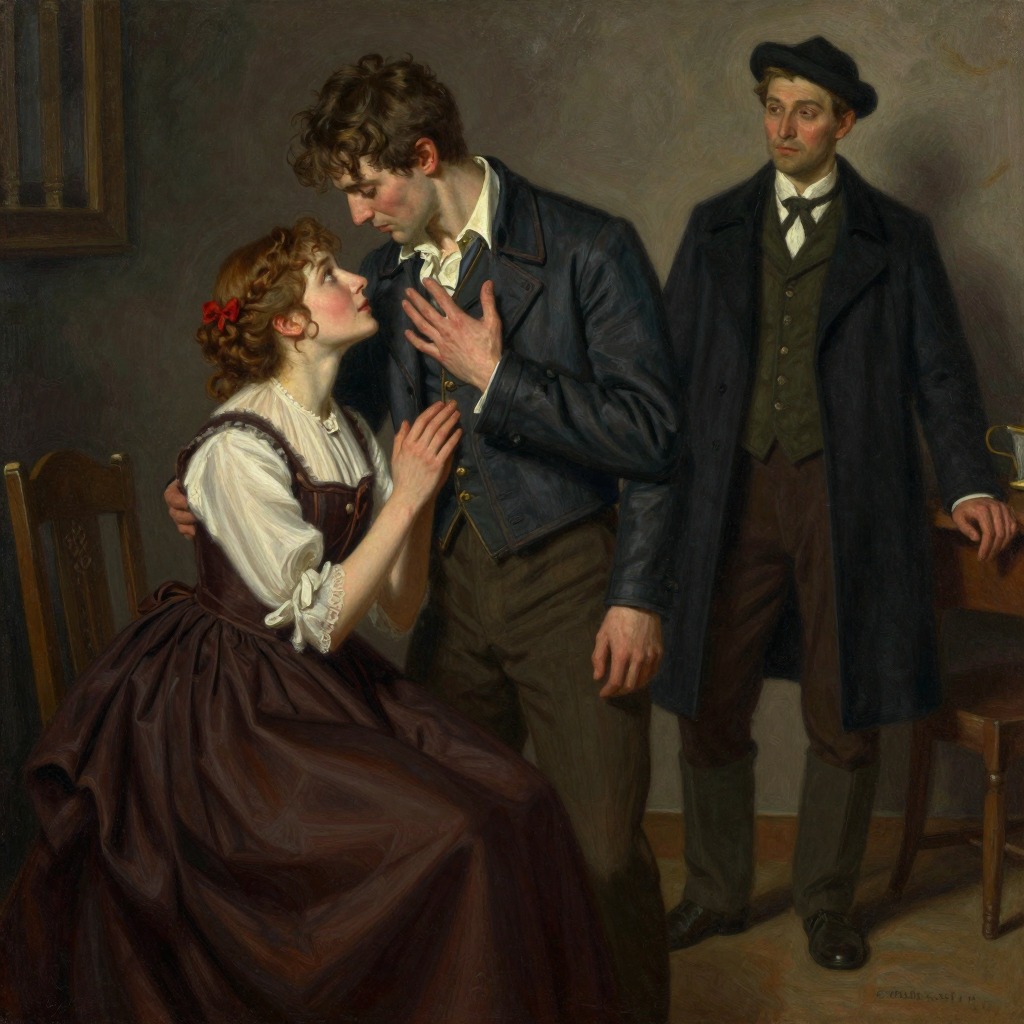
The Dreamer's story unfolds over four nights and one morning during the white nights season in Petersburg. On the First Night, after a day of despondency caused by the city's summer exodus to villas, he wanders along the canal embankment and encounters a young woman crying. He rescues her from a drunken gentleman and walks her home, learning her name is Nastenka. They agree to meet the next evening. On the Second Night, he delivers a long, self-lacerating monologue about the nature of dreamers, describing how they live in fantastic worlds, how they are paralyzed by real social interaction, and how they celebrate anniversaries of sensations that never existed. Nastenka then tells him her own story: she lives pinned to her blind grandmother, and she fell in love with a young lodger who promised to return in a year to marry her. He has been back in Petersburg for three days but has not contacted her. The Dreamer helps her compose a letter to the lodger. On the Third Night, a rainy day, Nastenka does not appear at first; when she does, she is anxious and hopeful. The Dreamer realizes that her tenderness toward him is merely the overflow of her joy at the prospect of seeing her beloved. On the Fourth Night, the lodger has still not responded. Nastenka, in despair, declares she will forget him. The Dreamer, unable to contain himself, confesses his love for her. She initially rebuffs him, then, in a surge of emotion, accepts his love, saying she will get over her old feeling. They make plans to live together, to take in her grandmother, and for him to become her lodger. But as they walk, the lodger suddenly appears. Nastenka cries out, rushes to him, and then returns to give the Dreamer a warm, tender kiss before leaving with the lodger. The next morning, the Dreamer receives a letter from Nastenka apologizing, explaining that she still loves the lodger and will marry him the following week, and asking the Dreamer to remain her friend. He reads the letter, weeps, and blesses her happiness.
Key Actions and Objectives
The Dreamer's central action is the act of confession and self-revelation. On the Second Night, he delivers a lengthy, almost theatrical monologue in which he defines the dreamer as a type, describing the strange nooks of Petersburg where such people live, their terror of real visitors, and their addiction to fantasy. He confesses that he has lost all his best years, that his life is a crime and a sin, and that he is forced to celebrate the anniversaries of sensations that never existed. His objective throughout the four nights is to connect with Nastenka, first as a friend and confidant, then as a lover. He helps her write the letter to the lodger, he waits with her, he comforts her, and finally he declares his love. His ultimate objective, however, is to escape his own solitude — to prove that he is capable of real life, not just fantasy. When Nastenka accepts him, he immediately begins planning a concrete future: he will move into her house, they will take her grandmother, he will get his salary, she will give lessons. But this objective is shattered by the lodger's return.
Relationships and Conflict
The Dreamer's primary relationship is with Nastenka. It begins as a chivalrous rescue and quickly deepens into a confiding friendship. Nastenka tells him her entire history, and he listens with rapt attention. The central conflict is the asymmetry of their feelings: Nastenka loves the lodger, while the Dreamer falls in love with her. He is acutely aware of this from the Third Night onward, noting that her tenderness toward him is merely the "coquetry of happiness" — the overflow of her joy at the prospect of seeing another man. He suffers in silence until the Fourth Night, when her despair at the lodger's absence finally forces his confession. The conflict is resolved not by the Dreamer winning Nastenka, but by the lodger's sudden return, which restores Nastenka to her original love and leaves the Dreamer alone. His relationship with the rest of the world is defined by absence: he has no friends, no acquaintances, only the silent old man on the Fontanka and the houses he personifies. His relationship with his landlady Matrona is one of distant, comic incomprehension; she simply stares at him when he complains about the spider's web.
Change and Ending
The Dreamer undergoes a profound but ultimately circular change. He is pulled out of his fantasy world by the reality of Nastenka's presence and his love for her. For a brief period, he experiences genuine happiness and makes concrete plans for the future. He tells Nastenka that she has reconciled him with himself, that he will no longer think so ill of himself. But the lodger's return and Nastenka's departure shatter this new reality. The ending is one of quiet, resigned acceptance. He reads Nastenka's letter, weeps, and then blesses her: "May your sky be clear, may your sweet smile be bright and untroubled, and may you be blessed for that moment of blissful happiness which you gave to another, lonely and grateful heart!" He returns to his solitary room, where he sees his future stretching before him: fifteen years older, in the same room, with the same Matrona. The novel's final line — "My God, a whole moment of happiness! Is that too little for the whole of a man's life?" — transforms his loss into a kind of gratitude, but it also confirms his return to the dreamer state, now with a real memory to cherish instead of a fantasy.
Narrative Role and Evaluation
The Dreamer is both the narrator and the central consciousness of "White Nights." The entire story is filtered through his perception, his memory, and his emotional state. He addresses the reader directly, creating an intimate, confessional tone. His narrative is marked by long, lyrical, self-analytical passages that define the dreamer as a social and psychological type. He is a deeply sympathetic figure — lonely, self-aware, generous, and capable of genuine love — but also a tragic one, unable to sustain a foothold in real life. Dostoevsky uses him to explore the pathology of excessive imagination, the pain of unrequited love, and the redemptive power of a single moment of genuine happiness. The Dreamer's final blessing of Nastenka elevates him from a pitiable figure to a morally heroic one: he chooses gratitude over resentment, and in doing so, he transforms his loss into a lasting, if bittersweet, treasure.