Lodger
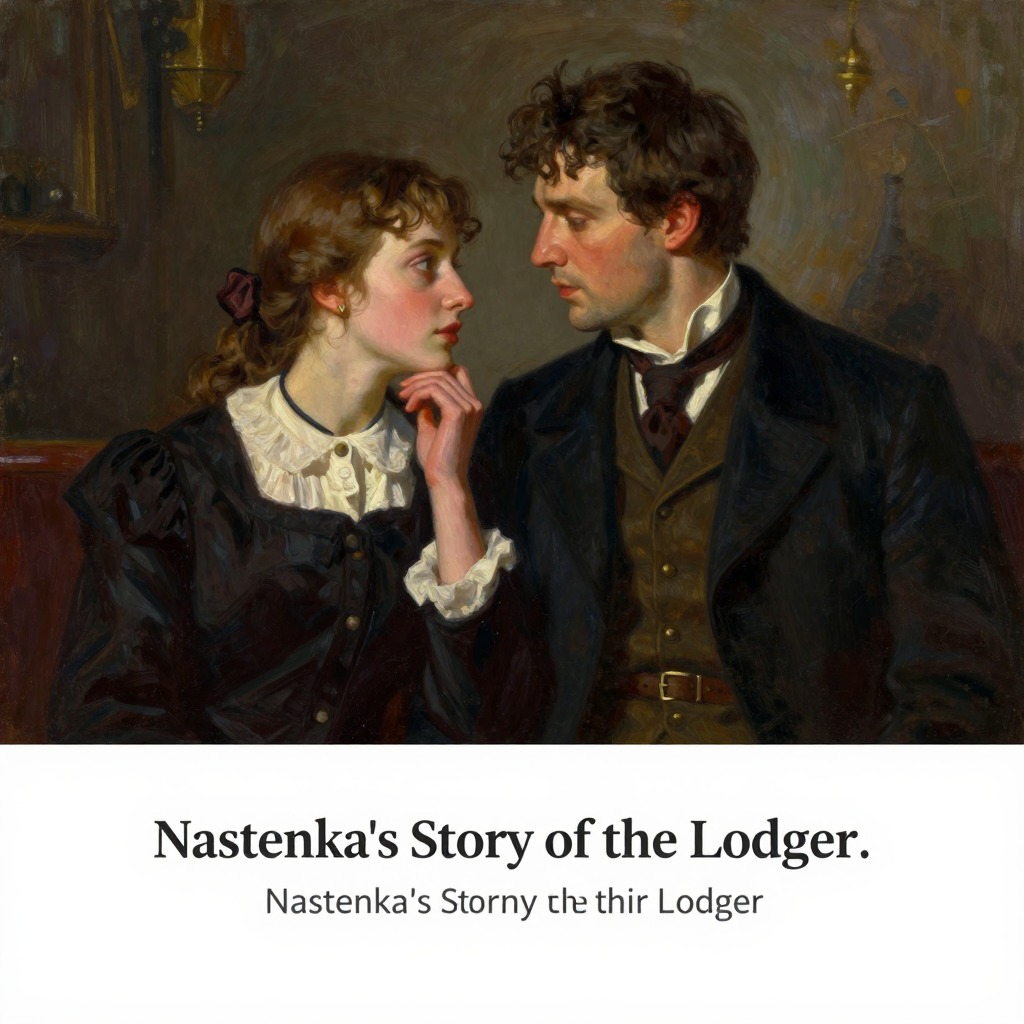
White NightsThe Lodger is the young man whose arrival in the little wooden house with three windows disrupts the quiet, pinned existence of Nastenka and sets in motion the central romantic drama of White Nights. He is the unseen beloved for a year, the promised husband who fails to appear, and finally the figure whose return shatters the Dreamer's newfound hope. More a presence defined by absence than a fully drawn character, the Lodger functions as the story's magnetic pole: everything Nastenka does—her secret meetings, her letter, her tears—is a response to him, and the Dreamer's entire arc is measured against the shadow he casts.
Identity and Arrival
The Lodger is a young man, a stranger not from Petersburg, who takes the vacant upper floor of Nastenka's house after the previous elderly, silent lodger dies. He does not haggle over the rent, which leads Nastenka's blind grandmother to accept him immediately. When the grandmother asks Nastenka about his appearance, Nastenka admits he is "pleasant looking," prompting the grandmother to warn her against paying him any attention. The Lodger's first significant encounter with Nastenka occurs when he visits to ask about papering his rooms; Nastenka, forgetting she is pinned to her grandmother, jumps up and reveals her constrained situation, blushing and crying with shame. The Lodger, seeing her distress, bows and leaves at once, an act of delicacy that marks his character.
Courtship Through Books and Theatre
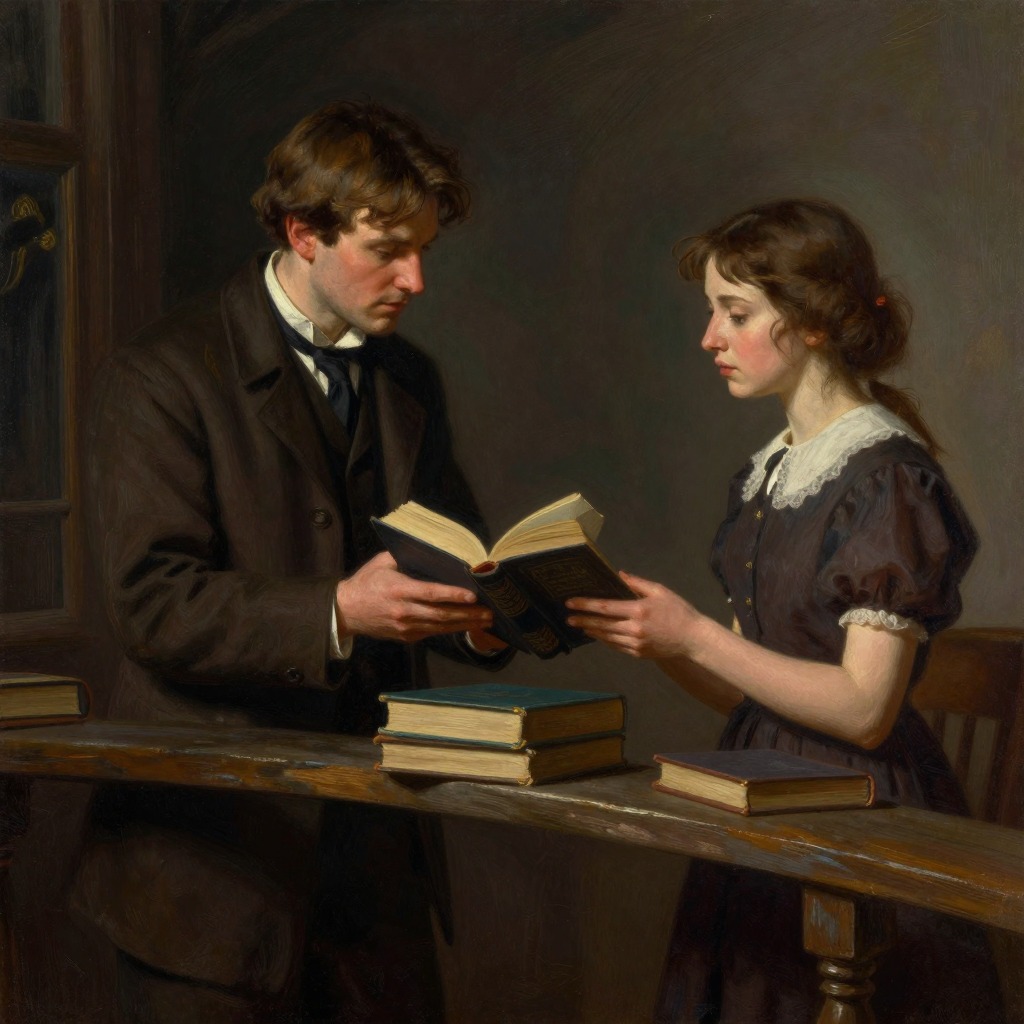
A fortnight later, the Lodger sends word through the charwoman Fyokla that he has a collection of French books, all moral, which Nastenka might read to relieve her boredom. The grandmother, suspicious, checks for hidden love letters under the bindings, but finds none. The books—Walter Scott's novels and Pushkin's works—become Nastenka's escape from her confined life; she stops dreaming of marrying a Chinese Prince. The Lodger begins to meet Nastenka on the stairs, exchanging brief, blushing greetings. He asks if she is dull sitting with her grandmother and, when she admits she has no friends, proposes taking her to the theatre without her grandmother's knowledge. Nastenka refuses to deceive her grandmother, but the Lodger then invites the grandmother herself, securing her agreement by mentioning The Barber of Seville, which she remembers performing in as Rosina in her youth. The three attend the opera, and Nastenka is overwhelmed by joy at the Lodger's kind attention. After this, however, his visits become rare—about once a month, only to invite them to the theatre again. Nastenka grows restless and thin, realizing he is motivated only by pity for her constrained life.
The Promise and the Year of Waiting
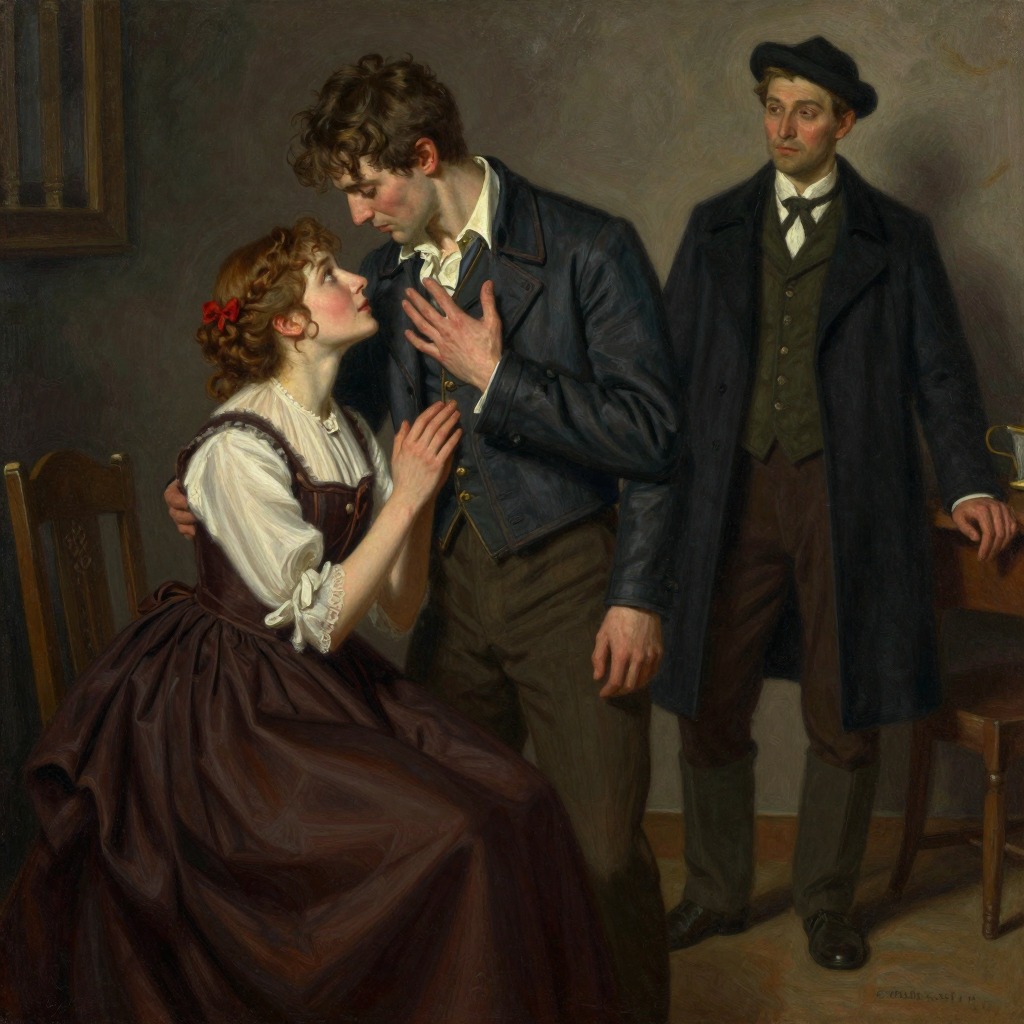
A year before the story's present, in May, the Lodger announces he must return to Moscow for a year to establish his position. On the eve of his departure, Nastenka, desperate, packs her belongings and goes to his room. She finds him and, in floods of tears, declares she cannot live without him. The Lodger responds with a careful, honorable promise: he is a poor man with no decent berth, but if he is ever in a position to marry, she will make his happiness. He asks her to wait a year, swearing that if she still loves him upon his return, they will be married. He refuses to bind her with a formal promise, giving her full freedom. They agree to tell the grandmother nothing, and he leaves. The Lodger's promise is the anchor of Nastenka's hope for the entire year.
The Failed Return and the Letter
When the year is up, the Lodger has returned to Petersburg—Nastenka knows this—but for three days he does not appear and sends no letter. This failure to honor their agreement to meet at the canal bench at ten o'clock on the day of his arrival drives Nastenka to despair. She writes a letter, which the Dreamer delivers to the Lodger's address through her friends. The letter is a plea: she apologizes for her impatience but declares she does not blame him, acknowledging she has no power over his heart. She asks only for a sign. The Lodger does not respond. On the fourth night, when the Dreamer tells Nastenka there is no letter, she breaks down, accusing the Lodger of inhuman cruelty. She declares she will forget him, that she no longer loves him. It is at this moment of utter abandonment that the Dreamer confesses his love, and Nastenka, in her grief and gratitude, accepts him.
The Return and the Aftermath
Just as Nastenka and the Dreamer begin to plan a future together—he will rent the empty upper floor, they will take care of the grandmother, she will give lessons—the Lodger suddenly appears on the embankment. He calls out Nastenka's name. She tears herself from the Dreamer's arms, rushes to the Lodger, and then, in a final gesture, returns to kiss the Dreamer warmly before taking the Lodger's hand and disappearing with him. The next morning, Nastenka writes to the Dreamer, explaining that the Lodger has come back in love and has never forgotten her. She asks for forgiveness and declares that she will marry him the following week. The Lodger's return, though it brings Nastenka happiness, leaves the Dreamer utterly alone, his moment of happiness already past. The Lodger himself remains a figure of honorable but devastating absence and presence: he keeps his promise, but only after the Dreamer has been allowed to hope.