Matrona
White NightsMatrona is the Dreamer's elderly landlady and housekeeper in his Petersburg lodgings, a figure of unadorned domestic reality whose practical, unimaginative nature serves as a foil to the Dreamer's rich inner life of fantasy. She is the sole human presence in his solitary existence, yet her complete inability to comprehend or share his imaginative world underscores the depth of his isolation. Her final appearance in the story, after the Dreamer has read Nastenka's farewell letter, crystallizes the themes of aging, stagnation, and the quiet desolation that awaits a life lived entirely in dreams.
Identity and Role
Matrona is the Dreamer's servant, the only person with whom he has regular, if minimal, contact. She is described as "always thoughtful and depressed" as she clears the table and gives him his pipe after dinner, a routine that marks the boundary between his fantasy-filled afternoons and the return to a drab reality. The Dreamer notes that she has one significant fault: "she has no imagination, Nastenka, absolutely none." This lack of imaginative capacity makes her the perfect inhabitant of the mundane world from which the Dreamer constantly flees into his dreams. She is not a confidante or a friend; she is a function, a part of the furniture of his life, as unremarkable as the grimy green walls and the spider's web she has "so successfully encouraged" to grow on the ceiling.
The Dreamer's Confidante and the Letter
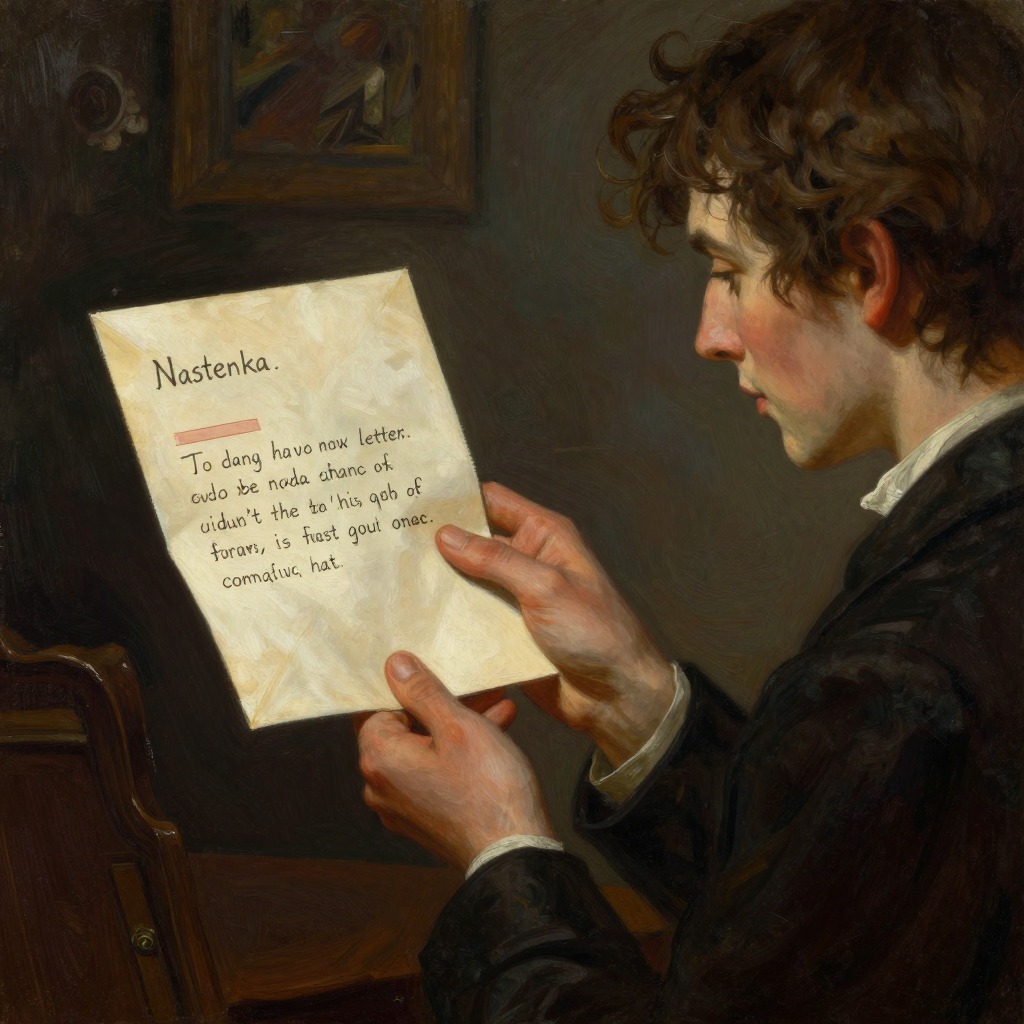
Matrona's most significant narrative action occurs in the story's final section, "Morning." As the Dreamer lies in bed, feverish and disoriented after the emotional devastation of the fourth night, Matrona enters to inform him of a letter: "There's a letter for you, sir; the postman brought it." When the Dreamer, startled, asks from whom it is, she replies with characteristic practicality: "I don't know, sir, better look — maybe it is written there whom it is from." She does not speculate, does not offer comfort, does not pry. She simply delivers the object and waits. This moment is the only time in the story that Matrona directly facilitates a plot development, and she does so with the same flat, uncurious efficiency with which she clears tables and ignores cobwebs.
Thematic Significance: The Emptiness of a Life Without Dreams
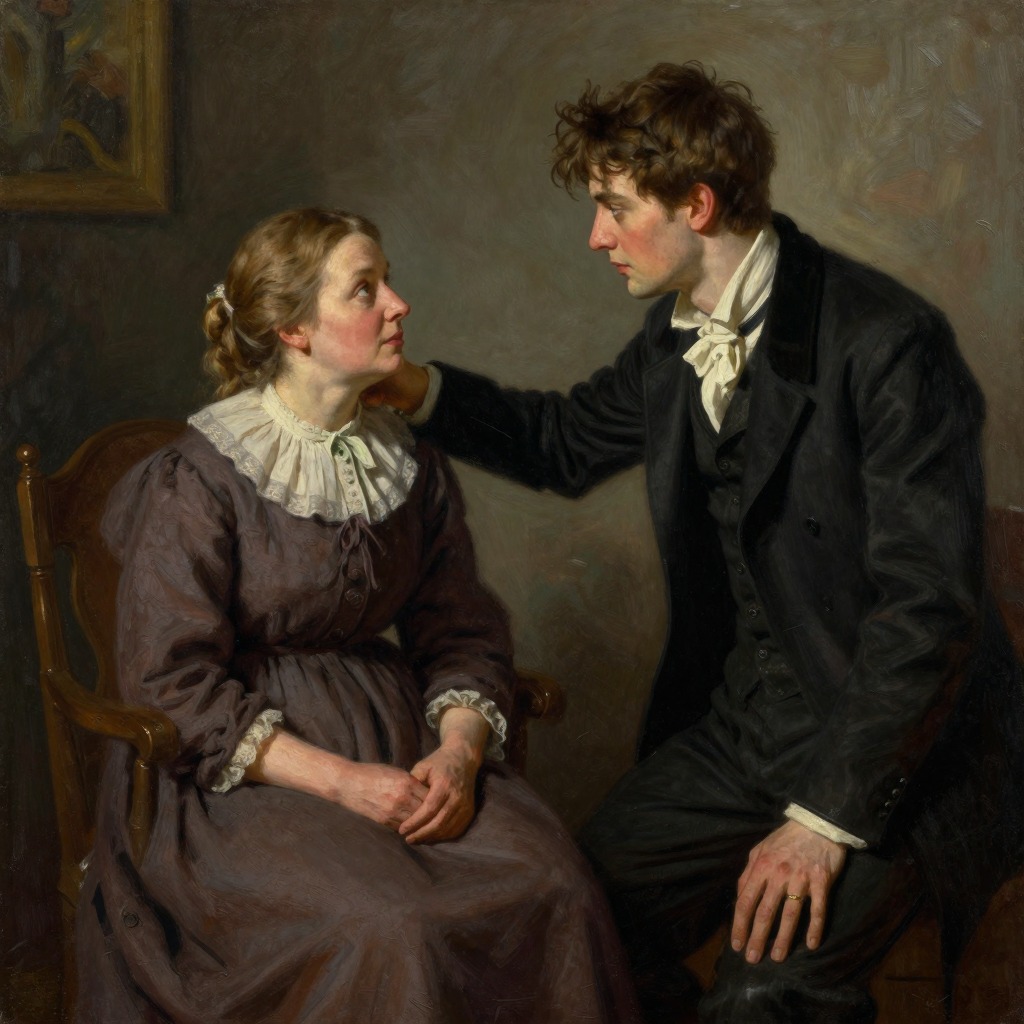
After the Dreamer has read Nastenka's letter and wept, Matrona speaks again, this time with a remark that is both absurdly practical and devastatingly symbolic. She announces, "I have taken all the cobwebs off the ceiling; you can have a wedding or give a party." The line is a grotesque non sequitur — the Dreamer's hopes of marriage have just been shattered, and Matrona, oblivious to his inner turmoil, has busied herself with a chore he had complained about on the first night. Her action, meant to prepare the room for a celebration, instead highlights the utter emptiness of his future. The Dreamer, looking at her, suddenly sees her not as the familiar, "hearty, youngish old woman" she has always been, but as a figure of decay: "I don't know why all at once I suddenly pictured her with lustreless eyes, a wrinkled face, bent, decrepit." This vision of Matrona's aging is inseparable from his own. He then imagines his room growing old with her, the walls discolored, the spider's webs thicker than ever. Matrona, the embodiment of a life without imagination, becomes the mirror in which the Dreamer sees his own future: fifteen years older, in the same room, just as solitary, with the same Matrona "grown no cleverer for those fifteen years." She is not a character who changes or develops; she is a constant, and that constancy is precisely what makes her so poignant a symbol of the static, unfulfilled life that awaits the Dreamer after his brief encounter with real love has ended.