dreamer intermediate creature
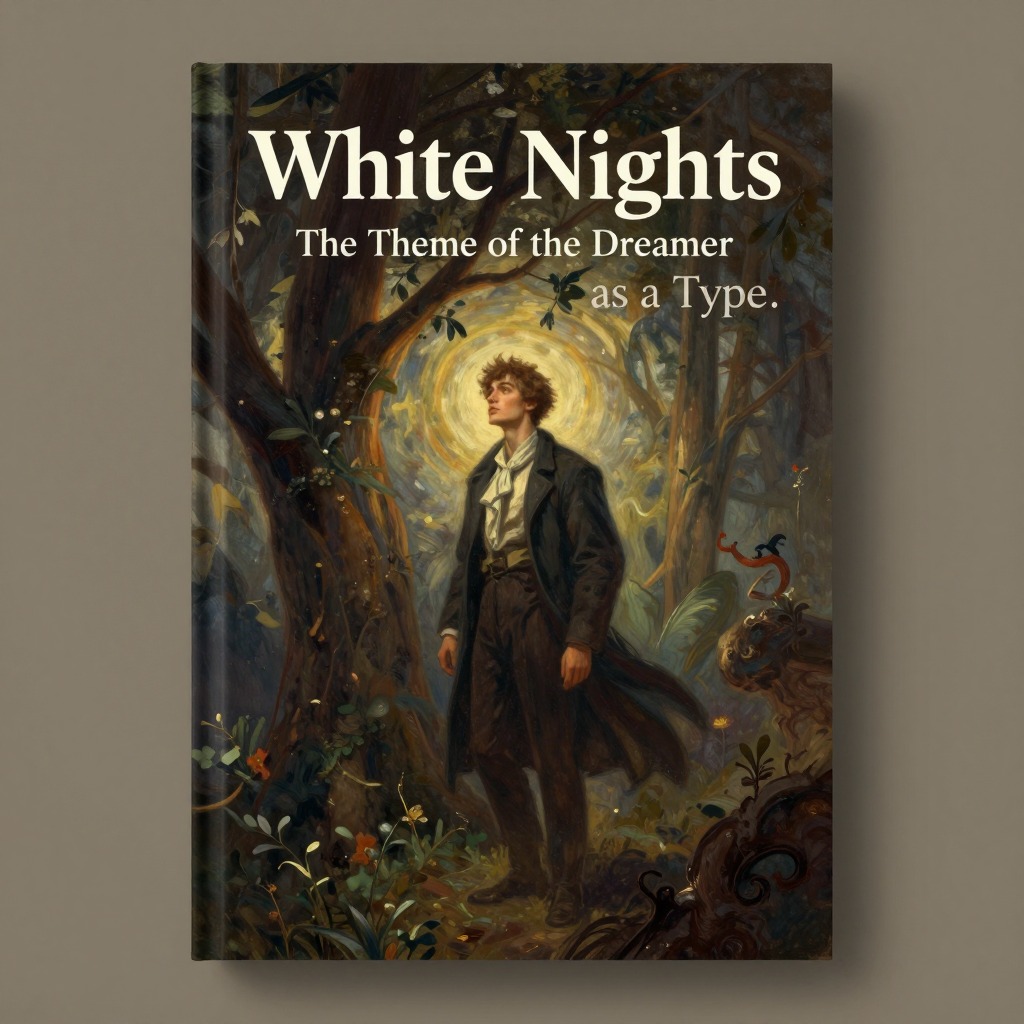
White NightsIn Fyodor Dostoevsky's White Nights, the Dreamer introduces the concept of the "dreamer intermediate creature" during his second conversation with Nastenka, offering a precise definition of the dreamer's nature. This definition emerges as the Dreamer attempts to explain his own existence and the peculiar psychology of those who inhabit the strange corners of Petersburg. The term encapsulates the idea that a dreamer is not a complete human being but a being of an intermediate sort, a creature that exists in a suspended state between the tangible world and the realm of fantasy.
Definition and Nature
The Dreamer, speaking with a pedantically serious attitude as though reading from a manuscript, tells Nastenka that in certain strange nooks of Petersburg, a different life is lived—a mixture of the purely fantastic and fervently ideal with the dingily prosaic and ordinary. In these corners live strange people called dreamers. The dreamer, he explains, is not a human being but a creature of an intermediate sort. For the most part, such a person settles in some inaccessible corner, as though hiding from the light of day, and once he slips into his corner, he grows to it like a snail or, in another comparison, like a tortoise—an animal and a house both at once. This description emphasizes the dreamer's withdrawal from society and his attachment to a confined, private space that becomes both his shelter and his prison.
Behavior and Social Awkwardness
The Dreamer elaborates on the dreamer's behavior when visited by an acquaintance, painting a vivid picture of social awkwardness and embarrassment. When a friend visits, the dreamer meets him with confusion, changing countenance and overcome with shame, as though he had committed a crime within his four walls—forging counterfeit notes or writing verses to be sent to a journal with an anonymous letter. Conversation becomes strained; no lively word flies from the tongue of the perplexed newcomer, who at other times may be fond of laughter and cheerful subjects. The friend himself becomes tongue-tied, looking at the downcast face of his host, who makes fruitless efforts to smooth things over. Eventually, the friend remembers some very necessary business that never existed, seizes his hat, and hurries off, swearing never to return. The Dreamer compares the dreamer's expression during such an encounter to that of an unhappy kitten treacherously captured, roughly handled, and frightened by children, until it hides under a chair in the dark, later bristling up and washing its insulted face with both paws.
Life of Fantasy and Withdrawal
The Dreamer further describes the dreamer's daily life, particularly the hour when work is over and he is free to indulge his imagination. At that hour, the dreamer walks along the streets, but a strange feeling of pleasure sets his pale, crumpled face working. He does not look at the evening glow but sees it without realizing, as though tired or preoccupied. He is pleased because he is released from irksome business, happy as a schoolboy let out from class. The Goddess of Fancy has already spun her golden warp and woven patterns of marvellous magic life, bearing him to the seventh crystal heaven far from the granite pavement. If stopped and asked where he is, he remembers nothing and flushes with vexation. He starts and looks round with horror when a respectable old lady asks him for directions. Fancy catches up in its playful flight the old woman, curious passers-by, and a laughing child, weaving everyone into its canvas like a fly in a spider's web. Only after returning to his comfortable den, having dined without knowing how, does he come to himself. The room grows dark, his soul is sad and empty, and the whole kingdom of fancies drops to pieces like a dream. But a vague sensation stirs his heart, evoking a swarm of fresh phantoms. Imagination is fostered by solitude and idleness, faintly smouldering like water boiling for coffee. A book drops from his hand before the third page, and a new world, a new fascinating life opens before him.
The Dreamer's Self-Perception and the Cost of Fantasy
The Dreamer reveals that the dreamer believes real life is poor and pitiful, and he looks down on those who live it torpidly, slowly, and insipidly. He is the artist of his own life, creating it every hour to suit his latest whim. The fantastic world is so easily created that he is ready to believe it is concrete and real. At such moments, his pulse quickens, tears start from his eyes, his pale cheeks glow, and whole sleepless nights pass like a flash. Yet the Dreamer confesses that this life is a crime and a sin, and that at times he is incapable of beginning a life in real life, having lost all touch with the actual. He hears the whirl and roar of the crowd in the vortex of life around him and sees that their life is eternally renewed, while his fancy is spiritless, monotonous, and easily scared. The inexhaustible fancy grows weary and worn out; old ideals shatter into fragments, and the soul longs for something else. The dreamer is forced to celebrate the anniversary of his own sensations, visiting places where he was once happy in his own way, and asking himself where his dreams have gone. He foresees gloomy solitude, old age trembling on its crutch, and misery and desolation, with his dreams falling like yellow leaves from the trees.
Significance in the Narrative
The concept of the dreamer intermediate creature serves as a central self-definition for the Dreamer, explaining his isolation, his intense emotional response to Nastenka, and his ultimate resignation. It frames his entire existence as a being caught between the real and the imagined, unable to fully participate in life yet capable of profound feeling. Nastenka, after hearing his description, recognizes that she too has experienced similar feelings when pinned to her grandmother, and she insists that the Dreamer must not continue living that way. The concept thus becomes a lens through which the reader understands the Dreamer's tragedy: his love for Nastenka is real, but his nature as an intermediate creature prevents him from claiming a place in her world. The final letter from Nastenka, in which she asks for his continued friendship, and the Dreamer's blessing of her happiness, underscore the bittersweet resolution of a being who can only experience a moment of blissful happiness, yet finds that moment enough for a whole man's life.