pin
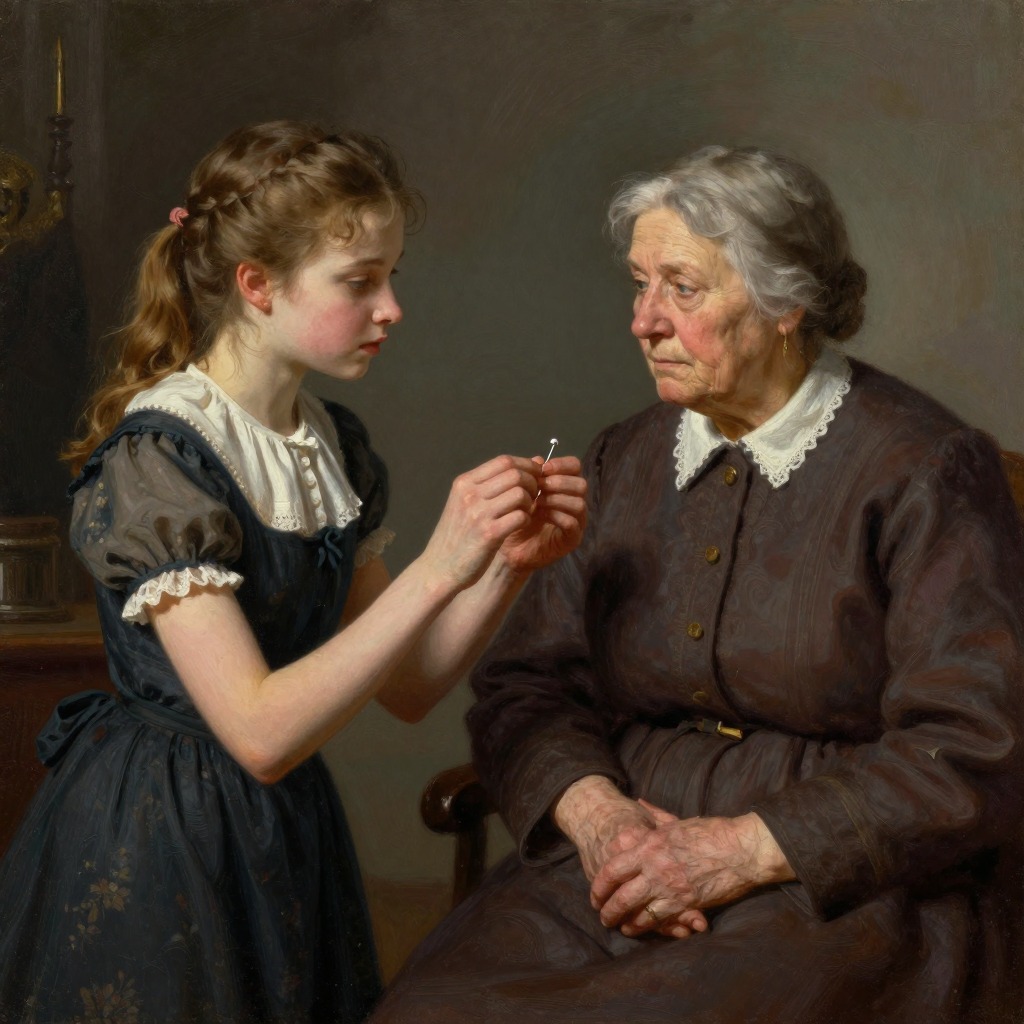
White NightsThe pin is an ordinary sewing implement that Grandmother repurposes into a device of absolute control, physically fastening Nastenka to her own clothing so that the girl cannot move, speak privately, or act independently. This act turns a trivial household object into the material embodiment of Nastenka's captivity, a daily, tangible reminder that her life is not her own. The pin's significance radiates outward from this single act of pinning to govern Nastenka's every interaction, her hopes, her secret plans, and ultimately her desperate bid for freedom.
Origin and Mechanism of Control
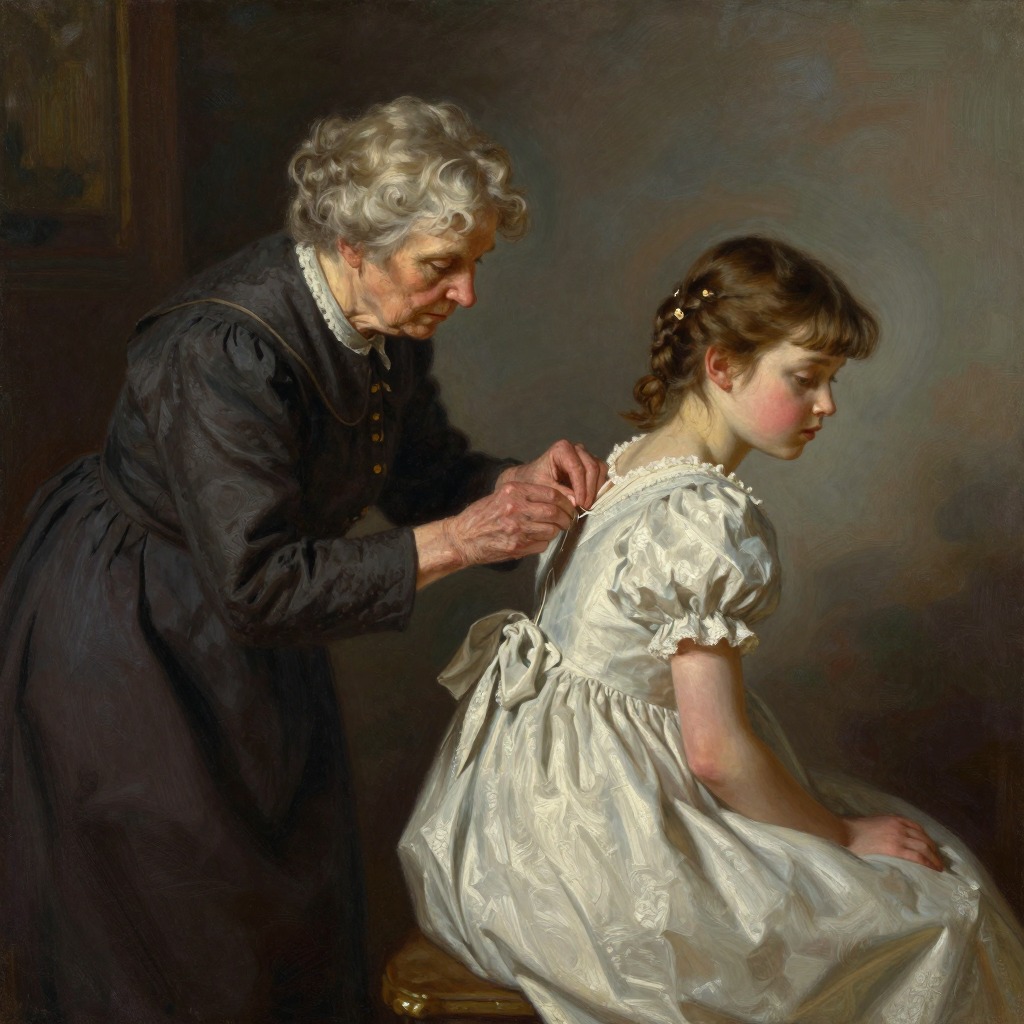
Grandmother, blind and unable to supervise Nastenka visually, devised the pin as a tactile, fail-safe method of restraint. When Nastenka was fifteen, Grandmother called her one morning, explained that her blindness made it impossible to watch over her, and then "took a pin and pinned my dress to hers, and said that we should sit like that for the rest of our lives if, of course, I did not become a better girl" . The pin thus became a permanent fixture of Nastenka's life, a constant physical link that bound her to Grandmother's side for all activities—working, reading, and studying. The only way to escape was to deceive Grandmother, as Nastenka once attempted by persuading the deaf charwoman Fyokla to sit in her place while she visited a friend. When Grandmother woke and discovered the substitution, the deception was uncovered, and Nastenka was forced back into her pinned position with even stricter consequences .
The Pin as a Social and Emotional Barrier
The pin did more than confine Nastenka physically; it shaped her entire social world and emotional development. She confessed to the Dreamer that she had "almost forgotten how to talk" because of her isolation, and that for two years she had been "pinned to her" grandmother, sitting together day after day while Grandmother knitted and Nastenka sewed or read aloud . The pin made any normal social interaction impossible. When the Lodger first visited their apartment, Nastenka, forgetting she was pinned, jumped up to fetch Grandmother's reckoner, and the chair moved, revealing her bondage to him. She blushed, stood "as though I had been shot," and began to cry from shame and misery . The pin had turned a simple household errand into a public humiliation, exposing her powerlessness before a stranger. Even after the Lodger began lending books and showing kindness, the pin remained an obstacle. Nastenka would stealthily undo it at the slightest sound in the passage, hoping it might be the Lodger, but he never came during those moments . The pin governed her hopes as much as her movements.
The Pin as a Catalyst for Rebellion
The pin's oppressive presence ultimately drove Nastenka to her most desperate act. When the Lodger announced he was leaving for Moscow for a year, Nastenka resolved to escape her pinned existence entirely. She made up a parcel of all her necessary linen and, "more dead than alive," went upstairs to his room, where she sat beside the bed, hid her face, and wept . In that moment, the pin was not just a physical object but the symbol of everything she was willing to risk—her home, her grandmother, her security—for a chance at love and freedom. The pin's rule was so absolute that even after the Lodger's return and apparent abandonment, Nastenka's first thought was of the pin's tyranny. When she believed he had rejected her, she cried out, "Oh, what I've suffered during these three days! Oh, dear! When I think that I was the first to go to him, that I humbled myself before him, cried, that I begged of him a little love!" . The pin had made her so desperate for human connection that she was willing to sacrifice her dignity.
The Pin's Aftermath and Symbolic Resonance
After Nastenka's reconciliation with the Lodger and her letter to the Dreamer, the pin disappears from the narrative as a physical object, but its legacy lingers. The Dreamer, reading her letter, is overcome with emotion, and Matrona, the housekeeper, announces that she has cleaned the cobwebs from the ceiling, adding, "you can have a wedding or give a party" . The pin's removal from Nastenka's life is not directly described, but its absence is felt in the new freedom she anticipates. The Dreamer, left alone, sees his own room grow old and dingy, and the spiders' webs thicker than ever , a mirror of the stagnation the pin once enforced on Nastenka. The pin, then, is not merely a plot device but a concentrated symbol of the story's central tension: the struggle between confinement and the yearning for authentic life. It is the object through which Grandmother's authority, Nastenka's suffering, and the Dreamer's vicarious experience of love are all mediated, a small, sharp thing that pins an entire world of feeling in place.