Fall of man
Who's Causing Your TroubleThe Fall of man is the foundational condition from which the book explains the presence of sin, evil, suffering, deception, and spiritual bondage in the world. It is not portrayed as part of God’s original design, but as an unnatural intrusion produced when Satan interfered with God’s perfect creation, tempted Adam and Eve, and led them into disobedience. The state therefore carries both a historical cause and an ongoing interpretive consequence: later troubles must be understood in relation to the spiritual enemy who first disrupted creation.
Origin in a Good Creation
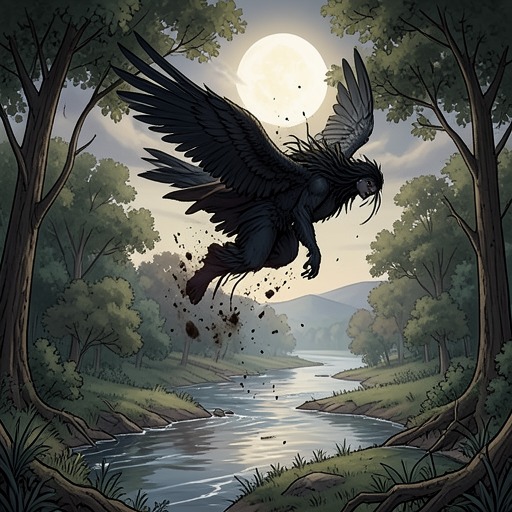
The argument begins with the contrast between creation as God made it and the world as it appears after the Fall. God saw everything that he had made and declared it very good, while Satan himself was also perfect when God created him. The distinction matters because evil is treated as neither an eternal substance nor an original feature of the created order. It entered through the misuse of free will. Satan’s rebellion and sin became the channel through which evil reached the human world, turning a good creation toward disorder without making God the author of that disorder.
Satan’s role is thus described as active interference rather than passive presence. Through the misuse of his own freedom, he brought sin and evil into the world and then directed that corruption toward humanity. The Fall of man begins when the devil’s spiritual action takes the form of temptation, and it becomes humanity’s fallen condition when Adam and Eve choose disobedience. The account preserves both levels of causation: Satan sets the trap, while the human pair responds to it by eating what God had forbidden.
The Trap and Its Exposure
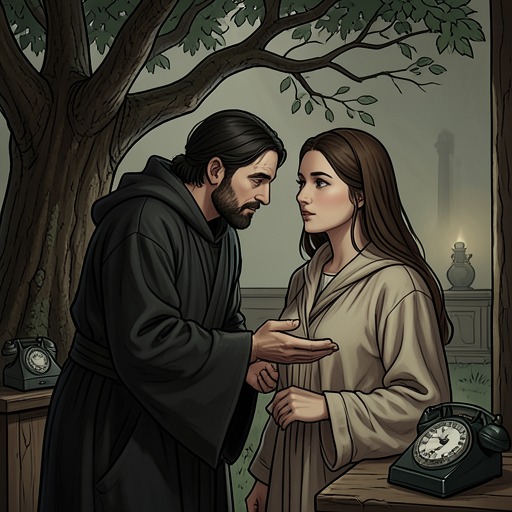
The Genesis account first shows Adam attempting to shift responsibility onto Eve. He says that the woman given to him supplied the fruit and that he ate it. His response places the immediate act before the reader but obscures the deeper source of the temptation. Eve’s answer changes the direction of the narrative. When questioned about what she has done, she identifies the serpent as the one who beguiled her and acknowledges that she ate.
This recognition is presented as more than an explanation of past conduct. By naming the serpent, identified by the book with Satan, Eve places blame on the guilty spiritual force behind the Fall rather than continuing to wrestle with another human being. The account consequently distinguishes between the human participants who disobeyed and the enemy who motivated the deception. Eve does not erase her own action, but she exposes the agency operating behind it.
Judgment and the Possibility of Deliverance
Once the true culprit is identified, God immediately pronounces judgment upon the serpent. The serpent is cursed above the cattle and beasts of the field, condemned to move upon its belly and eat dust. God also establishes enmity between the serpent and the woman, and between their respective seed. The promised conflict culminates in the serpent’s head being bruised while the serpent bruises the heel of the woman’s seed.
The book reads this sequence as a pattern for dealing with later trouble. Identifying the actual enemy enables God’s judgment to be directed at its source and opens the way for deliverance to the people affected by it. The Fall therefore contains not only the entrance of evil but also an early model of restoration: recognition, accusation of the genuine adversary, divine judgment, and release. The speed of the response is emphasized as evidence that confusion about the source of a problem can delay victory, while clear spiritual discernment makes restoration possible.
The Fallen Pattern in Later Suffering
The condition established by the Fall becomes the framework through which the book interprets subsequent disasters. Job’s losses illustrate how appearances can assign blame to the wrong causes. In a single day Job loses his oxen, donkeys, sheep, and camels; his children die, and only four of his many servants escape with their lives. Reports attribute the separate calamities to the Sabeans, God, the Chaldeans, and the wind. Yet the heavenly exchange shows that Satan received authority to test Job and took control of everything Job possessed.
The human raiders and the destructive wind remain part of the visible chain of events, but the book identifies Satan as the mastermind of Job’s losses. It specifically rejects the conclusion that God caused the destruction, even though the account says God permitted Satan to test Job. This distinction extends the central lesson of the Fall into the interpretation of suffering: visible agents, natural circumstances, and religious assumptions may conceal the spiritual source of harm.
The same pattern appears in the account of the bent woman. Religious leaders regarded her condition as a merely physical problem and argued that Jesus should not address it on the Sabbath. Jesus looked beyond the body to the spiritual root, recognizing that Satan had bound her for eighteen years. When the true culprit was named, the woman was healed immediately; the multitudes rejoiced, while the adversary was put to shame. The scene presents bodily affliction as another expression of the fallen order and divine healing as deliverance from Satan’s interference.
Human Agency Under Spiritual Pressure
The book also applies the Fall’s logic to conduct within the Christian community. Judas had an intimate relationship with Jesus and belonged among the twelve disciples, who were given power against unclean spirits and authority to heal sickness and disease. Nevertheless, he allowed the devil to control his mind and turn him against Jesus. Jesus understood the spiritual source of Judas’s unfaithfulness, even describing one of the chosen twelve as a devil. The episode shows that proximity to sacred authority does not remove the possibility of satanic influence.
Simon Peter’s rebuke of Jesus provides a second example of a human being treated as an unwitting instrument of the true enemy. Peter speaks, but Jesus recognizes that Satan is the force behind the resistance and rebukes Satan rather than reducing the conflict to a personal quarrel with Peter. The incident separates the visible speaker from the spiritual opposition working through him while preserving the seriousness of the words and their effect.
Ananias and Sapphira likewise act within a human community but are said to have been persuaded by Satan to lie about the price of land sold for donation to the Church. Simon Peter immediately names Satan as the culprit filling Ananias’s heart with deceit. The couple’s deception has a direct human form, yet the book places it within the wider fallen pattern of satanic influence, and both Ananias and Sapphira die as a consequence. Their deaths demonstrate that spiritual attribution does not make the human act inconsequential; the deception remains an accountable action with severe communal consequences.
Recognition as the Beginning of Restoration
The book turns the Fall from a doctrine about origins into an instruction for present action. It insists that anyone seeking to overcome trouble must recognize Satan as the source of every problem, boldly accuse the devil for his part, and take authority over him. The intended confession is direct: "Satan, you are at the bottom of my trouble!" This declaration is meant to end misdirected blame and begin an exercise of authority against the destructive power associated with the fallen order.
Restoration is presented as the consequence of that recognition. The devil is said to have to restore what he has destroyed or stolen from believers and their loved ones once authority is taken over him. Yet restoration has a stated entrance condition: salvation. Before receiving restoration or any other benefit from the Kingdom of God, a person must accept Jesus as a personal Savior. The fallen state is therefore not overcome merely by diagnosing Satan’s activity; it requires a change in allegiance, from serving Satan as the god of this world to serving the God of the Word. In this theological structure, salvation is the beginning of restoration, and the Fall is the condition from which that restoration proceeds.