Satan–Job relationship
Who's Causing Your TroubleThe Satan–Job relationship is defined by concealed agency and devastating loss. Job’s disasters are not treated as random misfortune or as acts directly caused by God; they are interpreted as Satan’s organized assault, carried out through human agents and destructive forces. By reconstructing who stood behind the visible events, the narrative turns Job’s suffering into a governing example for spiritual warfare: the apparent cause is not always the real cause, and identifying the true adversary is presented as the first step toward deliverance and restoration.
The Relationship’s Basic Structure
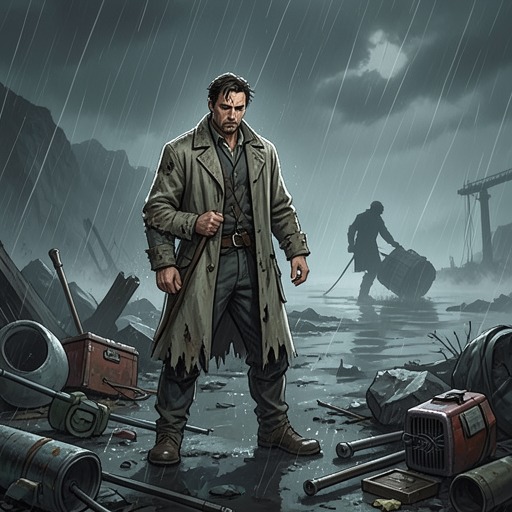
The relationship begins with Satan as the active enemy and Job as the sufferer whose life becomes the field of testing. Job is introduced as a person with immense possessions, including seven thousand sheep, three thousand camels, five hundred yoke of oxen, five hundred she-asses, and a very large household. The scale of this inventory makes the later destruction more than a private disappointment: it establishes the magnitude of what Satan is said to have placed at risk.
The book distinguishes between the visible victims and the hidden strategist. Job’s oxen and donkeys were taken by the Sabeans, and some servants were killed. The sheep and additional servants were destroyed in a fire that the report attributed to God. The camels were taken by the Chaldeans, who killed still more servants, while a wind was blamed for the deaths of Job’s children. These reports distribute responsibility among raiders, fire, and wind, but the narrative insists that none of these surface explanations reaches the relationship’s true center.
Satan’s Agency in Job’s Losses
The decisive explanation is supplied by the heavenly exchange in which God tells Satan that everything Job possesses is in Satan’s power, while forbidding him to touch Job himself. The statement establishes both permission and limitation: Satan receives authority over Job’s property, but the boundary around Job’s person remains in force. Within that permitted sphere, the subsequent robberies, killings, and destruction are interpreted as the adversary’s work.
The relationship therefore has a layered moral structure. The Sabeans and Chaldeans perform violent acts directly, and the wind and fire serve as the immediate forms through which devastation appears, yet Satan is described as the one who masterminds the losses. The text does not allow the presence of human perpetrators or natural instruments to displace the supernatural explanation. Job’s experience is thus presented as coordinated aggression rather than as a series of unrelated accidents.
The concentration of the losses intensifies this interpretation. Job loses his oxen, donkeys, sheep, and camels; all his children die; and only four of his many servants escape alive. The disasters arrive within a single day, with the surviving servants functioning as bearers of successive bad reports. Their survival makes the calamity narratively communicable: each messenger brings another visible cause, while the reader is directed toward the invisible adversary behind them all.
Misassigned Blame and Corrected Perception
A central feature of the Satan–Job relationship is the contrast between what the reports say and what the narrative claims to know. One report blames the Sabeans, another blames God for the fire, another blames the Chaldeans, and the deaths of the children are attributed to the wind. The book treats these explanations as incomplete, especially the attribution of destruction to God. It explicitly challenges the habit of interpreting harmful events as “acts of God,” noting that even insurance language commonly uses that phrase for destructive incidents of nature.
This correction has a practical purpose. If the sufferer blames God for the destruction, the source of the attack remains unidentified and resistance is misdirected. If the sufferer sees only human raiders or natural forces, the larger pattern remains hidden. By assigning ultimate responsibility to Satan, the book transforms Job’s story from an account of inexplicable catastrophe into an account of spiritual conflict in which the enemy can be named.
The same interpretive pattern is extended beyond Job. In the account of the bent woman, religious leaders see a physical problem, but Jesus Christ looks beyond the bodily condition and identifies Satan as the root of her eighteen-year bondage. The woman’s immediate healing follows the recognition of that spiritual cause. This parallel makes Job’s relationship with Satan part of a wider rule in the book: visible bodily, material, or circumstantial trouble may conceal a spiritual antagonist, and naming that antagonist is connected with release.
From Recognition to Authority
The relationship is not presented merely as a theological explanation of Job’s past. It becomes a directive for readers facing their own troubles. The book urges believers to recognize Satan as the real troublemaker, accuse him openly, and take authority over him rather than blaming God, circumstances, or surrounding people. In this framework, Job’s experience supplies the pattern, while the reader is invited to apply its logic to personal loss and adversity.
That application is expressed in economic and legal language. Once the real thief is found, the book argues, the thief must pay back what was stolen. It invokes the rule that a thief must restore sevenfold and expands that principle into a promise that the devil must restore what he has destroyed or taken from believers and their loved ones. The language of robbery, repayment, and sevenfold restoration turns spiritual authority into a claim of restitution.
The prescribed confession makes the shift in blame explicit. It rejects blaming God, circumstances, or people and announces that Satan is now recognized as the source of trouble. The confession then declares that the devil’s days of stealing are over, that he is under the believer’s feet, and that he must return what he has taken with sevenfold repayment, described in the text as seven hundred percent. Job’s losses therefore become more than an example of suffering: they become the script for a confrontation in which hidden theft is exposed and recovery is demanded.
The Relationship in the Book’s Spiritual-Warfare Framework
The Satan–Job relationship is finally placed within a larger account of conflict against principalities, powers, rulers of darkness, and spiritual wickedness in high places. The struggle is said not to be against flesh and blood, which relocates the decisive battle away from merely human opponents. Satan remains dangerous as an adversary, but the book insists that believers need not fear what he might do because Jesus Christ, through rising from the grave, stripped the devil and his demons of their power and openly displayed their defeat.
This claim changes the meaning of Job’s vulnerability. Satan may be shown exercising authority over Job’s possessions within the narrative’s heavenly permission, but the book presents the post-resurrection believer as standing within a different order of power. The enemy’s activity is real and destructive, yet it is not final. Recognition, accusation, authority, and the victory of Jesus Christ are arranged as successive answers to the pattern first displayed in Job’s catastrophe.
The relationship consequently serves two opposed readings of suffering. At the level of immediate appearance, Job’s losses look like the work of raiders, weather, fire, or divine judgment. At the level of the book’s declared interpretation, Satan is the mastermind, God is not the destroyer, and the believer’s task is to identify the thief and compel restoration. The relationship’s narrative significance lies in this reversal of perception: once the hidden adversary is recognized, suffering is recast as a conflict that can be confronted rather than an inscrutable fate that must simply be attributed to God.