Eve
Who's Causing Your TroubleEve occupies a decisive but sharply framed place in the account of humanity’s fall: she is the person whom Satan beguiled, yet also the one who names the serpent as the evil force behind the transgression. Her importance lies in this act of recognition. By identifying the true instigator rather than allowing blame to settle only on the human participants, Eve makes possible the narrative’s movement from accusation toward judgment and deliverance.
Identity and Introduction
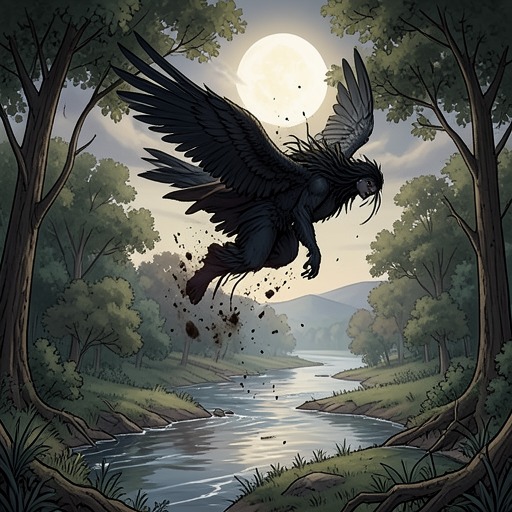
Eve appears within the account of a creation described as perfect and very good. The evil that later abounds on Earth is presented as an unnatural intruder, entering when Satan interfered with God’s creation and tempted Adam and Eve to disobey God. Eve therefore belongs to the first human pair implicated in the Fall of man, but the narrative does not present her as the original source of evil. Satan’s interference precedes the human act, and the temptation establishes the adversarial force against which Eve and Adam must be understood.
The account also distinguishes Satan’s status from the evil he later causes. Satan himself was perfect when God created him, but through the misuse of free will he brought sin and evil into the world. Eve’s story consequently unfolds inside a larger theology of corrupted freedom: the tempter is a created being who turns rebellion into temptation, and Eve is the human being drawn into that conflict.
The Fall and the Question of Blame
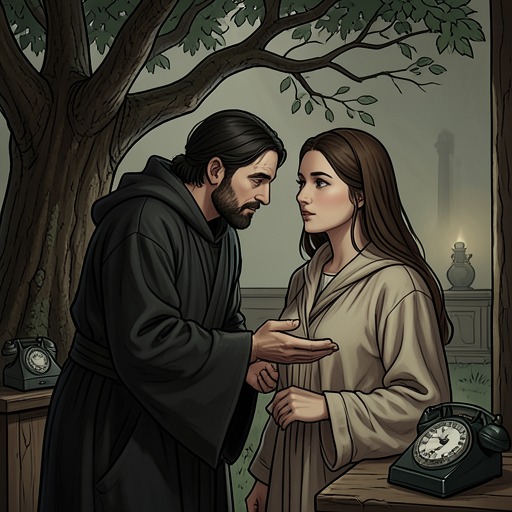
The scene of judgment begins with Adam attempting to shift responsibility onto Eve. He says that the woman given to him supplied the fruit, presenting her action as the immediate explanation for his own disobedience. The narrative thus initially directs attention toward the human relationship and toward Eve as the person whose act preceded Adam’s admission that he ate.
Eve responds differently. When God asks what she has done, she says,