
Observation, Memory, and Recognition
Why Didn't They Ask EvansThe mystery depends on details that characters notice, forget, or finally connect, showing how memory becomes a form of evidence.
increasing Bearing strength in each event
 decreasing
Bearing strength in each eventdecreasingA Face Remembered
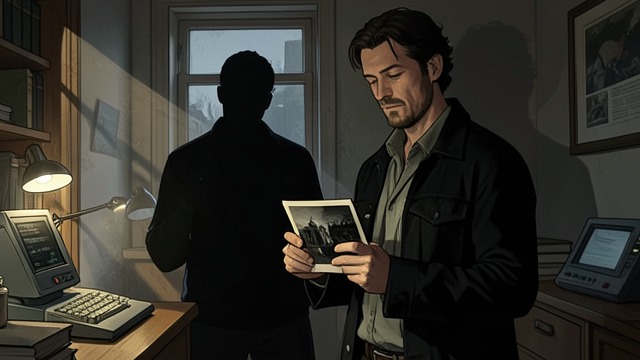
A Face Remembered
The portrait’s impression
Bobby sees a woman’s photograph in the dead man’s pocket and remembers its wide-set eyes and unusual beauty. He replaces it without comparing it to the dead man’s face.
Memory without understanding
The image remains vivid but unexplained. Bobby’s recollection later gives the investigation a reliable point of comparison against the photograph printed in the newspaper.
A Cry Misremembered
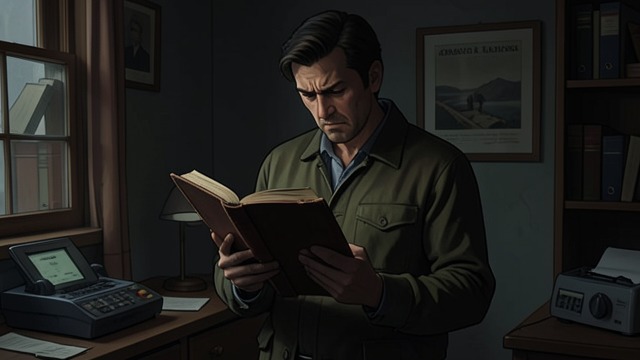
A Cry Misremembered
Uncertainty in testimony
Bobby tells the coroner that he may have heard a shout near the path but is unsure of its source. He cannot tell whether it came from the victim or from some unrelated moment.
A detail left unresolved
The cry could have signaled the push, yet it cannot establish that fact in court. Memory provides a lead, but its uncertainty shows why a witness’s honest recollection may not be enough.
The Wrong Photograph
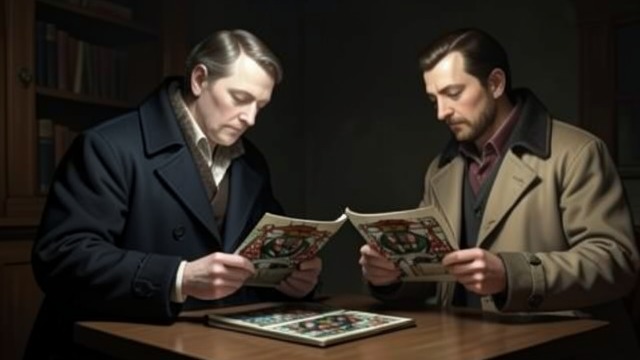
The Wrong Photograph
A discrepancy noticed
Bobby recognizes that the printed image is not the portrait he saw in the pocket. Frankie’s confirmation turns his private memory into a shared clue.
Comparison changes the case
The difference suggests deliberate substitution and makes the identification at the inquest suspect. A small visual memory begins to challenge an official conclusion.
Ears in the Dark
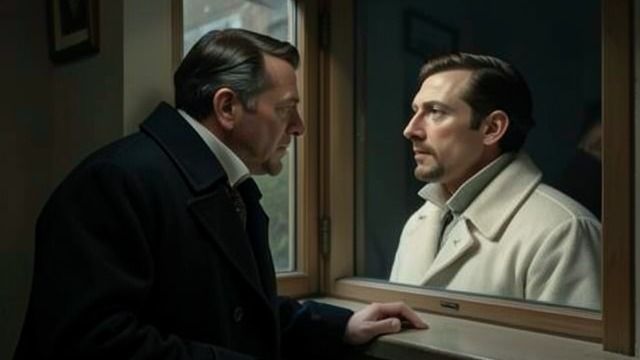
Ears in the Dark
An observation retained
Bobby studies Dr Jasper Nicholson through a window and notices that the doctor’s earlobes join his cheeks. He does not yet know how important the detail will become.
Recognition under pressure
When Roger impersonates Nicholson in the attic, Bobby recalls the difference and rejects the disguise. A seemingly incidental observation becomes life-saving evidence.
The Pattern of Witnesses
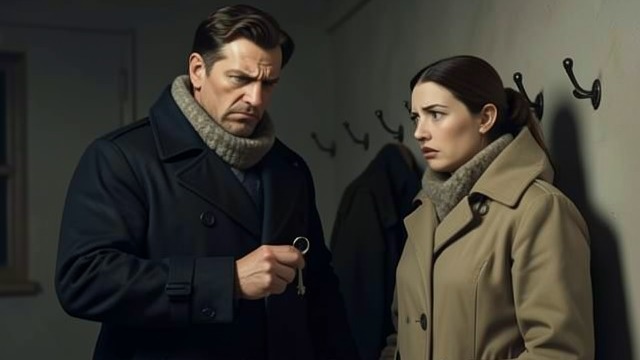
The Pattern of Witnesses
A remembered omission
Frankie notices that the house-parlourmaid was not called to witness Savage’s will. Bobby learns that she was Gladys Evans, who had served the household for months.
Attention completes the clue
The omission matters because Gladys could have recognized the person who signed. The investigation succeeds not through extraordinary insight alone, but through patient attention to a detail others considered routine.
Immediately after Alan Carstairs dies
At the first inquest
After Bobby reads the local newspaper
During the second night at The Grange
After the final search in Chipping Somerton
