Amelia Cayman
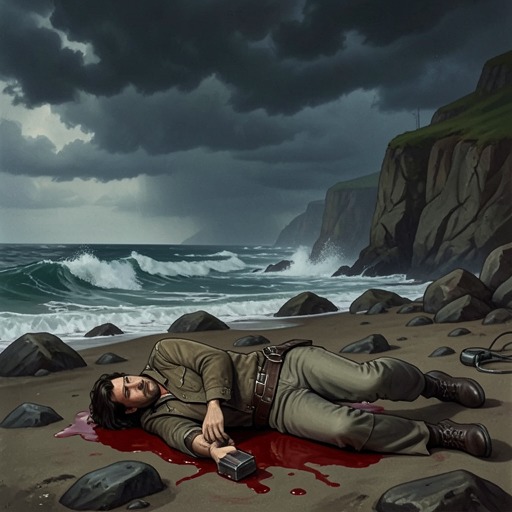
Why Didn't They Ask EvansAmelia Cayman is presented as the sister of Alexander Pritchard, the man whose body is found at Marchbolt, and her identification helps establish the official account of his death. She explains his absence from England, his plans for a walking tour, and the lack of luggage; each detail initially makes the case look like a straightforward accident. Later, the photograph associated with the identification becomes a point of suspicion, and Bobby Jones and Frankie Derwent begin to question who the Caymans really are.
Claimed Identity and Background
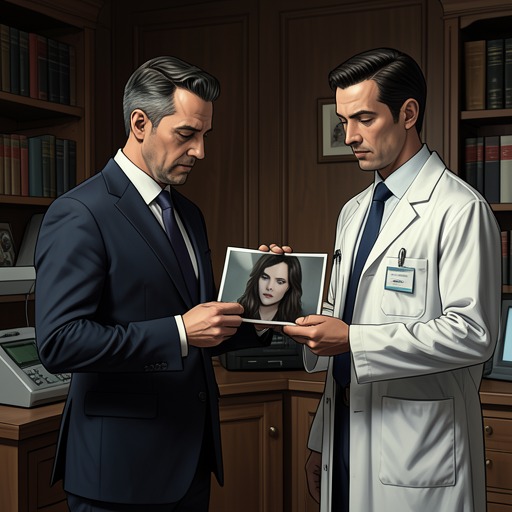
A newspaper report says the dead man was identified by a photograph he carried, which was recognized as a photograph of Amelia. The report names her as Mrs Leo Cayman and says she came to Marchbolt, where she identified the deceased as her brother, Alex Pritchard. At the inquest she gives his name as Alexander Pritchard. Her account places their last meeting the day before his death: he had told her he intended to walk in Wales. She says he had recently returned from the East, after ten years away, and had only just resumed contact with her.
Amelia is notably uncertain about her brother’s working life. Asked his profession, she says she cannot say that she knows, explaining that he called it prospecting and was seldom in England. She also cannot say whether he had recent financial or personal difficulties. Her impression is that he was cheerful and looking forward to his trip; because he took her to theatres and lunches in London and gave her presents, she assumes he was not short of money. Her evidence is therefore partly direct recollection and partly inference from a brief, renewed acquaintance.
Identification and Inquest Testimony
Amelia tells the inquest that her brother had no reason, as far as she knew, to take his own life, and insists that the death must have been accidental. She accounts for the absence of a knapsack by saying that he disliked carrying one and planned to send parcels as he travelled. One parcel, containing night things and a pair of socks, had been posted to Derbyshire instead of Denbighshire and arrived after his death. The explanation answers an apparent gap in the evidence, giving the inquest a mundane reason for his having no luggage with him.
Her testimony also establishes the limits of what she can know: she had not seen her brother for ten years before his recent return, and he was not a regular correspondent. Nonetheless, the coroner emphasizes that the evidence gives no indication of depression or suicidal intent. The jury returns a verdict of death by misadventure and recommends that the Town Council fence or rail the cliff path beside the chasm. Amelia’s identification thus forms part of a public conclusion that treats the death as accidental, while the jury’s practical recommendation directs attention to the dangerous path rather than to a possible crime.
The Caymans and Bobby Jones
After the inquest, Amelia and Leo Cayman visit Bobby Jones at the vicarage, explaining that they want to hear what the dying man said. Amelia asks whether her brother left any last words or message. Bobby tells her that he did not; she appears disappointed and asks whether he said nothing at all. Leo Cayman frames the absence of a final message as a mercy, and Bobby reassures her that the man did not suffer. Their visit makes the family’s interest in the final moments part of Bobby’s experience, but offers no new information about the death itself.
Bobby has already noticed a discrepancy between Amelia and the woman in the photograph he remembers seeing on the dead man. At this stage, that contrast unsettles his confidence in the identification rather than resolving it. In a later discussion, he and Frankie consider whether the photograph was switched after Bobby returned it to the dead man’s pocket. Their reasoning makes the image evidence, not Amelia’s testimony alone, central to the mystery: if there was only one photograph, its apparent replacement could have helped conceal the dead man’s identity. They suspect Roger Bassington-ffrench of making the substitution, but Bobby also points out weaknesses in the theory, including the timing and the chance that he would not see the newspaper report before the inquest. The possibility is investigated, not established by Amelia’s conduct.
Later Clues and Narrative Significance
The Caymans’ possible connection to the earlier John Savage affair emerges through a photograph found behind a telephone. Frankie recognizes the man in it as Leo Cayman and infers that the Caymans were the people known as the Templetons. This is an investigative conclusion drawn from the photograph, rather than a confession by Amelia. If the identification is right, the name links her to the woman who had gained influence over Savage, whose will left seven hundred thousand pounds to Mrs Templeton. The legal record complicates any simple accusation: the will was witnessed by a solicitor who considered Savage sane, and his fear of cancer may have been genuine. Bobby and Frankie suspect that the inheritance scheme involved taking advantage of the will and consider whether Savage was killed, but they acknowledge that suspicion is not proof.
The question of the Templeton household’s servants yields another clue. Frankie asks why a gardener was summoned to witness Savage’s will when a parlourmaid was in the house; Bobby realizes that the parlourmaid’s name was Evans. That discovery advances the investigation beyond what Amelia herself says, but it sharpens the uncertainty around the apparent family identities attached to the case. Amelia’s role is consequently more than that of a witness to the cliff death: her photograph anchors an official identification that the investigators come to distrust, while the later association of the Caymans with the Templetons suggests a wider history of assumed names and disputed evidence. The novel leaves her testimony in tension with the clues surrounding it, showing how an orderly inquest can settle a public account without answering every question raised by the investigation.