Bobby Jones
Why Didn't They Ask EvansBobby Jones begins as an uncelebrated amateur golfer and the fourth son of the vicar of Marchbolt, but a failed shot puts him beside a dying stranger and into the path of a murder investigation. Neither a polished detective nor a heroic celebrity, he proceeds by noticing what does not fit, correcting his own assumptions, and acting when other people are in danger. His movement from accidental witness to active investigator is matched by a quieter change: the affection he has long felt for Frankie Derwent becomes something they can acknowledge together.
Identity and First Appearance
Bobby is about twenty-eight, an amiable-looking young man whose face is described as likeable rather than handsome and whose honest brown eyes suggest friendliness. His modest position is established through the golf game that opens his story. He badly tops a shot, sending the ball skidding into a bunker rather than toward the green; there is no crowd to react, because the player is not a famous American golfer but simply a local vicar’s son. Bobby responds with frustration at his deteriorating game, a small comic failure that makes him an ordinary presence before the narrative gives him extraordinary responsibilities.
That ordinariness also shapes how he sees himself. When Frankie last met him before his poisoning, he had shown signs of feeling inferior; later, while recovering, he relishes telling her every detail of his case and jokes that he will become famous throughout England. His confidence is temporary and playful rather than a settled claim to importance. He can take pleasure in his new notoriety while still needing Frankie to tell him when he is exaggerating its significance.
From Witness to Investigator
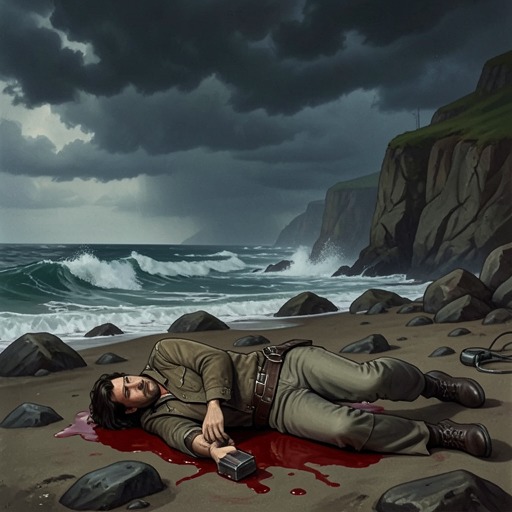
Bobby’s first decisive action follows a golf shot toward the sea. With Dr Thomas, he finds a man lying below the cliff, still breathing but unconscious. The doctor examines him and concludes that nothing can be done; Bobby, who feels sick at the sight, has nevertheless helped the less athletic doctor scramble down the rocks. The encounter makes him a witness to a death, but also leaves him personally involved in the questions surrounding it.
At the inquest, Bobby recounts the circumstances carefully. Mist was rising, he had heard what might have been a cry, and he had briefly wondered whether his ball could have struck someone on the footpath. He had decided it could not have travelled that far; the ball was later found about a hundred yards short of the path. Dr Thomas’s account allowed for an accidental fall in the mist, while also acknowledging that suicide could not be ruled out and that the injuries were consistent with a fall onto the rocks. Bobby’s testimony preserves the uncertainty rather than resolving it. His role in the case begins with a distinction he will repeatedly have to maintain: what he actually saw is not the same as what the circumstances tempt him to conclude.
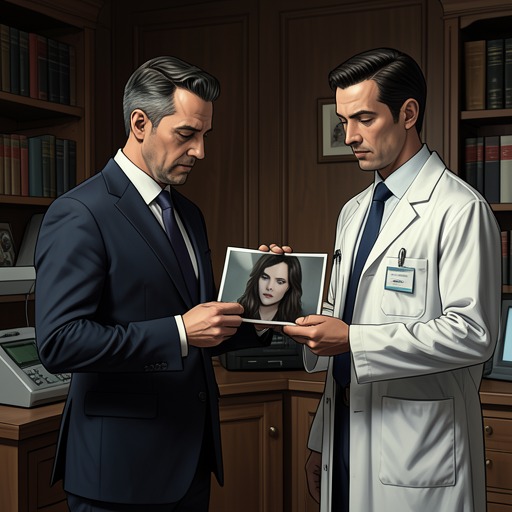
That caution becomes more explicit when he and Frankie examine the changed photograph associated with the dead man. They reason that, if there had been only one photograph, Roger Bassington-ffrench must have been the person who replaced it after Bobby had returned the original to the dead man’s pocket. But Bobby resists treating the inference as proof. If a photograph had made him a danger to the killer, he argues, waiting until after the inquest would have been an irrational risk: Bobby might have seen the newspaper photograph and immediately noticed the mismatch. He also recalls that Roger may not have arrived until five or ten minutes after Bobby replaced the picture. Frankie offers the possibility that Roger was watching him, but Bobby cannot see how that could have happened. Their exchange shows him doing more than collecting clues: he tests a theory against timing, opportunity, and the chance that an apparent clue has been misread.
Danger, Disclosure, and Partnership
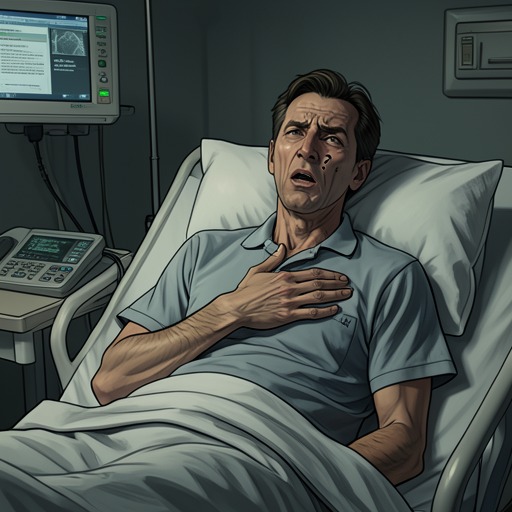
Bobby himself becomes the target of a poisoning. In a later conversation with Frankie, he explains that he was found sleeping so deeply that he could not be woken, taken to a farmhouse, and treated by a doctor. He says that the beer contained eight grains of Morphia and takes mock pride in having survived it, while Frankie points out the grim implication for whoever wasted the dose. His light tone turns the episode into banter, but the circumstances make clear that the investigation has crossed into direct danger for him.
His suspicions continue to develop through questions of access and timing. Bobby and Frankie had concluded that whoever tried to remove him must have had easy access to Morphia. Frankie notes that Roger could have taken some from supplies sent to his brother, Henry Bassington-ffrench. This is a possible route, not proof of Roger’s guilt; their investigation repeatedly advances through hypotheses whose explanatory power must still be weighed against what they know.
Bobby also carries the investigation to Moira Nicholson, whom he approaches under the assumed identity of a chauffeur named Hawkins. He tells her plainly that he is not really a chauffeur, works in a garage in London, and is Bobby Jones from Marchbolt. More difficult is his disclosure that her friend Alan Carstairs is dead. Bobby watches her reaction without pressing her, then gives her room to ask for the story. Moira’s quiet response—that she had wondered why Alan never came back—shows that the news connects with a history Bobby does not yet know. His tact matters here: he delivers a painful fact but does not presume to define what Alan meant to her.
The danger intensifies when Bobby and Frankie are both held captive. They discover that each has been bound, and Frankie helps free him; Bobby’s mouth has also been covered. They realize that a letter Frankie thought came from Bobby was not written by him. Bobby describes his own experience: after being knocked out, he woke in a confined place with food and drink on a tray, ate because he was hungry, and soon fell asleep again. By Friday he had been unconscious for much of the time since Wednesday evening. In their reunion, the two compare what happened to them and recognize how the deception separated them and left them vulnerable. Their exchange turns captivity into a test of trust: a message bearing Bobby’s apparent authority was enough to mislead Frankie, but speaking directly to one another restores their shared account.
Judgment, Relationships, and Ending
Even when trapped, Bobby continues to reassess who may be responsible. He asks Frankie whether she now believes Roger killed Henry Bassington-ffrench; her theory depends on Sylvia Bassington-ffrench also being involved. They consider why Sylvia resisted moving Henry away from the Grange, her apparent lack of concern about Morphia, and her presence in the house when a shot was heard. Bobby suggests that she might have fired it and then given the study key to Dr Jasper Nicholson to place in Henry’s pocket. The proposal unsettles them rather than settling the matter. Bobby’s willingness to entertain it is a sign of how far the case has shifted: respectable, familiar people can no longer be treated as innocent merely because they seem ordinary. But the conversation remains explicitly conditional, not a final finding.
The same investigative restraint appears when Bobby and Frankie review what can be established about John Savage’s will and death. They accept that Savage made the will and that his fear of cancer may have been genuine, but cannot prove that anyone hastened his death. Bobby distinguishes suspicion that Mrs Templeton gave Savage something to make him sleep from evidence that would establish it; he likewise notes that a letter Roger may have forged for the coroner could already have been destroyed. Their remaining question concerns why Mrs Templeton summoned the gardener to witness the will when a parlourmaid was present. Bobby then recognizes the significance of a detail he had pursued separately: the parlourmaid’s name was Evans. The discovery that she was Gladys Evans converts an overlooked household fact into a possible key to the mystery, while also showing how the investigation depends on connecting small discrepancies rather than on a single decisive revelation.
Bobby’s relationship with Frankie supplies the emotional counterpoint to that uncertain work. At the close, talk of people travelling to Kenya becomes a proposal in everything but form: Bobby asks whether Frankie would go, and she answers that she will. He admits that he has always been keen on her and that he used to be miserable because he thought his feelings could not be returned. Frankie connects his earlier rudeness on the golf links to that unhappiness. Bobby also acknowledges that Moira’s face had affected him, and Frankie responds generously rather than treating the admission as a rival claim. Their exchange makes the romance an extension of the trust built through danger, frank questions, and a shared investigation.
Narrative Role
Bobby’s importance lies partly in the gap between his unassuming beginnings and the stakes he comes to face. The bad golf shot first makes him a figure of gentle comedy; the same game places him close enough to discover a dying man. In the mystery that follows, he is neither infallible nor merely passive. He can be pleased with himself, misled by appearances, and drawn toward an exciting explanation, yet he also challenges Frankie’s theory about the photograph, separates suspicion from proof, and revises his view of familiar people as new circumstances emerge. The novel makes his amateur status a practical strength: he enters the case without authority, but his readiness to ask what a clue really establishes helps turn an accidental witness into a dependable partner.