Henry Bassington-ffrench's suicide letter
Why Didn't They Ask EvansHenry Bassington-ffrench's suicide letter is the farewell document produced at the inquest into his death, where it supports the official conclusion that he died by suicide while of unsound mind. Its public authority is immediate, but the later investigation leaves the provenance of an inquest letter uncertain and unprovable, making written evidence part of the story's wider problem of concealed truth.
Presentation at the Inquest
The inquest passes quickly and is conducted with tact because the Bassington-ffrench family is popular locally. Frankie Derwent and Roger Bassington-ffrench give evidence, as does Dr Jasper Nicholson; then the dead man's farewell letter is produced. The proceedings culminate in the verdict of suicide while of unsound mind, the sympathetic finding Mr Spragge had anticipated. The letter therefore appears within an inquiry arranged to spare the widow, Sylvia Bassington-ffrench, and the dead man's brother further distress, and its presence helps close the official account of Henry's death.
Documentary Evidence and Doubt
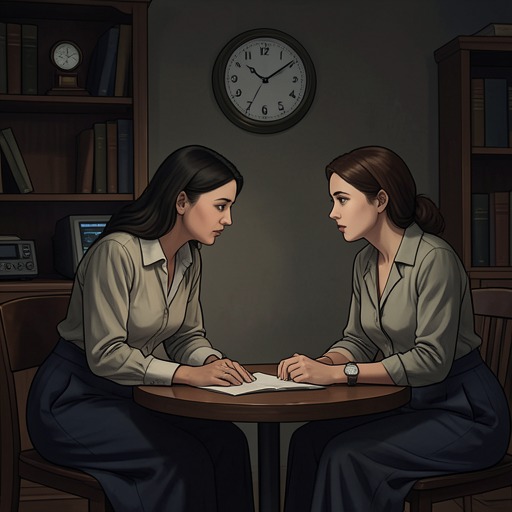
Later, while discussing the suspicions surrounding John Savage's will and death, Bobby Jones and Frankie consider whether Roger may have forged a letter submitted to a coroner. They acknowledge that they cannot prove the suspicion, and Bobby expects the document to have been destroyed after being used as evidence at an inquest. The discussion does not establish that this is Henry's farewell letter; rather, it places the inquest document within a broader uncertainty about how written evidence can be made to support a false account, and how its disappearance can prevent that account from being tested.
Narrative Significance
The letter's role shifts from apparent closure to a reminder of evidentiary limits. At the inquest it accompanies a verdict that settles Henry's death for the authorities; later, the investigators' inability to verify a potentially forged inquest letter shows how an official record may preserve a conclusion without preserving the means to challenge it. The contrast makes the document significant not for any revealed wording, which the account does not supply, but for the weight placed on it and the uncertainty that eventually gathers around documentary proof.