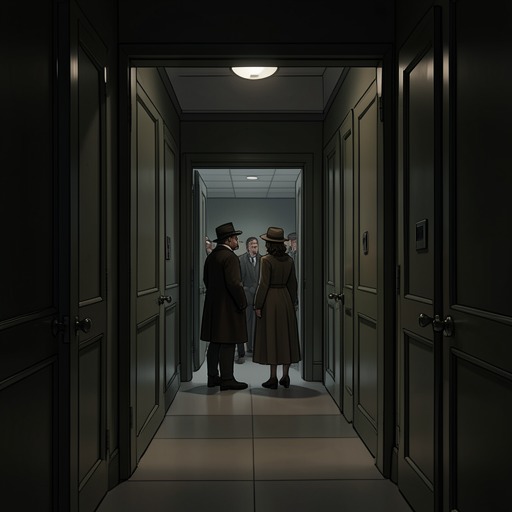
St Asaph's
Why Didn't They Ask EvansSt Asaph's is a nursing home presented as the setting for Bobby Jones's recovery after he is poisoned with morphia. Its quiet visiting-room scene brings Frankie Derwent back into the investigation: Bobby is alive, able to recount what happened, and still treating his narrow escape with comic bravado.
Setting and Character
St Asaph's is described as a large, old-fashioned house, identified by the name inscribed above its doorway. A nurse in uniform answers the door and guides Frankie upstairs to a room on the first floor, where Bobby is being cared for. The details establish the place as a private nursing home rather than a domestic setting, with staff managing visitors and tending to patients.
Frankie's Visit
Frankie arrives in her large green Bentley carrying a bunch of lilies. The nurse takes special interest in the car, the flowers, and Frankie's identity; learning that her visitor is Lady Frances Derwent visibly changes her estimation of her. She leads Frankie to Bobby and presents the visit as a pleasant surprise. Frankie sits in the designated visitor's chair, while the nurse takes the lilies away to put them in water, briefly leaving the two friends alone.
Bobby's Recovery
Bobby greets Frankie with surprise and quickly launches into an account of his case. He boasts that he is the nursing home's sensation after surviving eight grains of morphia, and jokes about the medical attention his case might attract. Frankie cuts through his self-congratulation, unimpressed by his enthusiasm for recounting every detail. Their exchange makes clear that he has recovered sufficiently to talk at length, even as the poisoning remains the immediate reason for his stay.
Narrative Significance
The visit turns a near-fatal poisoning into a scene of renewed companionship and disclosure. Bobby explains that morphia had been put in his beer; after he was found unresponsive, he was carried to a farmhouse and a doctor was called. At St Asaph's, his survival allows Frankie to hear his account directly, while their banter restores the lighter, familiar rhythm of their relationship after the danger. The nursing home therefore serves as a temporary refuge and a point from which the poisoning can be discussed, rather than as the place where the attack itself occurred.