The Caymans
Why Didn't They Ask EvansThe Caymans are a pair of conspirators whose apparent family relationship becomes a tool for fraud: they help present Alan Carstairs’s body as that of Alex Pritchard and support the story surrounding John Savage’s will and death. Their importance lies not only in the schemes attributed to them but in the false identities they make credible. A photograph appears to settle who the dead man is; the investigation eventually shows how that apparent certainty was manufactured.
Identity and Introduction
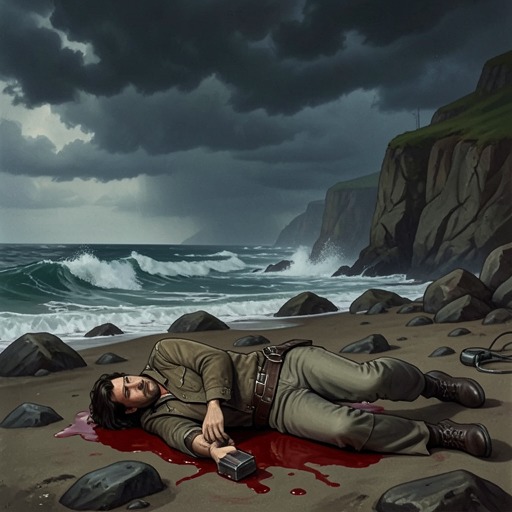
The public account identifies Amelia Cayman as the sister of the man who fell from the cliffs at Marchbolt, and identifies the dead man as her brother, Alex Pritchard. According to the newspaper report Frankie reads, the victim’s identity was established by a photograph he carried, after which Amelia came to Marchbolt and recognized him. The report adds that Alex Pritchard had recently returned from Siam after ten years away and was beginning a walking tour. These details make the identification seem coherent, but they are part of the cover story rather than a reliable account of the corpse’s identity.
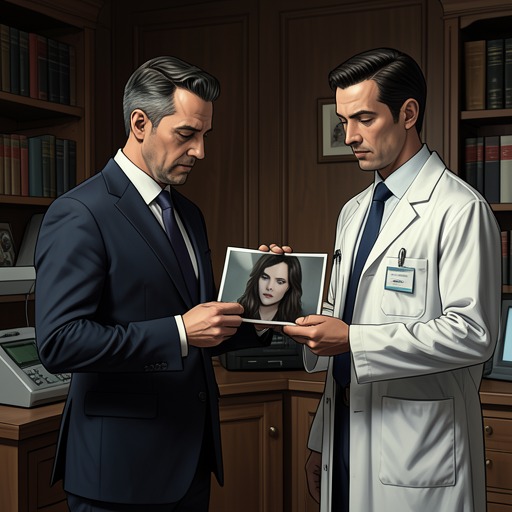
The Caymans’ apparent kinship is essential to that account. The police tell Frankie that there was only one photograph and that it was of the dead man’s supposed sister. They also explain that the photograph was crucial: the dead man had few other belongings that could establish who he was. The identification therefore rests heavily on an image and on the person who claims to recognize it. Neither the newspaper’s confident wording nor the police account independently verifies the family relationship on which the identification depends.
The Photograph and the False Identification
Bobby’s first encounter with the photograph occurs after he finds the cliff victim dead. While searching the man’s pocket, he accidentally draws out a photograph, sees a young woman’s face, and carefully replaces it. Its appearance stays in his memory. Later, the photograph reproduced in the Marchbolt Weekly Times does not match the one he remembers. The published image is identified as a portrait of Amelia Cayman, but Bobby tells Frankie that it is not the photograph he returned to the dead man’s pocket.
That discrepancy turns the supposed proof of identity into evidence of interference. Bobby and Frankie reason that someone substituted the image after Bobby saw it; at first they focus on Roger Bassington-ffrench, who had access to the body. Bobby also questions whether that theory explains the timing: if the photograph were so dangerous that he had to be silenced, an attacker could not safely rely on his chance failure to see the newspaper before the inquest. Their uncertainty matters. The substituted photograph raises suspicion, but it does not by itself establish who changed it or who killed the man.
The eventual account explains that the original photograph was of Moira Nicholson, whom Alan Carstairs had obtained a picture of, apparently for identification. Roger removed that photograph and other identifying material, then planted a photograph belonging to one of the gang. Amelia and Leo Cayman subsequently came forward as the dead man’s supposed sister and brother-in-law and identified him as Alex Pritchard. Alan Carstairs was thus misidentified through a chain combining a removed image, a planted one, and a false family claim. The photograph did not merely mislead the police; it helped obscure the identity of the person carrying it.
Connection to John Savage’s Scheme
The Caymans are also connected to the conspiracy involving John Savage. In Roger’s account, Moira, travelling as Mrs Templeton, met Savage and learned of his wealth. The man known as Leo Cayman acted as her unfeeling husband, helping create the circumstances in which Savage was drawn to her. Savage was induced to visit Tudor Cottage more than once; on his third visit, the conspirators’ plan was put into operation. Moira took the money and left, ostensibly going abroad, before returning to Staverley and The Grange.
This account places the Caymans within a wider criminal arrangement without making them responsible for every part of it. Roger describes himself as developing his own plans against Henry and Tommy Bassington-ffrench, while Moira was involved in the Savage scheme. The Caymans’ specified function was to help sustain the appearance surrounding Moira’s relationship with Savage. The evidence does not establish that they forged Savage’s will: that act is attributed to Roger. Their role instead supports the circumstances through which the supposed Mrs Templeton could approach Savage and the conspirators could profit from his death and estate.
Suspicion, Reversal, and Narrative Role
Before the full explanation is known, Frankie develops a theory that Leo Cayman may have followed Alan Carstairs through the mist and pushed him over the cliff. She imagines that the killing was followed by Amelia’s false recognition of the body and by the planting of her photograph. This interpretation connects the Caymans’ suspicious identification to the murder, but it remains a hypothesis, not the final account. Roger later admits that he was close behind Carstairs and pushed him. The distinction revises the Caymans’ apparent role: they participate in the false identification, while Roger is the person who confesses to the fatal push and the substitution of photographs.
The shifting explanations show why the Caymans’ identities matter to the investigation. Frankie and Bobby have to separate what the police reported, what Bobby directly remembers, and what they infer from the mismatch between the photographs. Each new piece of information changes the force of the earlier evidence. The official identification initially appears to close the question of who died; the remembered photograph reopens it; and Roger’s account explains how the false answer was installed. The Caymans are therefore central to the book’s pattern of mistaken identity, in which familiar social roles—sister, brother-in-law, husband—are used to give a fabricated story the appearance of ordinary truth.