
The Limits of Deduction
Why Didn't They Ask EvansBobby and Frankie learn that plausible theories can guide an inquiry but can also turn innocent people into suspects.
increasing Bearing strength in each event
 decreasing
Bearing strength in each eventdecreasingA Theory Built from Timing
A Theory Built from Timing
A pattern inferred
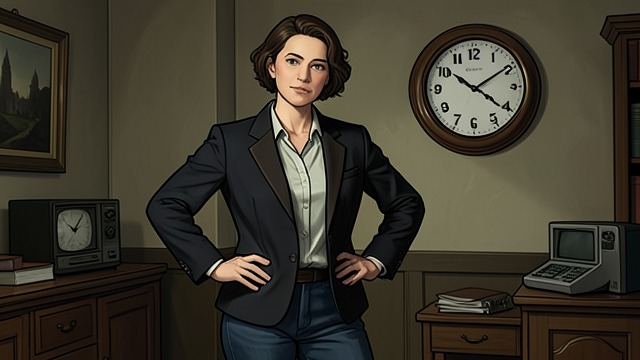
Frankie connects the cliff death, Bobby’s poisoning, and the job offer because they occur close together. She concludes that the same conspiracy may be responsible.
A useful but incomplete map
The theory correctly treats Bobby’s danger as meaningful, but it does not initially identify the right perpetrators. Deduction starts the investigation without guaranteeing that every inferred detail is true.
Roger as the Suspect
Roger as the Suspect
Circumstantial suspicion
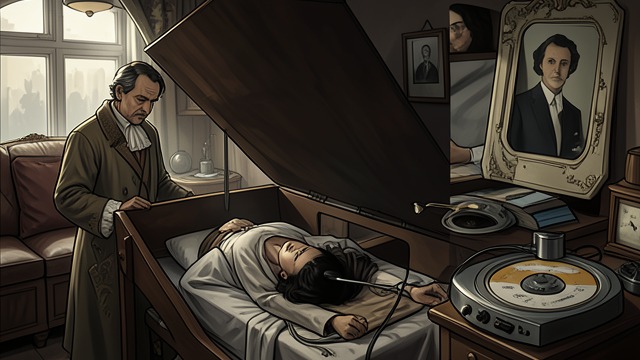
The changed photograph and Roger’s presence near the body make him appear to be the only person who could have switched the image. Frankie and Bobby infer that he may have killed the stranger.
A theory shaped by opportunity
They lack a clear motive and cannot establish exactly when the photograph changed. Their early conclusion is reasonable, but the uncertainty shows the difference between access and proof.
Nicholson as a Red Herring
Nicholson as a Red Herring
Suspicion accumulates
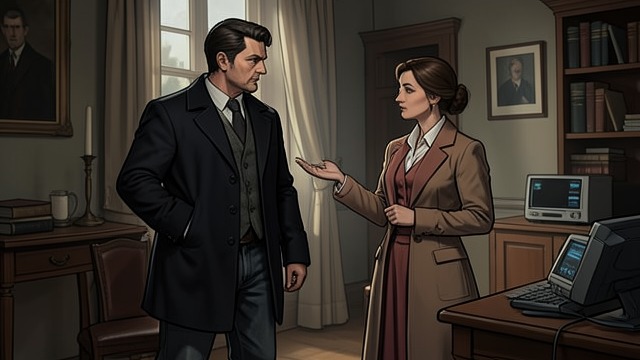
Nicholson’s intense questioning, blue Talbot, and access to morphia make him look dangerous. Moira’s account seems to confirm the idea that he threatens her and controls Henry’s treatment.
The wrong interpretation
Roger uses the real doctor’s manner and appearance to conceal his own role. The investigators’ deductions are not foolish, but they are incomplete because Moira and Roger supply false context.
The Anatomy of a Clue
The Anatomy of a Clue
Ears remembered
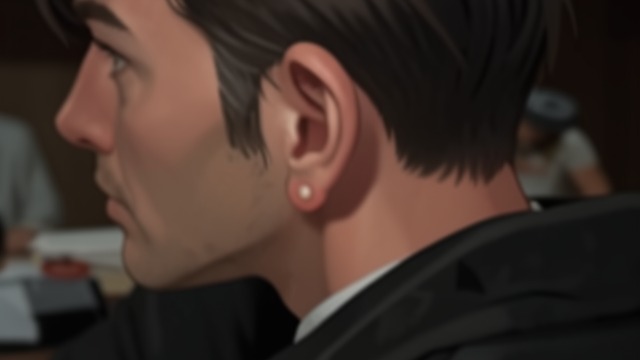
Bobby identifies the false Nicholson by recalling the real doctor’s distinctive earlobes. The clue comes not from an abstract theory but from an attentive observation made earlier.
Observation refines inference
His recognition does not explain the entire conspiracy, but it prevents him and Frankie from accepting the imposture. The novel contrasts conjecture with a detail that can be checked against direct experience.
The Witness Pattern
The Witness Pattern
A small irregularity
Frankie questions why the cook and gardener witnessed Savage’s will while Gladys Evans, the house-parlourmaid, was not asked. The omission had seemed trivial until she considers who would recognize a visitor.
Deduction gains force
The possibility that Roger impersonated Savage explains the witness choice and gives the original phrase about Evans a precise meaning. The case advances when a minor procedural detail is compared with human knowledge.
During Bobby’s recovery
Before Frankie’s arrival at Merroway Court
During Frankie’s stay at Merroway Court
After the confrontation at Tudor Cottage
After the discovery of Gladys Evans
