
The Mask of Accidental Death
Why Didn't They Ask EvansThe conspirators repeatedly exploit accidents, staged suicides, and misleading inquests to make deliberate violence appear ordinary.
increasing Bearing strength in each event
 decreasing
Bearing strength in each eventdecreasingThe Cliff Made Dangerous

The Cliff Made Dangerous
A plausible hazard
The coastal path turns abruptly near the cliff, and the rising mist makes it easy to imagine a walker stepping into empty space. The location has no protective railing.
A perfect public explanation
Roger pushes Alan Carstairs where a fall can resemble misadventure. The real danger of the path supplies the cover story for a murder that officials are prepared to accept as an accident.
The Accidental Verdict
The Accidental Verdict
A short inquiry
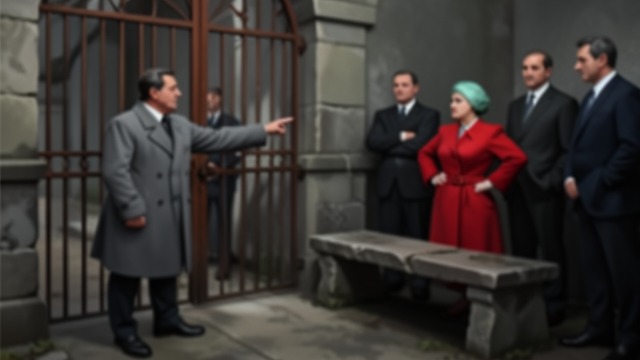
Dr Thomas explains the injuries, and Bobby recalls hearing a possible cry. The false identity presented by the Caymans supports the appearance of an ordinary walking-tour accident.
Suspicion closed by procedure
The jury returns misadventure and recommends a railing. The investigation ends with the path blamed for the death rather than the person who pushed Carstairs.
A Locked-Room Suicide
A Locked-Room Suicide
The scene arranged
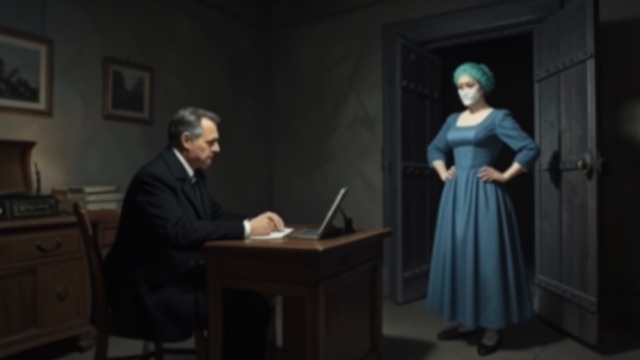
Roger kills Henry, writes a suicide letter, and manipulates the weapon and key to make the study appear locked from within. He relies on the family’s knowledge of Henry’s addiction to make suicide believable.
A second sympathetic verdict
The inquest returns suicide while of unsound mind. As with the cliff death, an official conclusion gives the murder a socially acceptable explanation.
The False Car Accident

The False Car Accident
Roger’s final design
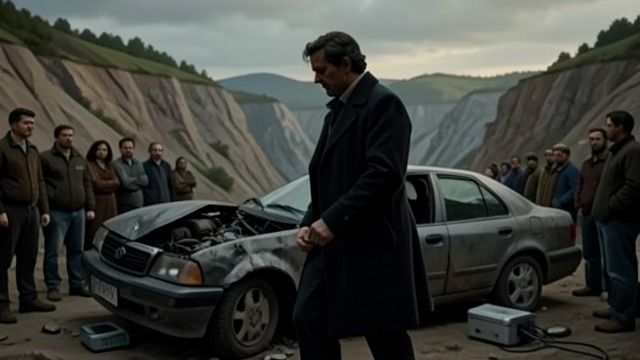
Roger tells his captives that their deaths will be presented as a car plunging over a quarry edge. Frankie’s known driving and the chauffeur disguise provide a ready-made public story.
A method exposed as pattern
The plan reveals that accidents have become Roger’s preferred instrument for disposing of people. Bobby and Frankie understand that their captor is repeating a method already used against others.
The Pattern Confessed
The Pattern Confessed
Intent behind misfortune
Roger admits that he attempted accidents against Tommy and used a false suicide to conceal Henry’s murder. His account confirms that chance events were repeatedly manufactured.
The recurring danger clarified
The mystery’s central threat is not simply murder but murder made to look like ordinary misadventure. Recognition of that pattern allows earlier events to be understood as parts of one design.
Before the first inquest
The day after the cliff death
The evening Henry dies
During Bobby and Frankie’s imprisonment
In Roger’s letter from South America
