Discovery of Gladys Evans's identity
Why Didn't They Ask EvansThe discovery of Gladys Evans’s identity turns an apparently minor question about witnesses to John Savage’s will into a crucial clue in Bobby Jones and Frankie Derwent’s investigation. By tracing the absent house-parlourmaid from an old account of the signing to a postal address in Marchbolt, they connect Alan Carstairs’s unfinished inquiry with their own and arrive at a new explanation: Roger Bassington-ffrench may have impersonated Savage. The discovery sharpens the case, but does not yet prove who killed Savage or how the scheme was carried out.
The Witnesses to the Will
Frankie’s questions to Mrs Pratt recover the circumstances of Savage’s will through the memory of someone who had not understood their significance at the time. Mrs Pratt had only recently come to the house and initially could not say whether Savage had often stayed there. She did remember being asked to witness a document. Frankie prompts her to recall that she and Albert, the gardener, were summoned to the best bedroom, which the mistress had vacated for Savage the previous night.
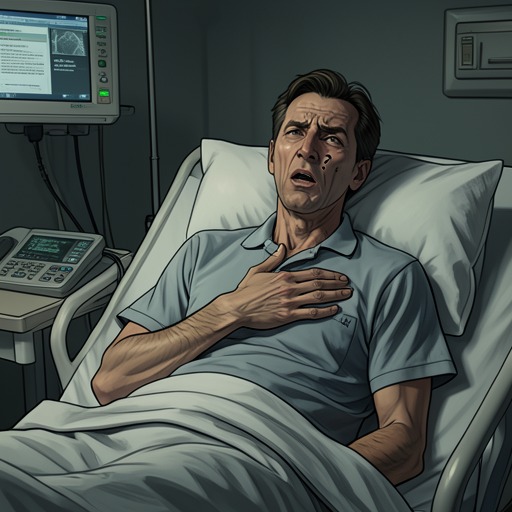
Mrs Pratt describes a man sitting up in bed after returning from London and going straight upstairs. He looked so ill that she found him frightening; Mr Elford, the lawyer, reassured the servants and directed them to sign where the gentleman had signed. Mrs Pratt added her occupation and address, and Albert did the same. She went downstairs trembling and told Gladys Evans that the man had looked almost like a corpse. Evans replied that he had seemed well the night before and suggested that something in London must have upset him.
That recollection gives the signing a specific setting and a troubling discrepancy: the witnesses saw a sick-looking man in bed, but Mrs Pratt had never seen him before. It also establishes that Evans was nearby in the household and heard about the apparent change in Savage’s condition. Frankie and Bobby do not treat Mrs Pratt’s memory as proof of murder; it supplies the details from which they can test the choice of witnesses.
Why Was Evans Not Asked?
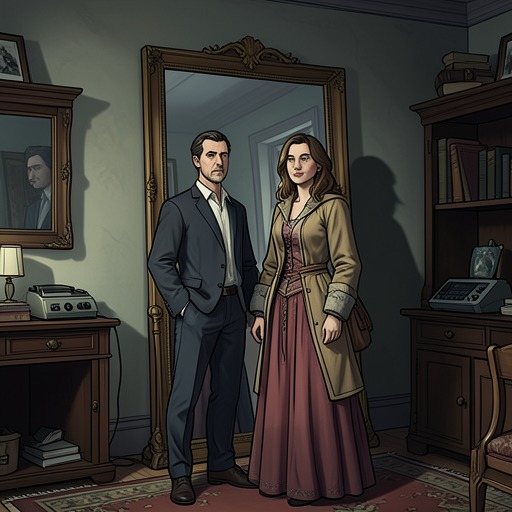
After thanking Mrs Pratt and leaving, Frankie and Bobby consider what her account can and cannot establish. They suspect Savage’s fear of cancer was genuine and that his supposed heirs may have exploited the will he had made to act before he could change it. But neither can see how to prove that he was killed. They also acknowledge that suspicions about the woman posing as Mrs Templeton giving him something to make him sleep, or Roger Bassington-ffrench forging a letter to the coroner, remain unproved.
Against that uncertainty, one practical detail stands out. The household had a house-parlourmaid, yet the mistress sent for the gardener to witness the will. Bobby reveals that he had stayed behind to ask for the parlourmaid’s name: she was Evans. The coincidence is more than a name match. Alan Carstairs had already asked the same question about why the household did not call Evans, and Bobby and Frankie recognize that their investigation has reached the same point that arrested his attention.
Frankie reasons from the servants’ different positions in the house. A guest might tip the house-parlourmaid, who served dinner, summoned him, and brought coffee; a cook, who was rarely seen by guests, would be less likely to meet one. If Savage had been impersonated, Evans was therefore the servant most likely to recognize the impostor. Frankie concludes that the conspirators could not risk having her witness the will. Her explanation identifies the omission as deliberate, not simply an odd choice of available staff, and points to Roger Bassington-ffrench as the person who took Savage’s place.
Tracing Gladys Evans
The deduction gives the pair a reason to find Evans, but her whereabouts are not immediately known. Frankie approaches the postmistress by speaking casually about rain and claiming a connection to Marchbolt. She asks whether the woman knows Gladys Evans, describing her as someone from that part of the country who had once been in service at Tudor Cottage. The postmistress recognizes the name and corrects Frankie’s assumption: Evans had come from Wales, returned there, and married. Her name was now Roberts.
The postmistress can provide more than the married name. She says that Mrs Roberts and her husband have gone into service together, and searches among her papers for an address. The note they receive reads, “Mrs Roberts, The Vicarage, Marchbolt, Wales.” Frankie and Bobby read it together, astonished to find Evans not far away but in Marchbolt itself. The address changes the inquiry from an inference about a missing witness into a traceable lead: they now know the name under which she lives and where she can be sought.
Consequences and Significance
The discovery links three strands that had previously seemed separate: the suspicious execution of Savage’s will, Alan Carstairs’s investigation, and the identity of a servant who might have recognized the man in bed. Bobby and Frankie infer that Carstairs came to Wales to follow Evans, whose Welsh name suggested a connection to the region. They further believe someone was following Carstairs and that he was killed before he could reach her. This is their reconstruction of his purpose, not a fact established by Mrs Pratt’s testimony or the address itself.
The episode’s force lies in the difference between a clue and proof. Mrs Pratt confirms that she and Albert witnessed a signing under unusual circumstances; the absent Evans gives the pair a plausible reason why the witnesses may have been selected. But their own conversation has already marked important parts of the wider case as impossible to prove at that moment. Identifying the likely impersonator explains the conspicuous omission without resolving every question about Savage’s death or the forged evidence surrounding it.
The address also gives the title question of the investigation a literal answer: the investigators should have asked Evans. Her absence from the will’s witnesses first makes her important, and her new name then conceals her in plain sight. The sudden discovery that she is living at the Marchbolt Vicarage ends this stage not with a completed solution but with a startlingly close destination—and the prospect that a witness overlooked by the conspirators may still clarify what happened.