Rose Chudleigh
Why Didn't They Ask EvansRose Chudleigh, later addressed as Mrs Pratt, is a former cook in the household where John Savage’s will was signed and one of its two witnesses. Her account supplies a crucial, if incomplete, clue: she signed beside a man she had never seen before, believing the procedure was legitimate because a lawyer was present. What she remembers supports Bobby Jones and Frankie Derwent’s suspicion that the apparent signing was part of a deception, though her testimony alone does not establish who the man was.
Identity and Household Role
Bobby Jones’s notes identify Rose Chudleigh as the cook who witnessed the will, alongside the gardener. When Frankie Derwent questions her as Mrs Pratt, Rose clarifies that she had worked for Mrs Templeton for only two months; Gladys Evans, the house-parlourmaid, had been there for six. The distinction matters to the investigation because the two servants had different access to the household and its visitors.
Rose’s recollections of the people involved are uncertain. Asked whether she had been present when Savage died, she initially misunderstands the question as referring to Mr Templeton and says that he had not died but had gone abroad. Bobby Jones has to specify that he means the man who left Mrs Templeton the money. Rose’s confusion makes her account less decisive, but it also shows why the investigators need a more informed witness.
Witness to the Will
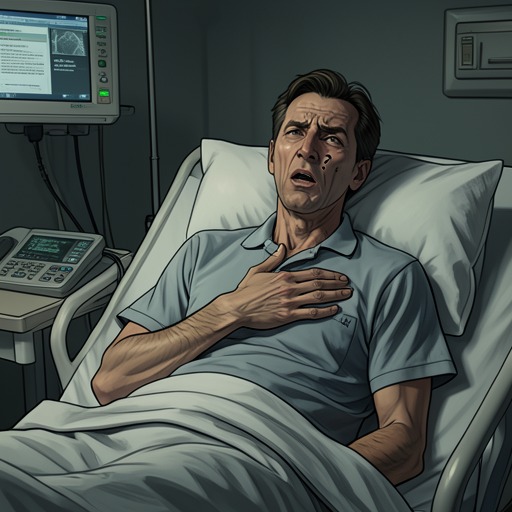
Rose remembers being summoned from the kitchen by her mistress, who asked her to fetch the gardener and come to the best bedroom. The room had been moved out of for the gentleman the night before. There they found a man sitting up in bed, apparently returned from London and gone straight to bed, and looking so ill that Rose thought he looked like death. Mr Elford, the lawyer, was also present.
Rose had never seen the man before. Mr Elford reassured her that there was nothing to fear and instructed her to sign where the gentleman had signed. She wrote her name, occupation as cook, and address; the gardener did the same. Rose says she had never signed such a paper before and did not like doing so. Afterward, trembling, she told Gladys what had happened. Gladys replied that the man had looked all right the previous night and suggested that something in London had upset him.
How Her Testimony Changes the Investigation
Frankie Derwent and Bobby Jones had already identified Rose and the gardener as witnesses they should seek out while investigating the will. Rose’s recollection gives their inquiry a concrete point to test: whether the man who signed in the bedroom was really John Savage. Frankie proposes that Roger Bassington-ffrench could have impersonated Savage, while the real Savage was drugged and kept out of sight; Rose’s statement that the signer was a stranger to her is consistent with that theory, but does not by itself prove it.
Frankie also reasons that Rose’s work as a cook may have made her a useful witness for an impersonation. A cook might rarely see the people she serves, whereas a house-parlourmaid such as Gladys would wait on them and have more chances to recognize them. Frankie therefore suspects Rose was chosen because she would be less able to identify a substitute. Bobby doubts she could distinguish the real Savage from another man even if shown a photograph, describing her as vacant in their conversation; this is their assessment of her reliability, not proof that she knowingly helped anyone.
Limits and Significance
Rose does not recognize the man in bed, identify the signature as false, or report knowing of a plot. She signed because the lawyer was present and reassured her, and she understood the unfamiliar, very sick-looking gentleman to be the person whose will she was witnessing. Her evidence consequently serves less as a complete explanation than as a warning that the formal presence of a lawyer and two servants may not guarantee that the signer was who the witnesses assumed.
The investigators consider two ways to pursue the lead: show Rose a photograph of the real Savage and ask whether he was the man in the bedroom, or have an expert examine the signature. Frankie notes that no one had previously challenged the will because there had seemed to be no plausible opportunity for it to have been forged. Rose’s account helps create that possibility, while the contrast between her limited recognition and Gladys Evans’s longer service directs Bobby Jones and Frankie Derwent toward finding Gladys for further evidence.