
The Making of a Revolution
William Tell (P. G. Wodehouse Edition)This thread traces the practical stages by which discontent becomes a revolt capable of replacing Austrian rule.
increasing Bearing strength in each event
 decreasing
Bearing strength in each eventdecreasingDiscontent Accumulates
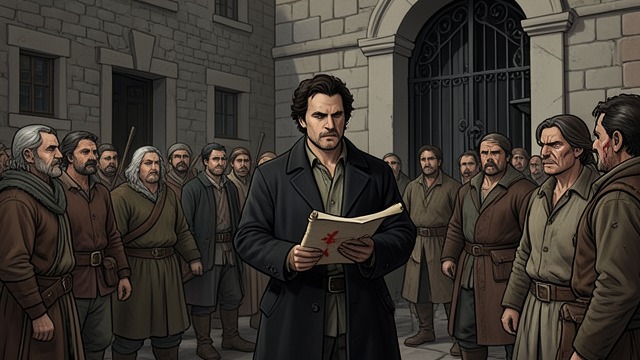
Discontent Accumulates
A broad grievance
Taxes and prohibitions affect the Swiss people across daily life.
A political cause emerges
The burden encourages citizens to treat separate frustrations as evidence of a shared oppressive system.
The revolution begins before anyone takes up arms, in a common judgment about rule.
Petition Gives Way
Petition Gives Way
Attempts exhausted
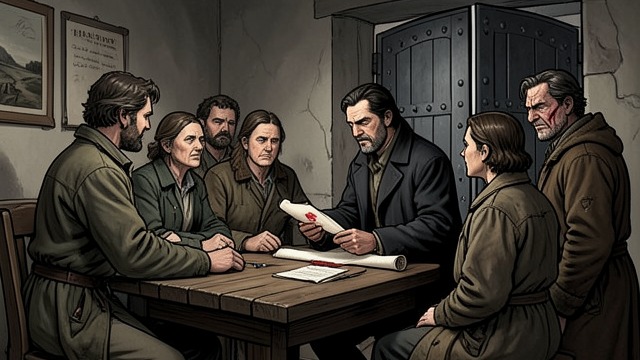
The original delegates and Arnold of Sewa all return without relief.
A new conclusion
The people decide that the Governor will not be moved by complaint or tact.
The repeated failure provides a rationale for rebellion.
A Public Spark
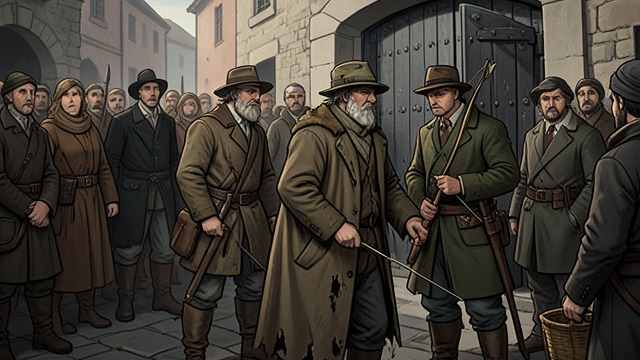
A Public Spark
Defiance becomes visible
William Tell refuses to bow and shoots through the Governor’s hat after the guards attack him.
A first opening
The crowd joins the conflict and hears Tell describe the moment as the beginning of revolution.
A local confrontation gives the larger movement a public spark.
The Champion Removed
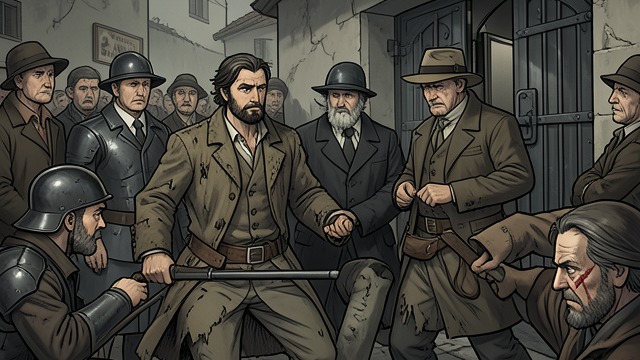
The Champion Removed
Arrest at a moment of hope
Hermann Gessler captures William Tell after the apple shot and the second-arrow threat.
A movement tested
The people lament the loss of their leader but do not yet attack the armed escort.
The revolution must become more than the deeds of one man.
Fortresses Taken
Fortresses Taken
The rising spreads
Meetings across the country resolve to begin the revolution, and people seize Gessler’s fortresses.
Freedom consolidated
The Emperor’s death occupies his successor, and the Swiss become strong enough to resist later attack.
The uprising succeeds through collective action and favorable timing.
Before the first audience
After both delegations fail
At the meadow, after the pole decree
After the apple challenge
The night Gessler’s death becomes known
